
5 Top Myths on Watering Houseplants & Why They're Dangerous
Some of the links in this post may be affiliate links.
People are generally very confused over how to water houseplants properly. The problem is that it is easy to misinterpret a lot of aspects about houseplant care in general.
This post focuses on one aspect of houseplant care, and that is to help you understand everything about watering your houseplant properly.
Here are a few watering myths that I've come across that I would like to debunk.
Table of Contents
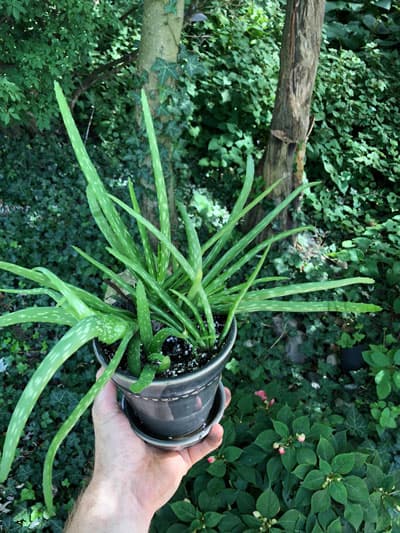
Myth #1: I shouldn't soak my succulents. They only need a little bit of water at a time.
WRONG! Almost without exception, I recommend thoroughly soaking your houseplant, regardless of whether it is a succulent or not.
And no I'm not crazy. It works and I speak from experience, so trust me!
Keep reading though...because you might be wondering "oh I thought succulents don't like much water?" Well that's only partially true.
Would you like to save this post?
If you just add a little bit of water (because succulents don't need that much water, right?), you are doing a big disservice to your plant.
If you don't thoroughly soak your plant and just add a little bit of water, you are encouraging a shallow root system. And if you have a poor and shallow root system, your whole plant will suffer. Without a healthy root system, you will not have a healthy plant.
Yes it is true that succulents don't need as much water as many tropical foliage plants, however, you should still soak your plant.
The critical part for succulents is that after you water, you should wait long enough for the potting soil to pretty much go completely dry before watering again. And when you do water again, soak it again!
Let the water drain through the drainage hole and discard any extra water. Less frequent, but thorough-watering, is superior to frequent mini-drinks of water.
Myth #2: Houseplants Need to Be Watered Once a Week

WRONG! Well, the real answer is that it depends! In some cases, yes this may work! But only under certain combinations of conditions.
It's ok to have a regular checkpoint to see if your houseplants need water or not, but you shouldn't blindly water a houseplant just because your schedule tells you to.
If you watered a plant, and a week later the top of the soil is still moist, you should NOT water it again. Doing so will invite root-rot.
When a plant stays too wet, you are depriving the roots of oxygen and they will proceed to rot. As a general rule of thumb, you should wait to water until the top inch or two of the soil is dry (depending on the size of the pot).
Then go ahead and give it a good soaking. There are some exceptions though. Some plants, such as succulents or cacti, should be allowed to go completely dry before watering again...but don't wait TOO long!
The concept of "overwatering" houseplants is very rampant and it doesn't necessarily mean what you think! Check out my blog post on overwatering and find out what it really means.
Myth #3: You Water Orchids with Ice
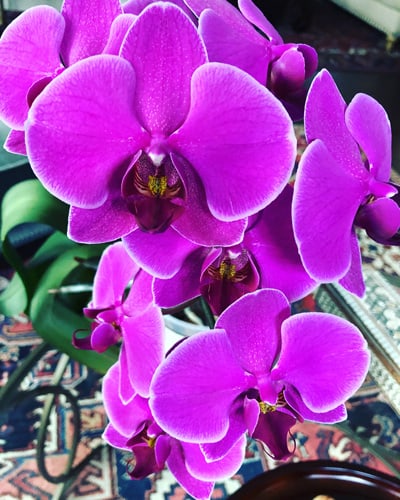
NO! Unless you've seen a monkey with a popsicle in the jungle, then you should not water your orchids with ice. This is one of the worst marketing gimmicks I've ever seen.
Do NOT use ice to water your orchids. First of all, when the ice melts, it does not provide enough water in order to soak the potting medium and thoroughly moisten all the orchid roots.
Secondly, the ice can damage the roots if they come into direct contact with the ice. It makes absolutely zero sense to water orchids with ice.
This scheme is mainly marketed for Phalaenopsis or moth orchids. Phalaenopsis come from the tropics of southeast Asia and I guarantee you they've never met an ice cube.
To read more details on why you shouldn't use ice cubes, be sure not to miss my 5 Reasons Why You Should NOT Water Orchid With Ice Cubes blog post.
Myth #4: If I fuss over my houseplants, they'll grow better
Don't get too happy with that watering can! You have to let nature take its course and a lot of people tend to overwater their houseplants.
Like I mentioned, it's OK to have a regular checkpoint to see if your plants need water, but don't water just because you told yourself you need to water every Saturday.
I can't emphasize the following point enough: If your calendar is telling you that it's your normal watering time, and you feel the surface of the soil and it is still moist, then don't water!
On the other hand, you might find a houseplant that dried out terribly and once a week may not be enough. You may need a couple checkpoints during the week.
Why is this? Watering needs vary drastically depending on:
Temperature: Higher temperatures means that soil will dry out more quickly.
Pot Size: Smaller pots will dry out much more quickly.
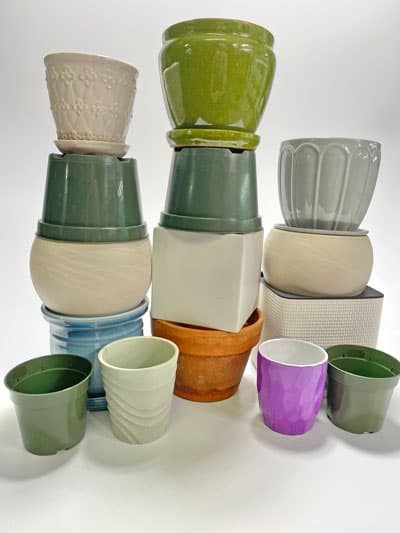
Pot Material: Terra cotta pots will dry out very quickly because they are porous. Plastic or glazed ceramic pots will take longer to dry out.
Choosing a pot type based off of your specific plant can work to your advantage or disadvantage, so choose carefully depending on the moisture needs of your plant.
Growing Season: Depending on where you live, plants will slow down or stop growing in the middle of a dark/cold winter.
So they will not use as much water and you have to be careful not to "overwater" especially during this time. On the other hand, during the growing season, plants will use more water.
Root System Size: Recently I was shocked because I had watered my large hibiscus tree indoors in the middle of winter, and 3-4 days later, it was very dry.
This plant has an extensive root system and is in a large pot. I probably won't be repotting that plant anymore otherwise it'll be too difficult to move.
Having a pot-bound plant, coupled with increasing growth as days are getting longer, all increase the need for watering.
Humidity: In a more humid atmosphere, soil will generally take longer to dry.
Light Levels: The higher the light levels, the more water a plant will use. A plant that is sitting in a dark corner will use much less water than a plant that is in brighter light that is actively photosynthesizing and growing.
Myth #5: Everything on the internet is true
WRONG! This one is a BIG WRONG. You can tell the websites that just regurgitate material versus those that truly have knowledge to back it up.
Be weary of any old website, or many sources on social media, when getting houseplant care information especially when it seems vague and generalized.
I've seen so much misinformation online. So if you are researching online, trust reputable sources (such as Ohio Tropics!) Or if you have very specific questions, it is best to refer to the numerous plant societies out there such as:
So there you have it! Hopefully you have taken away some helpful pointers in houseplant watering. Did you read anything here that was new information for you? If so, comment below!

Great article. Would it be safe to just go by the weight of the pot and color of the soil and not have to stick your finger into the soil? I ask because I have a bad nervous habit of picking the dry skin around fingernail and got a nasty infection one time from digging in the soil. Also I am using Mosquito bits soaked in water to kill some fungus knats and am afraid to put my finger n that bacteria, please help I don’t want to kill my plants I already lost a peace lily from over watering,
Hi Connie, whatever works for you is fine. You can also just touch the surface of the potting mix and not bury your finger in there. Sometimes the color can be misleading....so I don't always go by that.
Hi! I have a question about my monstera plant. I’ve been struggling finding a solution for some issues on my leaves. I’m very new to plants and for the past couple weeks my monstera has been developing tiny holes in middle of the leaf that grow bigger and around them is a dry ring of crispy brown. I thought I was under watering but using the finger test and my moister meter my soil is moist. On a moister meter it usually reads around a 5-6. I am very confused and just want healthy leaves as this plant has many of them. One last question, how can I get my monstera to grow more up and taller rather then out and very bottom heavy? Thank you so much for your help 🙂
Hi Sarah, I'd have to see photos to help more, but as far as growing up more, you'll just have to give it time. The only thing you can do to speed this up is make sure you have enough light, but otherwise you'll just have to wait. I would honestly ditch the moisture meter and only use your finger. Moisture meters are just not reliable and many people have killed their plants with them. If you want to send me a photo, use the contact form on my website, and when I reply, you can attach your photos. Please also describe how you water and how you approach watering, and also describe the light situation (how far from a window, what exposure it is, etc.). Hope this helps!
Hello,
I used to live in a bright and sunny high rise flat and could drench my spider plants when they looked a bit sad and they were fine. Since moving to a colder flat, with less direct sunlight and poor ventilation, this same water technique has caused root rot. I would like to what all my plants as you suggest but I worry that the plants will all stay to wet for too long. Do you have any advice?
Thank you,
Erin
Hi Erin! I have a few comments to help you out. You may already be doing some of these things, but here are my thoughts. One thing you can supplement with grow lights. I've done this in my sun room and added grow lights along the wall of Northern windows. It helps a lot especially in the winter time. Another thing is when you repot your plants, only go up one pot size. If you go too big, you'll have a lot of excess potting mix that will take a long time to dry out, especially in cooler temps and low light. I don't know what kind of potting mix you use, but I like to add perlite to my packaged mixes. It also will help, especially if you also do everything else described above. You may already be doing some of these things, but it's important especially in climates like ours :-). Also, keep your plants as close to your windows as you can to maximize the light, and don't be afraid of direct sun especially in wintertime. It will benefit all of your plants.
Your above article gave me in depth knowledge of watering the indoor houseplants.Thanks.Waiting for the upcoming articles.
I would like some information on Hoya soil please. I bought a Hindu rope at Walmart and it was soak in water. So I waited about three weeks to water again and the leaf starter turning yellow Ana eventually the plant dye. So indeed some tips in case I get another one
Here is a blog post I wrote on Hoya carnosa, but the same care and soil would apply to your hindu rope: https://www.ohiotropics.com/2019/06/09/hoya-carnosa-care-blooming/
hi! thank you so much for your blog posts on plants! i find them really useful and credible! i'm very new to growing indoor plants and i'm scared i might kill them in a week! but i made sure i got low light growth plants and have been reading about watering plants here in your blog. very informative! however, when do i start giving my new plants fertiliser? also, i live in the Philippines and can't buy the dyna-gro grow. any brand that you recommend that you think is being distributed here? or instead of a brand, what ingredients in the fertiliser should i look for? i was actually given urea crystals by the plant supplier but as you've said, this is not a good type of fertiliser.
Hi Patricia. Do you have any organic fertilizers available? Fish and seaweed fertilizers are also great, but I only like to use these outside. The fish emulsion has a smell to it...I haven't used urea crystal, but I would be careful of those. Any all-purpose houseplant fertilizer should be ok. Some are better than others, but see what you can get your hands on where you live!
As an addition - are you saying that my plants' soil should just be dry on the upper third or so? Also I am trying my hand (again) at a maidenhair fern and a phaleonopsis. The ones I purchased at Trader Joe's died fairly quickly because they were planted directly into the ceramic pot. This time I purchased elsewhere and saw that there was a plastic drainage cup inside the ceramic pot. I will remove the mossy fru-fru at the top before watering, as you said. The maidenhair is in my kitchen just out of the sunlight (I have a garden window). Two days ago I moved it behind some plants about a yard from the window and a few of its leaves started to get discolored. Back in its original place, it looks pretty good. I have only watered it once, when kind of dry damp.
Hi Deborah! Feel free to use the search feature on my site. I have a lot of blog posts on many plants, and am continually adding more. Maidenhair ferns need to be continually moist. I wrote a detailed blog post on them (see the link at the end of this comment.) I also have a lot of posts on orchids. Type in orchid in the search feature of my site and you will find several posts :-). Here is my maidenhair fern post for your convenience: https://www.ohiotropics.com/2020/03/07/maidenhair-fern/
Thank you! Just joined last week. This makes sense. Looking forward to learning more.
You're welcome Deborah! 🙂
So I've got a huge Australian tree fern. I adore this plant but the fronds turn brown. I know it likes damp so I keep it moist all the time with water in the spill off dish below the pot. Then I think well the roots are rotting so I let it dry out but then I really get dead brown branches. How do I know if I am under or overwatering? The soil is so compact I can't even get my finger in to check for wetness.
Hi Elizabeth! It sounds like the plant is severely pot bound. The root ball is probably all roots and it needs to be repotted. Is there even any soil left? Or is it just a hard mat of roots on the surface? Maybe send me some photos and I will be able to better help you. If this is the case, you'll probably have to take the plant out of the pot, make some vertical cuts all around the root ball (and at the bottom) if you're not able to loosen the rootball at all. After you make a few cuts in the root ball, it'll provide some areas for new roots to grow from and you can plant it in a larger pot with new soil.
I think you are right about it being pot bound. There is a hard mat of roots on top. I'm a little hesitant about repotting in Cleveland in January but it may not make it if I wait until Spring. I'll send you a photo and I look forward to any tips you may have. Thank you.
Hi omg i love ohio tropics! Ok well i have monstera an it out grew its pot it was in 10.5 inch plastic pot well i think i messed up all i could find at store was 14 inch terra cotta and i purchased it an put monstera in it do you think i going to ruin the plant?? Please an advice would be great!
Hi Kelly, I'm glad you are enjoying my site 🙂 . I think you will be fine! Especially since the pot is terra cotta. As long as you used a potting mix that drains well when you water.
Hi Raffaele thanks for sharing your knowledge. I have 3 pots of succulents that are in glass containers that do not have drain holes. I followed the nursery directions on planting without drainage, I put rocks in the bottom , I used charcoal. I can’t really soak them do you suggest I repot in containers with drainage holes.
Hi Mary! I would always recommend drainage holes. And you are correct that you can't soak them if you don't have drainage holes. You can hold off if you'd like until spring, and then repot. Just be careful with not adding too much water right now. Even with the rocks at the bottom, you will be surprised sometimes how much water will accumulate!
I did not know it was ok to soak a succulent! I have been giving my aloe Vera plant small amounts of water and I water it very infrequently. The leaves are green but they are curling inward. I’m no expert, but I believe I’m watering the poor plant quite incorrectly!! Thank you for sharing your knowledge!!
You should see an improvement soon Tamala! Make sure your aloe is getting enough light. They are high light plants.
I just bought a couple of succulents to add to my aloe vera. The nursery clerk did say to water sparingly around the edge of the pot. I would never have thought I should soak them then leave to dry out. I'll try your method for sure. I also have Jade plants so expect this same method will be good for them?
Hi Ann, yes I would do that for all succulents. Absolutely! Just make sure that your succulents are receiving as much direct sun as possible and that they dry out in between watering. There is a lot of misinformation on watering, especially for succulents. It's really quite simple!
Hello Raffaele!
I’ve been reading your blog and learning a lot! But I’m a bit afraid of winter x watering. Should I keep the “soak system”? Or reduce it? I had a nightmare with fungus gnat (also read how to manage it) and apparently now the situation is better. Thank you!
Hi Ana! I'm glad you're enjoying my blog! I still water the same way regardless of the season. In the winter, of course more time will go in between watering. I do tend to keep soil drier for longer during the winter. Fungus gnats proliferate when your soil stays wet for too long. I would encourage you to make sure that your plant(s) are getting enough light in the winter. This will help them use up water more quickly and help avoid fungus gnats. Also, having a porous/loose soil helps things tremendously too. There are many factors to consider. These are some of the most important. Hope this helps!
Can you offer tips on how to water indoor cactus plants?
I would water the same way as I describe succulents. After all, all cacti are succulents (but not all succulents are cacti). You should allow your cactus to completely dry out in between and in the winter be sure to water them very sparingly.
Happy Sunday Raffaele Awesome info I watered my alocasia and my ponytail palm last week according to your instructions and both look happy. No new brown leaf tips ???How dry should the soil be before I water the alocasia again? 1 - 2 inches ? For the ponytail i read to let the top half of the soil dry out and then wster but cantbfindvanythingbon the alocasia. I appreciate your patience with my questions and your willingness to share your knowledge. Thanks! ???
You're welcome! It's not an exact science, but 1-2 inches would be a good approximation for the alocasia. Don't let it get TOO dry. In the summer, I place my Alocasia outside, and I water it abundantly. Sometimes daily depending on the weather. It really flourishes outside.