You don't have to live in California or Florida to be able to grow lemon trees indoors. Once you understand the basics and apply these tips, you can successfully grow your own lemon trees anywhere. And there is nothing more satisfying than harvesting your own fruit!
Table of Contents
GROWING YOUR OWN POTTED LEMON TREE
PICK A GOOD VARIETY
Fully grown lemon trees can get far too big for most homes. And growing lemon trees from seed (although I've done it myself and is fun) is super slow to get to a fruiting size. I'd recommend buying a dwarf lemon tree from a local nursery or mail order if don't see any nearby you.
If you can't find a plant locally, Logee's is a fantastic source for citrus and all sorts of tropical plants. I'd suggest starting with a Meyer lemon tree if you can get your hands on one. It is a hybrid between the table lemon and the sour orange and it originated in China. It has some great benefits including:
Dwarf size (usually between 1-3 feet in a poty)
This is the hardiest plant for cooler climates
Meyer lemons have more flavor than store bought lemons and are great for baking
Start though with your local nurseries because you can often get bigger, more established plants vs buying online.
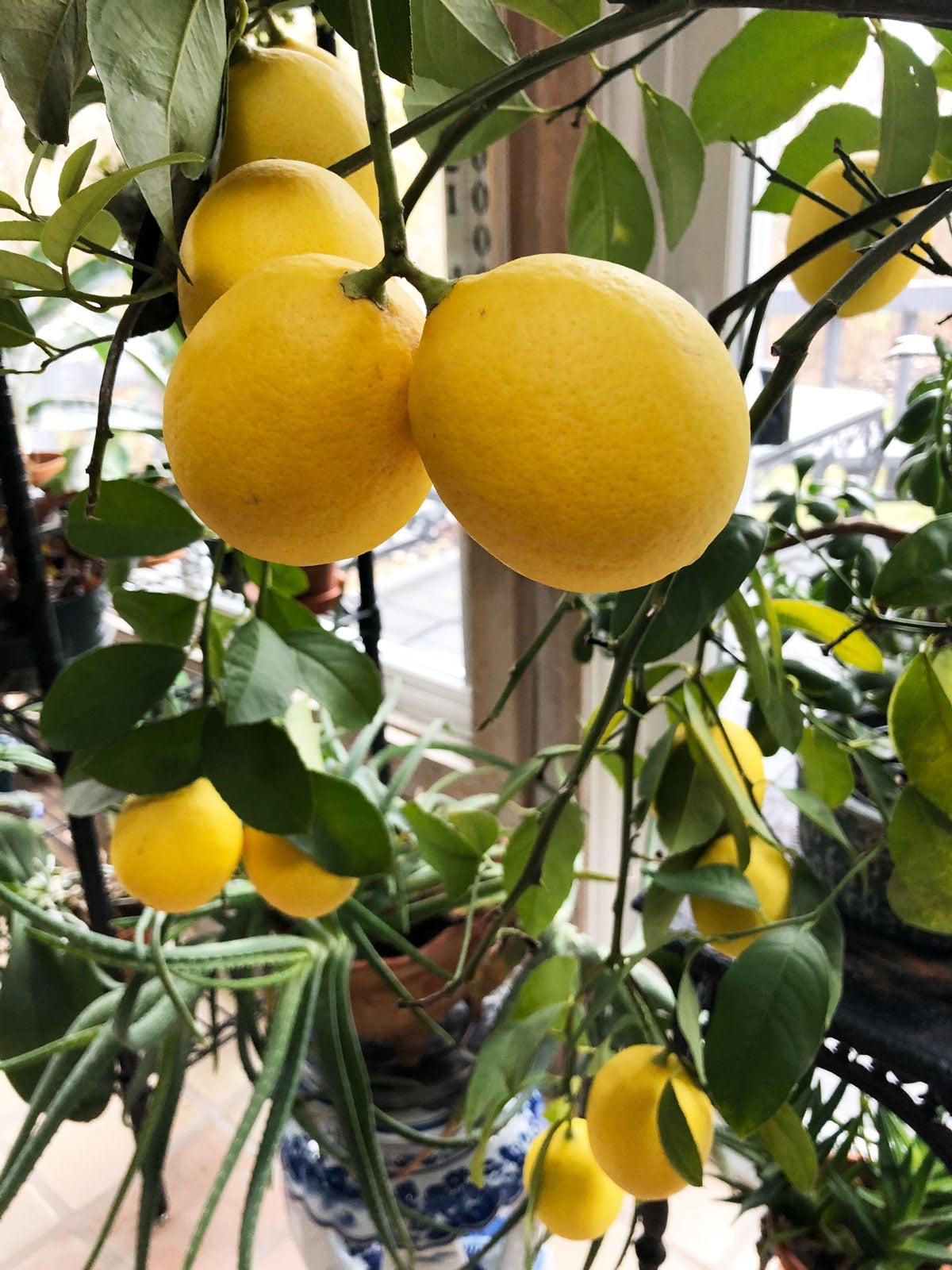
My own lemon tree growing in my sunroom. In the summer, I place it outside.
LIGHT
Having strong is is non-negotiable when it comes to growing lemon trees. If you don't have direct sun (or an appropriate grow light setup), you will be setting yourself up for failure. Place your plant in front of the absolute sunniest window that you can.
Southern-facing windows with no obstructions outside (in the northern hemisphere) are ideal. If you live in the southern hemisphere, the equivalent would be a northern exposure.
Otherwise, regardless where you live, an unobstructed east or west facing window would be the next best exposure. And in the summertime, place them outdoors in full sun (I have some important comments on that in a later section).
Without sufficient light, you'll get poor growth, yellowing leaves, and poor to no flowering and fruit.
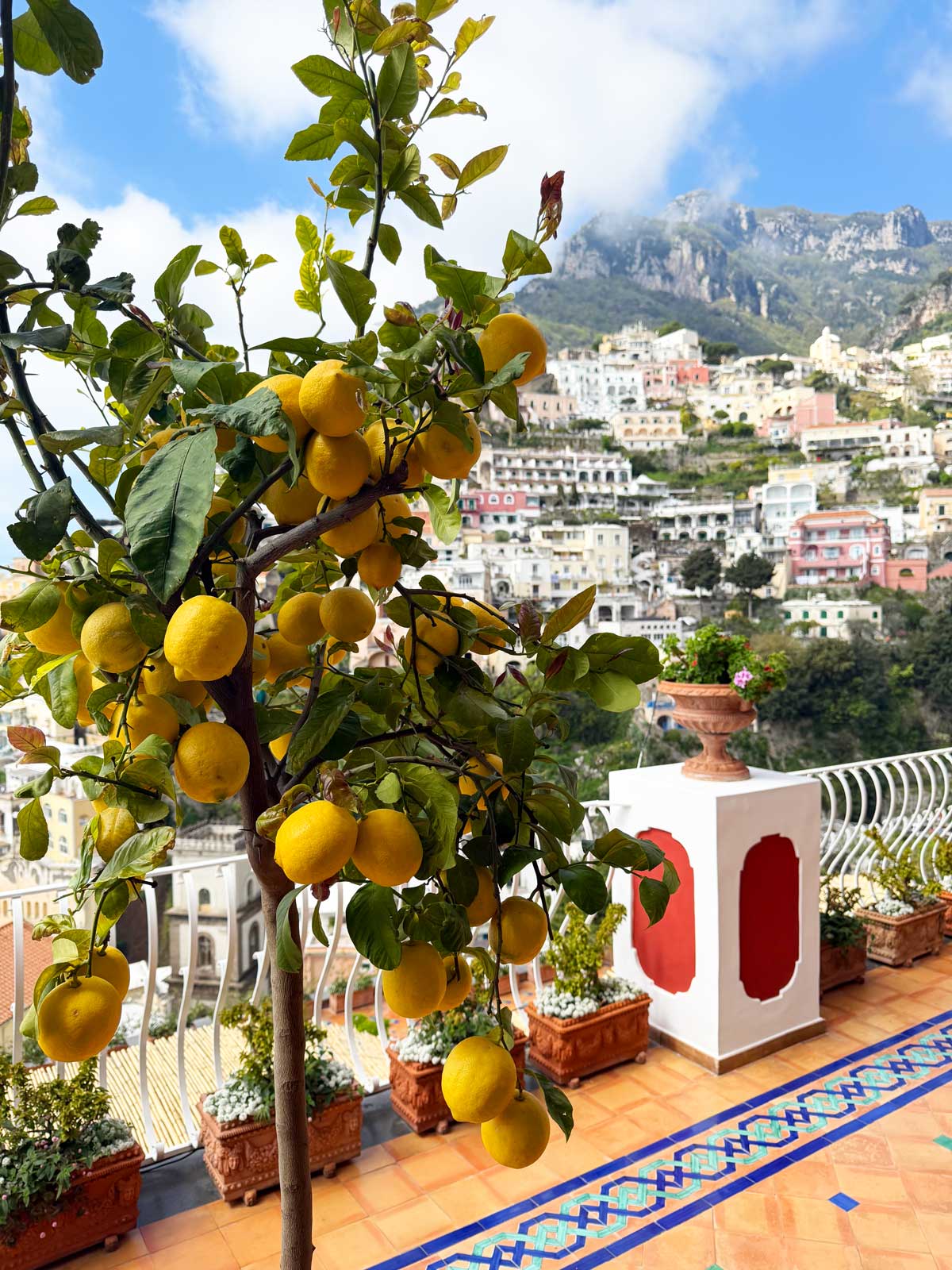
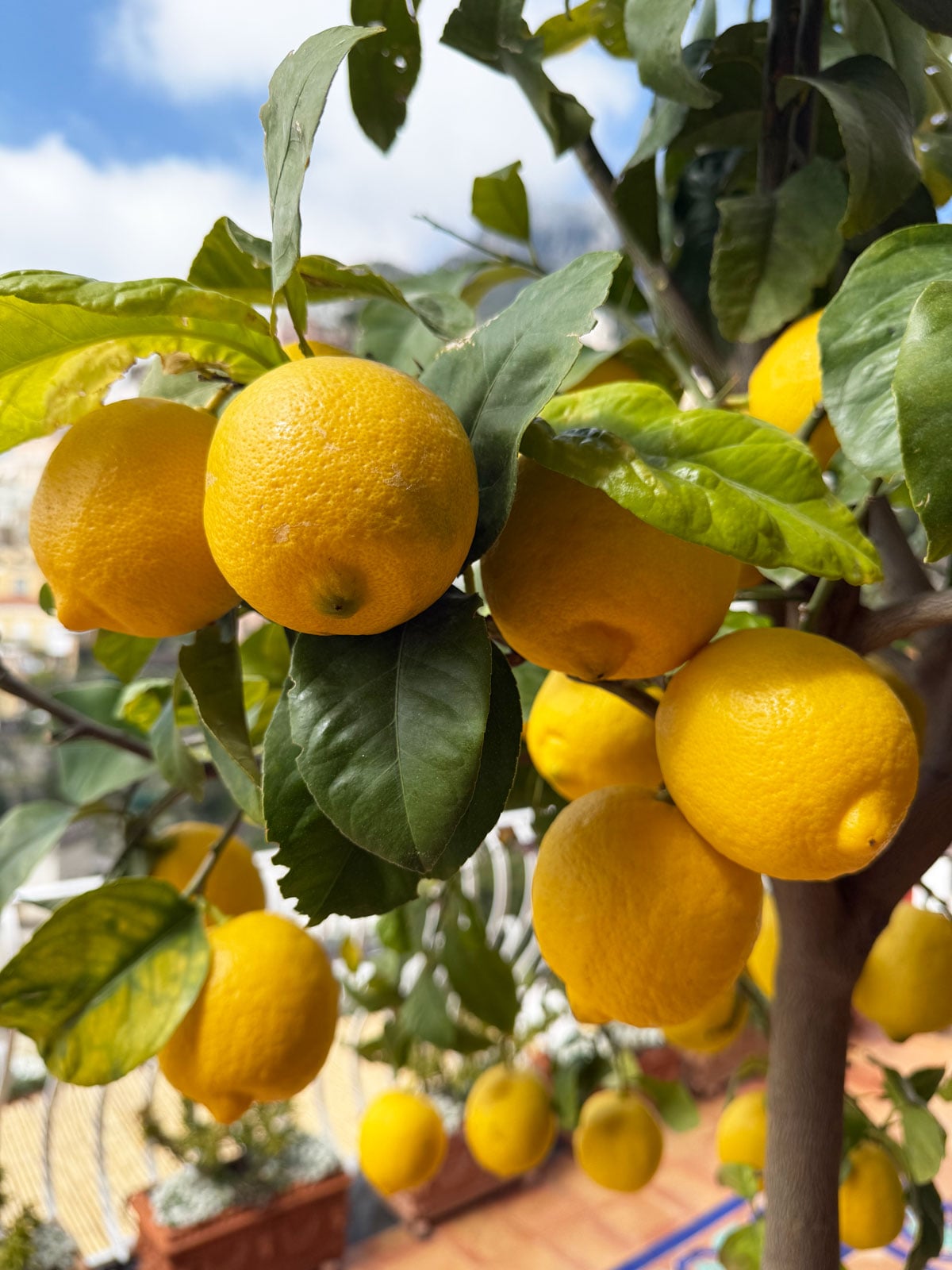
A gorgeous lemon tree that I saw growing in a large terracotta pot in Positano, Italy
WATERING
Learning how to water your potted lemon plant is important. Allow the top 2-3 inches of soil to dry out completely before watering thoroughly and allowing ALL excess water to drain away. Citrus trees are prone to root rot, so allowing the top layer of soil to dry out is important.
Take special care to empty any water out from saucers below the plant if you're using them. Letting your plant sit in water for extended periods is a recipe for root rot.
At the same time, never let the soil dry out completely if you can help it.
Would you like to save this post?
Enter your email, and I will send this link straight to you!
SOIL AND POT TYPE
You can grow citrus in a variety of pot types, but I strongly prefer terracotta pots because they allow the root system to breathe, and it's especially helpful since citrus trees can be prone to root rot so this will definitely help. Terracotta is also heavier than plastic, and your plant won't be as prone to be knocked over from being top-heavy (especially when fruit production happens!)
Well-drained soil is a must. Use any well-drained potting mix, and it's always a good idea to add either perlite or pumice. I recommend 1 part of perlite or pumice to 2-3 parts of your preferred potting mix.
If you really want to get technical, the ideal soil pH is between 5.5-6.5. Lemon trees like a slightly acidic soil, and in this pH range, it will also be able to absorb nutrients better.
As far as pot size, DO NOT OVERPOT. If your lemon is root bound, only go up ONE pot size. For example, if it's in a 6 inch diameter pot, only go up to an 8 inch diameter pot. You will have a healthier root system this way, and a happier plant.
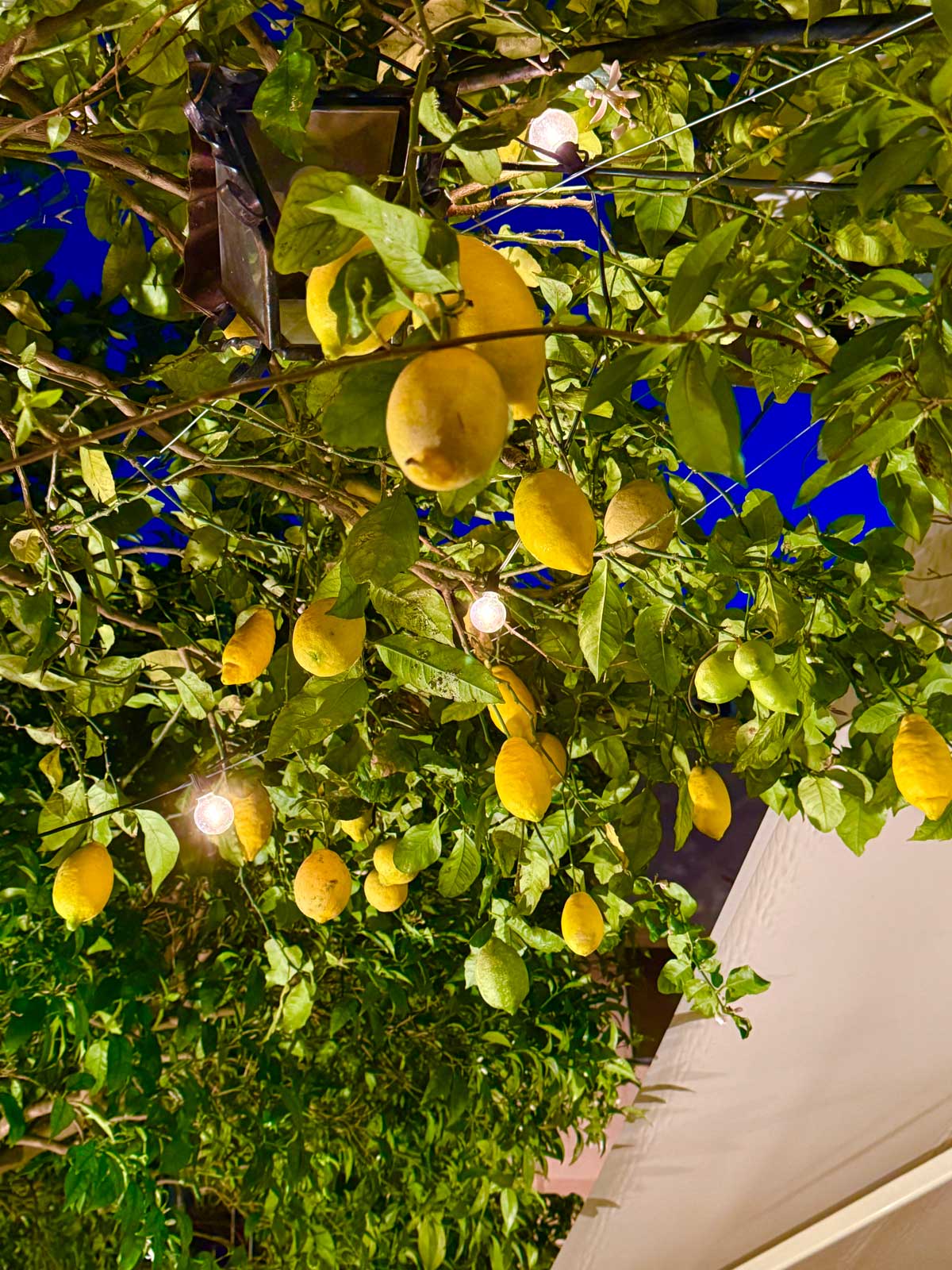
In warm climates, such as in Italy where I spotted this lemon tree, they can be trained over a pergola, to spectacular effect.
FERTILIZATION
Fertilization is important for a healthy plant and for good flower and fruit production. And since you'll be eating the lemons, I personally prefer to go the organic route when it comes to fertilizing. I prefer Citrus-tone from Espoma (link to Amazon).
Simply use it per package directions. You simply mix the dry fertilizer into the soil and water it in. An application in late winter, again in the spring after flowering and then one more in late summer or early fall. Do not apply more fertilizer after late summer/early fall.
TEMPERATURE & SUMMERING OUTDOORS
As far as lemons go, Meyer lemons can tolerate even brief stints below slightly below freezing, but generally, 45-60°F minimum temperatures at night is a good range.
If you can move your lemon tree outside in the summer, it will be a huge benefit to the plant. When you first place it outdoors though, place it in full shade for a week or so. Then gradually add some morning sun (1-2 hours a day) for a few days, and increase sun from there until it is sitting in full sun.
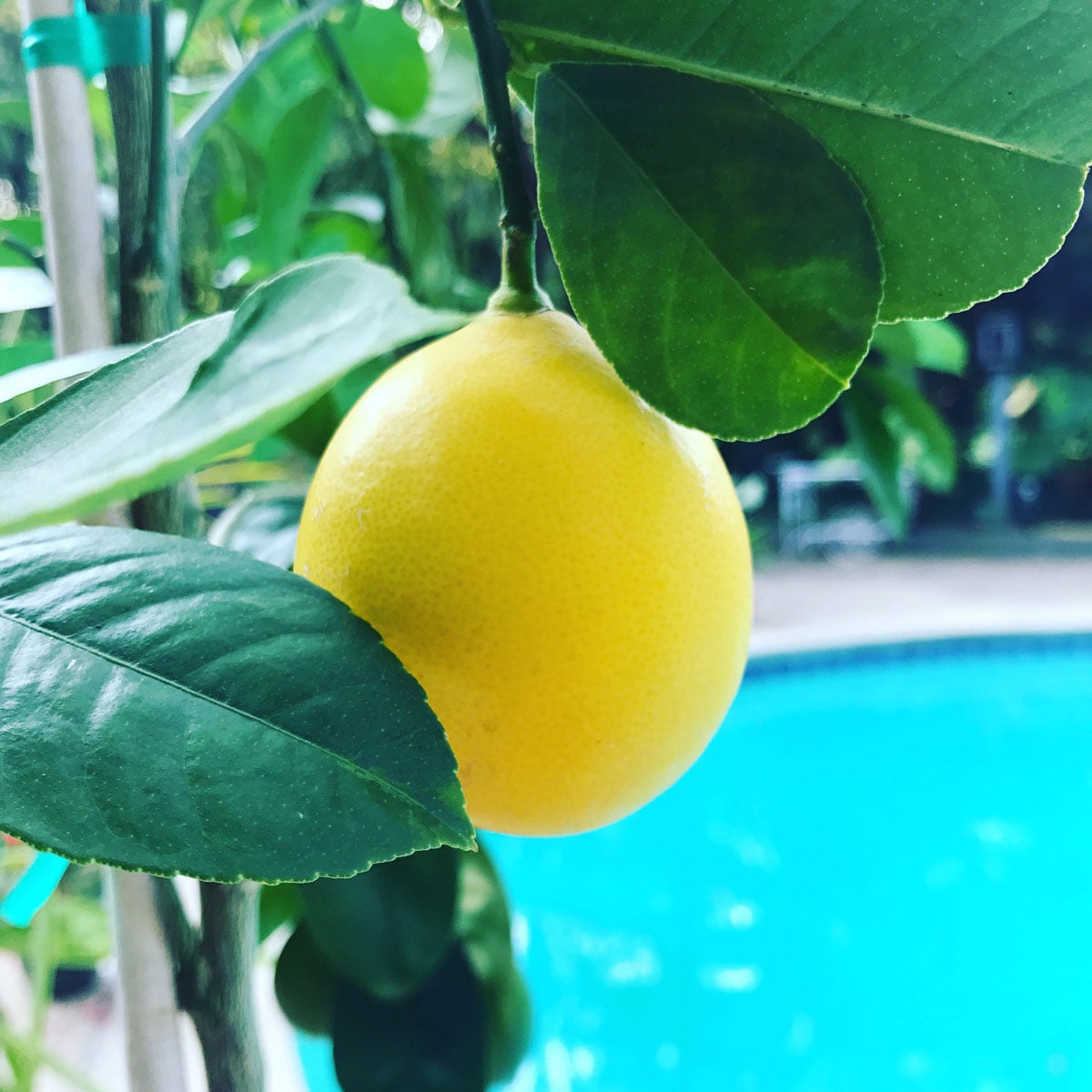
My lemon tree that I moved outdoors for the summer, right next to the pool.
If you move your lemon tree from indoors and place it immediately into full sun outdoors, it will quickly experience sunburn. And once the leaves have burned, there is nothing you can do but wait for new leaves to grow. The damage can not be undone.
A summer outdoors will be the best thing that you can do for your plant in terms of growth, health and fruit production. I strongly recommend it.
HAND POLLINATION
Meyer lemons can bloom multiple times throughout the year, but the heaviest flush of flowering will occur in the springtime. If you've never smelled any citrus flowers, you are in for a HUGE treat. They smell absolutely amazing.
If your plant is indoors while it is flowering, it can help to hand pollinate the flowers in order to maximize fruit production. Simply take a small, dry paintbrush, or even a cotton swab and gently transfer pollen from flower to flower.
Have you grown lemon trees before? It is one of the most satisfying things to be able to pick your own fruit from your very own lemon tree.