The list of houseplant pests can be tremendous. Spider mites, thrips, mealybugs, fungus gnats, aphids, scale. It is a long and disgusting list! This post will focus on the tiny, yet highly annoying and destructive spider mite.
There are many different methods that you can use to deal with spider mites. I will give you some home remedies that you can try, as well as recommend some products out in the market that you can try if you don't want to make your own concoction.
Spider mite damage can be pretty extreme and if you don't detect it early and it can cause a giant headache.
Here is some important information to know about spider mites.
Table of Contents
Table of Contents
Where do Spider Mites Come From?
I have gotten this question so many times about pests in general. Where do they come from? The fact of the matter is that there are bugs everywhere and you simply can not stop them.
You can create conditions that will make it favorable for certain types of pests to attack your plants, but where do they come from?
Let me put it in perspective. There are an estimated 10 quintillion (that's 10 with 18 zeros after it) insects in the world. That's a LOT of damn bugs. Spider mites technically actually aren't even insects, but they are closely related to spiders.
We can not stop them.
They are everywhere.
What we CAN do though is 3 things:
Create an environment that is unfavorable for spider mites
Be observant
Treat spider mites early on before the damage is too great
Keep reading to delve in a little deeper.
How Can You Tell If You Have Spider Mites?
There are a few telltale signs that you have spider mites.
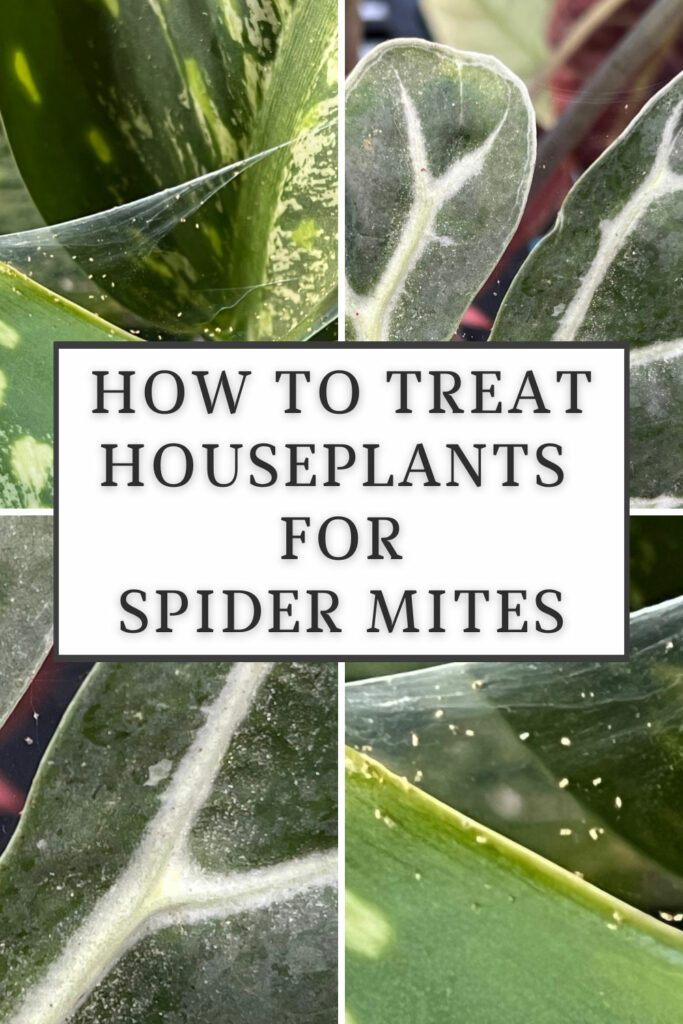
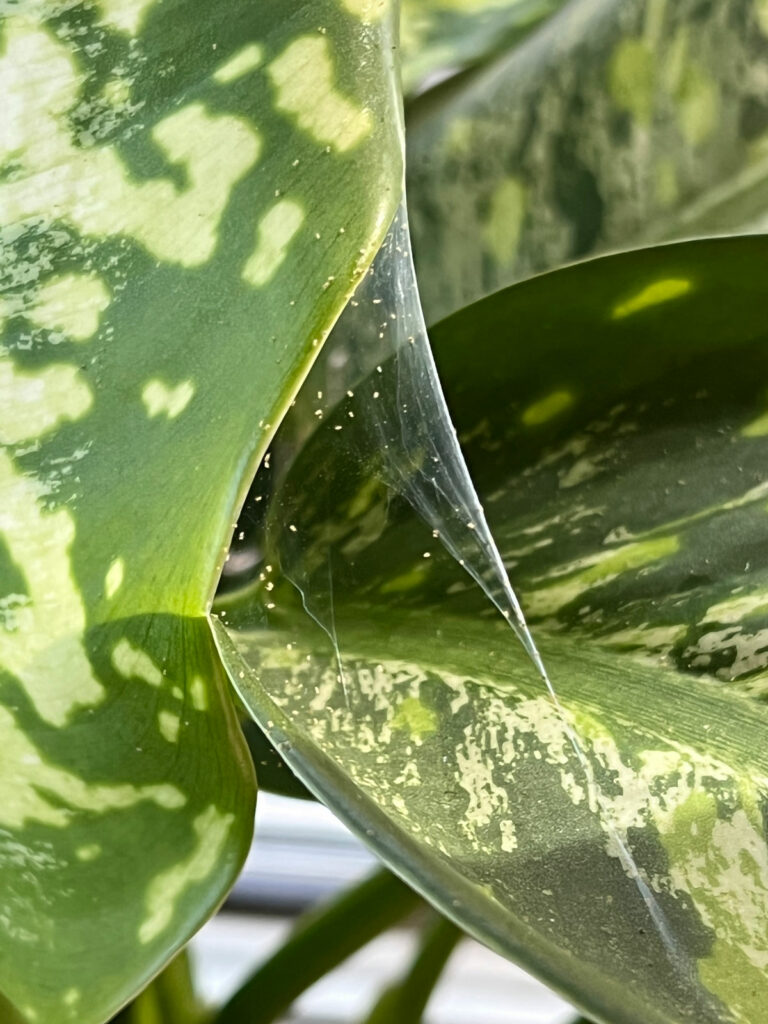
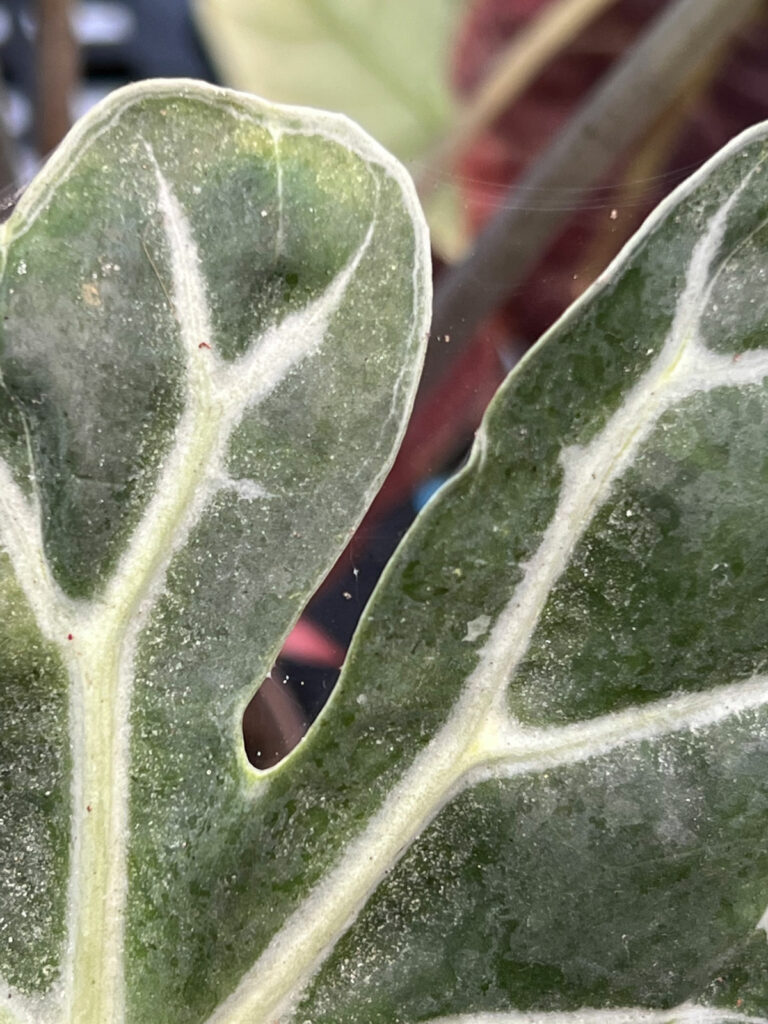
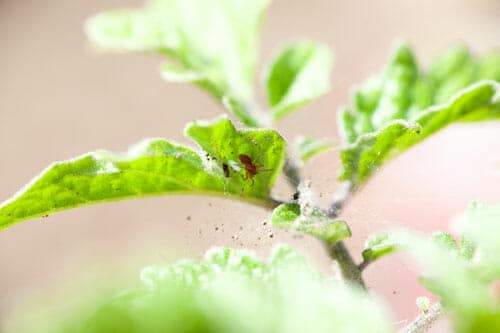
Seeing a fine webbing in the leaves and stems will probably be the first thing that you notice. If you look closely, you can actually see the spider mites, although they are very, very small.
They will appear as little specs and they come in different colors (lucky us).
Spider mites and webbing on my Dieffenbachia
One trick that you can use to see if you have spider mites is to hold a white piece of paper under the leaves of your plant that you are inspecting. If you gently shake the plant, you may notice little, dark specs falling on the paper.
These are spider mites, although their color can vary from yellowish to reddish brown.
Once spider mite infestation gets worse, you will notice a speckled or mottled appearance of the leaves. There will be whiteish or yellow discoloration on the leaves.
This is because they suck the chlorophyll out of the leaves. Chlorophyll is the pigment that gives plants their green color.
As a result, once the spider mites suck out the chlorophyll, you are left with unsightly white and yellow discoloration, and eventually very damaged brown leaves.
Dealing With Spider Mites on Houseplants
How to Prevent Spider Mites
My top recommendations on preventing spider mites are:
Quarantine any new plants that you bring home for a period of a couple week. Closely monitor your plant and look for signs of spider mites.
Give your plants regular showers. Giving your plants a gentle shower will not only keep dust off your plants, but it will help knock off any pests.
Spider mites thrive in an environment that is warm, dry and low in humidity. So naturally, you can help discourage spider mites by having an environment that is the exact opposite.
You may not be able to control the temperature much, but spider mites HATE moisture. So keeping your plant well hydrated and increasing the humidity of your space will go a long way in preventing spider mites from damaging your plants.
When I do have spider mites, I tend to notice them much more in the wintertime. Forced air heat in our home produces an environment that is very low in humidity. These conditions make it more favorable for spider mites.
Can You Drown Spider Mites?
It depends on what you mean by drowning. Applying a stream of water from a hose or mister will help knock the population down.
This is a good tactic to use before making applications of insecticidal soap, horticultural oil, or any other insecticide.
However, just blasting spider mites off with water on its own will not get rid of your problem. But it is an important first step in helping to control the mite population
Some people even go as far as literally placing the foliage of their plant underwater. This is tedious and only really practical for small plants.
Would you like to save this post?
Enter your email, and I will send this link straight to you!
The simplest thing you can do is give your houseplant a shower! Take it to the sink, the shower, or wherever you can give your plant a good rinse. Wet the entire plant, including the undersides of the leaves.
After you do this, what I like to do is to take a damp paper towel and wipe every surface of the leaves. This works particularly well if you have larger leaves that you can handle.
It may not work if you have finer or smaller leaves. Be sure to wipe the undersides of the leaves as well! You will notice that you will see a yellowish/brownish color on the paper towel.
I have a cast iron plant that gets spider mites in the winter, but I am able to keep it under control and will regularly wipe the leaves down.
Spider mites hate moisture, so giving your houseplant a regular shower will help keep the population down dramatically and will help you get closer to eradicating this pest.
The key is CONSISTENCY, so if you notice spider mites on your houseplant, give it a regular shower at least once a week.
Spider Mites - Other Remedies
Whether I have plants indoors or outdoors, I like to use the safest, most natural remedies before resorting to anything more harsh for pest control. We have a responsibility for ourselves, our family, our pets and our environment to use the least harsh methods for pest management!
Insecticidal Soap is my product of choice for general pest control and it is easily found on Amazon or most nurseries, garden centers, and hardware stores.
It uses naturally derived ingredients for pest control. You need to make sure that you spray all surfaces of the plant, including the undersides of the leaves. The insecticidal soap must contact the spider mites otherwise it won't work.
Not only does it help with spider mites, but it will also help you eliminate aphids, mealy bugs, and a host of other pests.
Another remedy for treating spider mites and other pests is Neem Oil and it is also available on Amazon. I personally don't use it because it has an odor which I don't like indoors, but many people report success.
Neem oil is naturally derived and is a good control for aphids, white flies, and spider mites. It is also reportedly a good treatment for fungal diseases such as powdery mildew and can be used indoors and outdoors.
Lastly, you can also use a horticultural oil as well. This is a great option if you don't want to use Neem Oil or insecticidal soap.
What Humidity Kills Spider Mites?
I've read many sources that state quite a variety of answers, but I've found it all to be false.
Some sources say to keep humidity over 50% while others say over 70%. I know this is not true because I have seen spider mites in my greenhouse, which often is in the 70-95% relative humidity range.
You can not kill spider mites simply by increasing humidity, but it can help slow their progress.
What Plants Do Spider Mites Hate?
Typically, spider mites will tend to avoid plants like succulents and cacti, and thicker-leaved Hoyas.
Spider mites usually leave succulents alone.
It is more difficult for the spider mites to pierce the leaves and feed on the sap of these types of plants.
What Plants Do Spider Mites Like?
There are a host of houseplants that can be very prone to spider mites. I've personally witnessed these time and time again.
In general, spider mites like to feast on plants that have thinner, broad leaves, but it's not exclusively limited to this. Here are the usual suspects:
Hawaiian Ti plants are also notoriously prone to mites indoors
English Ivy seems eternally cursed indoors with spider mites
Gardenias
Jasmines
There are of course more, but these are the ones that really stick out to me from what I've seen.
Can You Kill Spider Mites With Heat?
You can, but the temperature levels that will kill the spider mites will also kill or severely stress your plants as well.
One spider mite heat study study shows that spider mites at all stages of the life cycle will be killed at temperatures of 57°C (135°F) for 6 hours. This is simply not practical.
Can Spider Mites Be White?
The mites themselves are generally reddish brown or yellowish green.
You will however see white spots on the foliage of your plants. This is caused by the mites puncturing the leaves to feed on the plant.
Although spider mites are very annoying, you can successfully and safely treat them if you spot them before they cause a large amount of damage to your houseplants.
Want to know how to deal with other pests? Check out my blog post on how to deal with:
I have been using the insecticidal soap and spraying down the plants in the shower. This seems to be working especially for my Madagascar Jasmin which was in bad shape.
This guide was super helpful, and to the point. I've been showering my plants weekly -like clockwork, and it has definitely helped to eradicate these little beasts. Thanks again!
The items that are on the market are just useless. They adapt to quickly, you miss spraying a section of the leaf etc. You will constantly be chasing them and switching chemicals. The only way to remove spider mites is to make them the food chain. There are many predators (Phytoseilus persimilis, Amblyseius Swirskii etc.) Just make sure you match your environments temp/humidity to the correct item. Buy a lot of them, sprinkle them everywhere, when they eat all the eggs / adults etc they die off and they don't create webbing. No Eggs / Adults no reproduction. Follow it up 2-3x or every couple weeks until you see nothing left. Maybe a purchase over time for any new ones being tracked in thru your dirt etc. You will be cleaned up before you know it. Also no chemicals to worry about in the process.
I have mealy bugs on some of my plants. I spray them with alcohol and water. It works for a while but they still come back. Is this normal or should I be using another method? Thank you
Hi Carmen, mealy bugs can be very frustrating for sure! You have to make sure that you spray everything down very thoroughly, and then repeat that weekly, even after you don't see them anymore. This is so you can can catch the mealy bugs that you can't quite see yet. And even after that, inspect your plants very closely. With persistence, you can manage them.
Hi, I just wanted to share my experience. I recently found spider mites on my Ficus Audreys (I have a small plant shop so I have about a dozen smallish plants). Because my shop is small, I generally throw out any infested plants, but they weren't too bad and I didn't even have webs yet. Anyway what I did: I took all of the plants to the sink, soaped up my hands and washed every leaf with soapy water top and bottom, the next day, I sprayed them all down with insecticidal soap and repeated the whole process about a week later... so far so good. Obviously this isn't really doable for finer foliage plants like parlor palms or ivies but might be helpful for calathea or other larger leaf mite magnets.
Wondering what can/ should be done after the infestation is over. I inherited a plant that shows the spotted appearance of spider mites on many leaves ... it’s a large philo Xanadu. I see no evidence of current occupation!
Do I, as some suggest, prune all affected leaves?
I’m guessing the visual damage is permanent...?
Soooo frustrating, it was a gift of a wishlist plant!
Hi Rachel, yes you are correct in that those affected leaves will not look like they used to prior to the infestation. If it really bothers you, you can trim those affected leaves off. There is no harm in doing that, especially if your plant still has some healthy, unaffected leaves! The plant will grow back.
Do you have a recommendation for string of turtles and S.O.heart plants? I know they do not like to stay wet and I can't quite tell if the mites are under SOT because the leaves are so close together. Thank you for your time and advice.
Hi Alexis! You'd have to inspect closely and look on the undersides of the leaves to see if you see any spider mites. They hide in all sorts of areas. You can still rinse off these plants as long as they can dry out quickly. Don't be afraid to do so. You can also use a good insecticidal soap to treat the spider mites. That should take care of them, but be sure to use as directed and get complete coverage when you spray. Hope this helps!
Thanks for the information. I tried a new way to water my plants this week. I put them in 2 inches of room tempature of distilled water for 20 minutes.
I could not believe the results. Some of the plants drank it all up and looked a lot better.
Has anyone tried this? Could I do it with my orchids?
You're welcome Megan! For my orchids, I have most of them in a plastic pot with holes, but have them slipped into a decorative pot with no holes. I fill it with water to the top and let them soak for at least 30 minutes. Then I take the plant out, drain the water, and place back by the window. It works very well to thoroughly moisten the bark mix.
I need your help in a big, bad way. I have spider mites (I've sent you so darn many questions and comments and pretty sure I've asked you about those evil mafnards before, it's a yearly battle that seems to happen at the EXACT time I turn the switch from AC to heat, which is Sept here in NW WI).
So! I have many, I'm guessing around 200-230 houseplants (not counting babies being propagated) and I grow everything but Orchids (I have an AWESOME track record and don't want to wreck that by taking on a plant that seems a tad "difficult" and that I might not have success with. I pushed my luck with every type of Croton I could get my hands on, one at a time, and I even impress MYSELF with how happy and healthy they are ? ~ that's where I drew the line ?) ~ But I digress, as is my usual.....I use various home made, store bought, organic and non-organic methods and I have a routine that seems to work. However, for the very first time, my African Violets now have them ?? ~ despite googling the heck out of the topic I can't find good, sensible (I'm not about to start smoking cigars and blowing the smoke on my plants) and reliable advice on how to treat AVs specifically. To be honest, I've come to rely on your expertise and advice when it comes to my precious green babies. I got my first AV as a thoughtful gift, followed by 3 others, when my daughter passed away 3 years ago, so I can't imagine tossing them out, like I've easily done with other plants that I didn't have any sentimental attachment to.
Should I just treat them as I do ny Dieffenbachias, Peperomias, etc? Would swishing them upside down in soapy Dr. Bonners or Murphys Oil Soap water do the trick? I know it's an old wives tale about not getting their leaves wet, just as long as you keep them out of the sun until they are dry. I'm sure I'm not the only person who literally LOVES AND CARES deeply about their plants. (I don't know any others personally, but I'm positive they're out there!) Thanks again, for all of your help.
Your Short-Story-Long follower,
Tawny Leste-Carlson
I'm working on getting into the habit of applying a homemade insecticidal soap once a week as a preventative measure. I've also noticed a few lady bugs and a baby praying mantis hanging around my outdoor plants which is helpful!
#2: Be Observant! This is so important! Inspecting all your plants at least weekly (hopefully more frequently) can save a lot of time, money and heartache. Great advice!


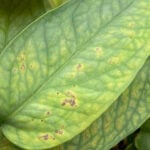
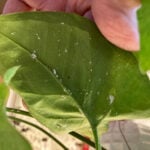
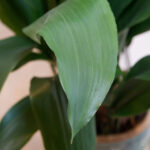
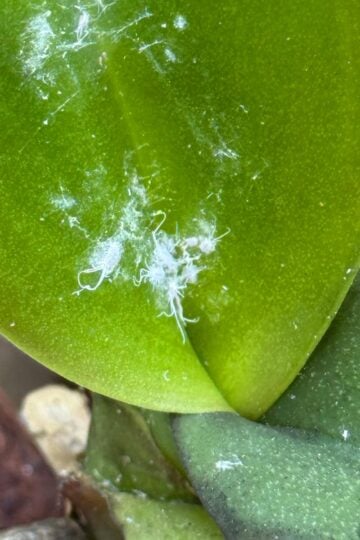
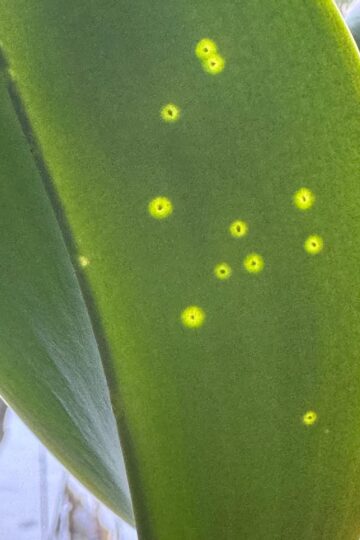
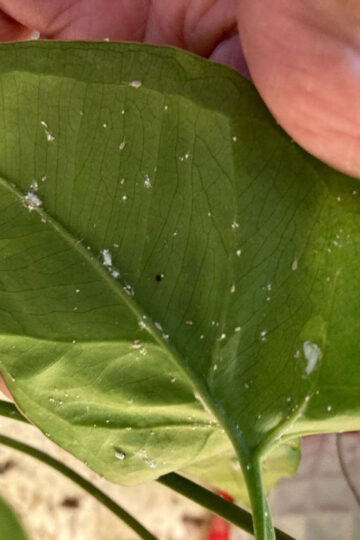
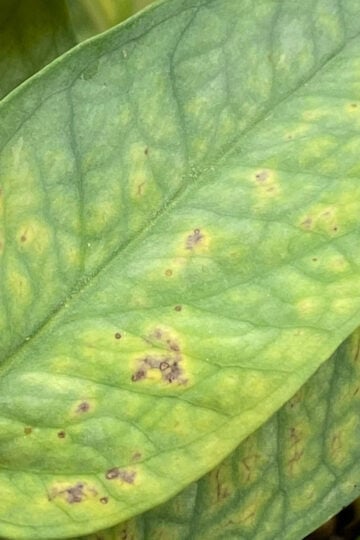
I have been using the insecticidal soap and spraying down the plants in the shower. This seems to be working especially for my Madagascar Jasmin which was in bad shape.
Thanks for all your excellent advice.
You're very welcome Nisa! 🙂
This guide was super helpful, and to the point. I've been showering my plants weekly -like clockwork, and it has definitely helped to eradicate these little beasts. Thanks again!
You're very welcome! Glad it helped!
The items that are on the market are just useless. They adapt to quickly, you miss spraying a section of the leaf etc. You will constantly be chasing them and switching chemicals. The only way to remove spider mites is to make them the food chain. There are many predators (Phytoseilus persimilis, Amblyseius Swirskii etc.) Just make sure you match your environments temp/humidity to the correct item. Buy a lot of them, sprinkle them everywhere, when they eat all the eggs / adults etc they die off and they don't create webbing. No Eggs / Adults no reproduction. Follow it up 2-3x or every couple weeks until you see nothing left. Maybe a purchase over time for any new ones being tracked in thru your dirt etc. You will be cleaned up before you know it. Also no chemicals to worry about in the process.
Thanks for the info Craig. I'm actually currently experimenting with beneficial insects in my greenhouse.
I have mealy bugs on some of my plants. I spray them with alcohol and water. It works for a while but they still come back. Is this normal or should I be using another method? Thank you
Hi Carmen, mealy bugs can be very frustrating for sure! You have to make sure that you spray everything down very thoroughly, and then repeat that weekly, even after you don't see them anymore. This is so you can can catch the mealy bugs that you can't quite see yet. And even after that, inspect your plants very closely. With persistence, you can manage them.
Hi, I just wanted to share my experience. I recently found spider mites on my Ficus Audreys (I have a small plant shop so I have about a dozen smallish plants). Because my shop is small, I generally throw out any infested plants, but they weren't too bad and I didn't even have webs yet. Anyway what I did: I took all of the plants to the sink, soaped up my hands and washed every leaf with soapy water top and bottom, the next day, I sprayed them all down with insecticidal soap and repeated the whole process about a week later... so far so good. Obviously this isn't really doable for finer foliage plants like parlor palms or ivies but might be helpful for calathea or other larger leaf mite magnets.
Thanks for sharing! That sounds like a great approach! 🙂
Wondering what can/ should be done after the infestation is over. I inherited a plant that shows the spotted appearance of spider mites on many leaves ... it’s a large philo Xanadu. I see no evidence of current occupation!
Do I, as some suggest, prune all affected leaves?
I’m guessing the visual damage is permanent...?
Soooo frustrating, it was a gift of a wishlist plant!
Hi Rachel, yes you are correct in that those affected leaves will not look like they used to prior to the infestation. If it really bothers you, you can trim those affected leaves off. There is no harm in doing that, especially if your plant still has some healthy, unaffected leaves! The plant will grow back.
Do you have a recommendation for string of turtles and S.O.heart plants? I know they do not like to stay wet and I can't quite tell if the mites are under SOT because the leaves are so close together. Thank you for your time and advice.
Hi Alexis! You'd have to inspect closely and look on the undersides of the leaves to see if you see any spider mites. They hide in all sorts of areas. You can still rinse off these plants as long as they can dry out quickly. Don't be afraid to do so. You can also use a good insecticidal soap to treat the spider mites. That should take care of them, but be sure to use as directed and get complete coverage when you spray. Hope this helps!
Thoughts on mosquito bits to control reoccurrence of spider mite infestation?
Mosquito bits won't do anything for spider mites (though they're great to treat fungus gnats).
Thanks for the information. I tried a new way to water my plants this week. I put them in 2 inches of room tempature of distilled water for 20 minutes.
I could not believe the results. Some of the plants drank it all up and looked a lot better.
Has anyone tried this? Could I do it with my orchids?
You're welcome Megan! For my orchids, I have most of them in a plastic pot with holes, but have them slipped into a decorative pot with no holes. I fill it with water to the top and let them soak for at least 30 minutes. Then I take the plant out, drain the water, and place back by the window. It works very well to thoroughly moisten the bark mix.
I need your help in a big, bad way. I have spider mites (I've sent you so darn many questions and comments and pretty sure I've asked you about those evil mafnards before, it's a yearly battle that seems to happen at the EXACT time I turn the switch from AC to heat, which is Sept here in NW WI).
So! I have many, I'm guessing around 200-230 houseplants (not counting babies being propagated) and I grow everything but Orchids (I have an AWESOME track record and don't want to wreck that by taking on a plant that seems a tad "difficult" and that I might not have success with. I pushed my luck with every type of Croton I could get my hands on, one at a time, and I even impress MYSELF with how happy and healthy they are ? ~ that's where I drew the line ?) ~ But I digress, as is my usual.....I use various home made, store bought, organic and non-organic methods and I have a routine that seems to work. However, for the very first time, my African Violets now have them ?? ~ despite googling the heck out of the topic I can't find good, sensible (I'm not about to start smoking cigars and blowing the smoke on my plants) and reliable advice on how to treat AVs specifically. To be honest, I've come to rely on your expertise and advice when it comes to my precious green babies. I got my first AV as a thoughtful gift, followed by 3 others, when my daughter passed away 3 years ago, so I can't imagine tossing them out, like I've easily done with other plants that I didn't have any sentimental attachment to.
Should I just treat them as I do ny Dieffenbachias, Peperomias, etc? Would swishing them upside down in soapy Dr. Bonners or Murphys Oil Soap water do the trick? I know it's an old wives tale about not getting their leaves wet, just as long as you keep them out of the sun until they are dry. I'm sure I'm not the only person who literally LOVES AND CARES deeply about their plants. (I don't know any others personally, but I'm positive they're out there!) Thanks again, for all of your help.
Your Short-Story-Long follower,
Tawny Leste-Carlson
I'm working on getting into the habit of applying a homemade insecticidal soap once a week as a preventative measure. I've also noticed a few lady bugs and a baby praying mantis hanging around my outdoor plants which is helpful!
That's a great idea, and a good sign if you are seeing beneficial insects!
#2: Be Observant! This is so important! Inspecting all your plants at least weekly (hopefully more frequently) can save a lot of time, money and heartache. Great advice!
Thanks. It is so much better if you can catch spider mites early on before it's too late!