Do you have mealybugs on your Phalaenopsis orchids and can't seem to get rid of them no matter what you do? In this post, I'll describe exactly what to do in order to eliminate those dready mealybugs off your orchids.
Table of Contents
What are Mealybugs
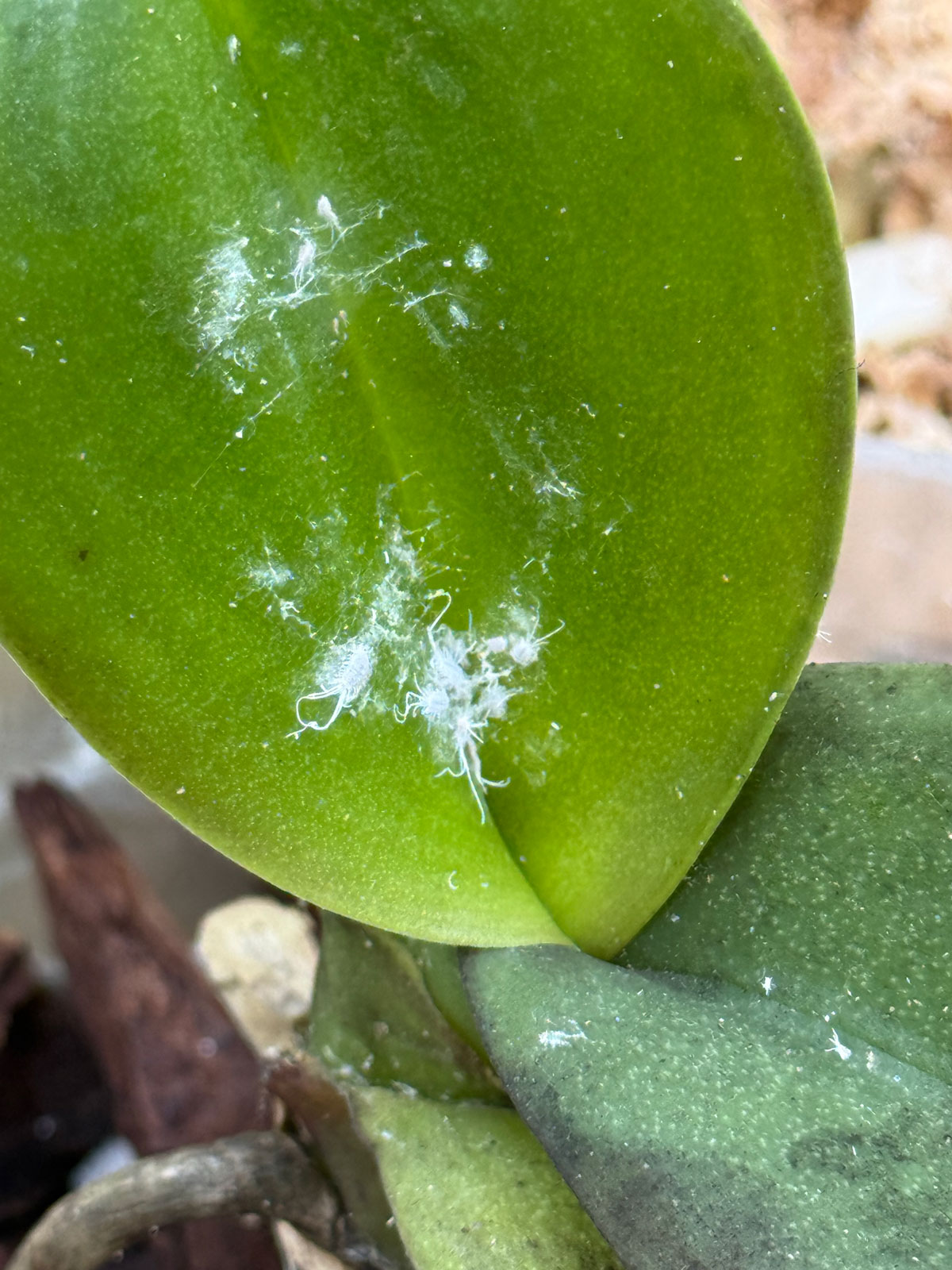
Mealybugs are white and cottony in appearance and you can find then literally anywhere on a Phalaenopsis orchid. On the tops of the leaves, on the undersides of the leaves, on the flower spike and flowers and even in the potting medium!
When inspecting your Phalaenopsis orchids, look everywhere. The first step after you spot mealybugs is to isolate those infested plants and move them away from your other plants because they can spread quickly.
Mealybugs damage your plants by sucking sap out of your plant and they will also excrete a sticky honeydew. The best line of defense against mealybugs is to catch your infestation early on before it gets really bad. Here is what mealybugs look like.
Treating Mealybugs on Orchids
Many people spray their orchids once and then expect the problem to go away. Unfortunately, that's not sufficient. Make sure you read the entire article, because you must take all these steps for maximum effectiveness.
I like to employ 2 treatments at the same time. The cheapest and quickest way to kill mealybugs is with 70% isopropyl alcohol, and I also recommend adding a systemic insecticide at the same time. Here is the process I recommend.
1. Spray Down Your Phalaenopsis Orchid
If you only see one or two mealybugs, you can dip a Q-tip into isopropyl alcohol (70% isopropyl alcohol will be fine) and touch the mealybug with the Q-tip and it will die immediately. You can easily find 70% isopropyl alcohol at a drug store or grocery store.
If there are multiple mealybugs, especially if they are hiding in leaf crevices, place 70% isopropyl alcohol in a spray bottle and spray down the entire plant, including the undersides of the leaves.
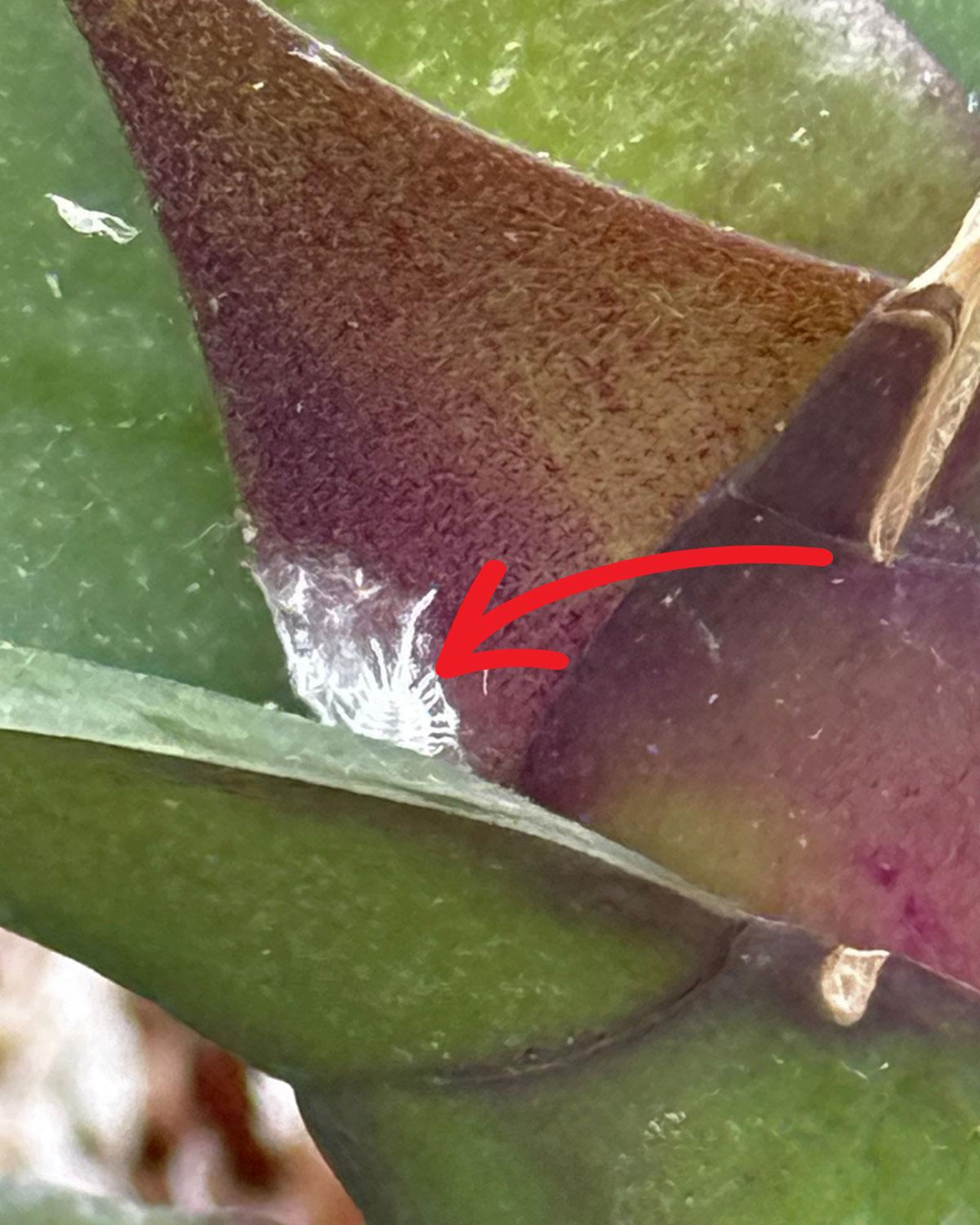
Here is a single mealybug before spraying.
Would you like to save this post?
Enter your email, and I will send this link straight to you!
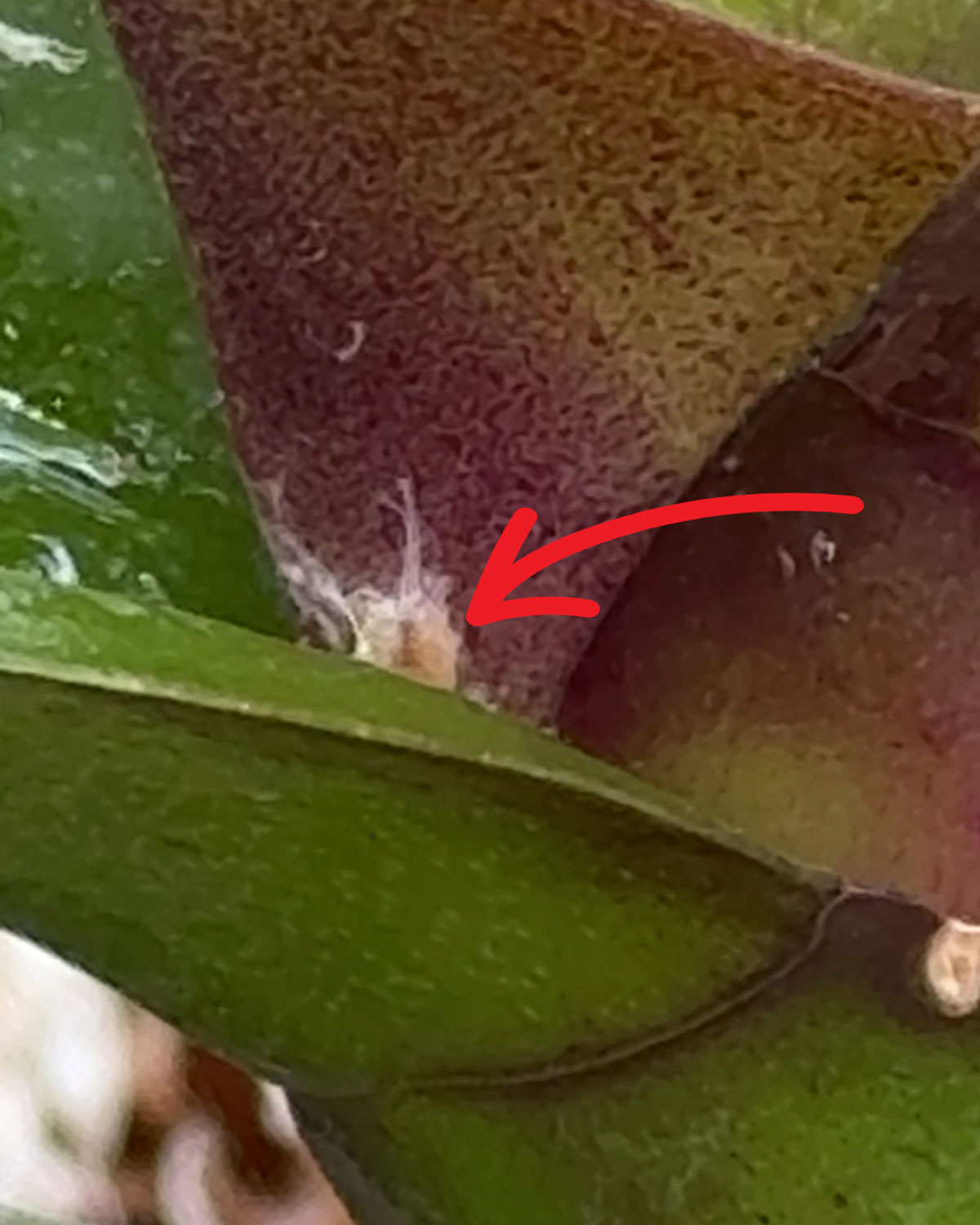
And after spraying, it immediately turned brown and died.
Check your plants at least weekly, and if you see anymore, keep applying the alcohol. You may find yourself spraying weekly for several weeks or longer, depending on the severity of the infestation and how well you are spraying or applying the alcohol.
And just because you don't see anymore mealybugs, it doesn't mean that they're not there. There could be juvenile mealybugs that aren't visible yet to our eyes so it's important to take all of these steps.
2. Apply a Systemic Insecticide (optional but helpful)
In addition to the spraying, I recommend adding a systemic insecticide simultaneously. A systemic insecticide works by absorbing the insecticide from the root system, and then the plant distributes it to the leaves. It essentially protects the plant from the inside out, so it will offer an additional layer of protection. When used in combination with spraying, it is a very effective remedy.
Mealybugs can also infest the potting mix of your orchid, so the systemic will take care of that, and it will prevent you from having to repot your orchid into a fresh growing medium! This is a huge benefit.
Always follow the manufacturer recommendations on safe usage of any insecticide.
There are many systemics on the market, and they are not always available depending on where you live. You can refer to this article on orchid pests and diseases as a further reference.
You may only need one application, especially if you catch the mealybugs early, but you can reapply again after a couple of months if you still see mealybugs at that time. (But during the first two months, you'll want to keep using the isopropyl alcohol regularly every time you see any new mealybugs appear.)
3. Monitor Your Orchids
Lastly, monitor your orchids regularly. Check them at least weekly. You may need to continue using the isopropyl alcohol weekly over the period of a couple months. After the initial application of the liquid systemic insecticide, if you still see mealybugs after two months or so, do another application.
The key with pests is to be persistent and systematic. I wish it were as easy as spraying once, but unfortunately it's not the case.
If you want to learn all about how to get your orchid to rebloom reliably and have healthy, thriving moth orchid plants, don't miss my signature, online orchid care course, Become an Orchid Master. It also includes bonuses with support from me, personally, to guide you in your orchid journey!
My phalaenopsis orchid has been blooming for over 14 months and has consistently had 4 blooms. The flower spike just gets longer and longer. But there are lots of roots or spikes growing out of the bottom. I even had one grow out of the pot and into a nearby peat moss pot. I'm not sure if it rooted. I need to repot my 2 orchids with new medium because the current medium stinks! I bought some orchid potting soil, pine bark mulch and sphagnum moss. I missed your articles on how to repot and trim up the air roots and could you please send me the link. I found that one of my orchids that refuses to send out a spike has sticky undersides on the leaves. I wiped them down with soap and water, but I see now that I have to use alcohol. I think I have one phalaenopsis and one moth orchid.
Hi Cindy! Phalaenopsis and moth orchid are the exact same plant. Phalaenopsis is the genus, and moth orchid is just a common name for the plant. If your orchid medium stinks, it most likely means that your mix has broken down and it should be repotted 100%. Here are some resources for you for repotting. I have both blog posts and YouTube videos.
Here is my YouTube video where I'm using pure sphagnum to repot: https://youtu.be/SCZwAJqdPF8
Here is an older YouTube video that I did where I used a bark mix: https://youtu.be/lZeyz20e6lg
Here is a video I made where I talk about my favorite bark mix for orchids (along with a repotting demo): https://youtu.be/Px0J-cmTaOE
And lastly, here is my blog post, but honestly I would watch the videos. I go through more things in detail: https://www.ohiotropics.com/2019/05/08/repotting-you-moth-orchid/
Raffaele...I once had about a dozen orchid plants I had collected and accumulated, and I was fairly successful in learning about orchids and actually had them rebloom for me over a period of a couple years. Then, I made a mistake.....I bought a new orchid and without knowing, placed it amongst my collection........I should have isolated it for awhile because I think it was that plant that introduced mealy bugs to my collection. At the time, I did not realize what was happening--did not recognize mealy bugs and before I knew it, all my orchids were infested. I was horrified. I stayed up half the night cleaning the leaves with alcohol. I did not know to spray or to also use an insecticide. The mealy bugs kept appearing and after several days, I threw my entire collection on my compost pile and sadly, ended my orchid experience. I wish I knew then what to do to save them. Mostly, to isolate any new plant for awhile.
I now have one new little plant that has a beautiful lavender, edged with white flower . It bloomed for months and I so want to keep it alive and healthy, so will try again. I'm so glad I discovered your channel and am learning so much. Thank you for all your encouragement and teaching.
How did you ever learn so much about plants, especially orchids? I'd love to know your background and experience. Thanks so much!
Hi Linda! I'm so sorry to hear about your mealybug infestation. It's definitely frustrating and we've all been there! I'm glad you are trying again though, and I'm happy that you are enjoying my content. The key is to use the alcohol regularly for several weeks and the addition of a systemic will also help, but most importantly, doing all of this early on before the infestation gets too bad is key. As far as my background, you can read about my background here: https://www.ohiotropics.com/about/


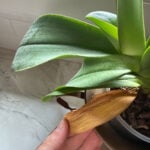
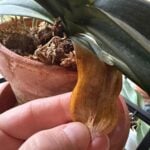

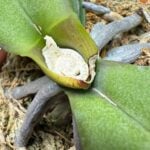
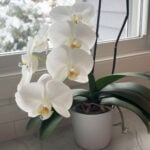

My phalaenopsis orchid has been blooming for over 14 months and has consistently had 4 blooms. The flower spike just gets longer and longer. But there are lots of roots or spikes growing out of the bottom. I even had one grow out of the pot and into a nearby peat moss pot. I'm not sure if it rooted. I need to repot my 2 orchids with new medium because the current medium stinks! I bought some orchid potting soil, pine bark mulch and sphagnum moss. I missed your articles on how to repot and trim up the air roots and could you please send me the link. I found that one of my orchids that refuses to send out a spike has sticky undersides on the leaves. I wiped them down with soap and water, but I see now that I have to use alcohol. I think I have one phalaenopsis and one moth orchid.
Hi Cindy! Phalaenopsis and moth orchid are the exact same plant. Phalaenopsis is the genus, and moth orchid is just a common name for the plant. If your orchid medium stinks, it most likely means that your mix has broken down and it should be repotted 100%. Here are some resources for you for repotting. I have both blog posts and YouTube videos.
Here is my YouTube video where I'm using pure sphagnum to repot: https://youtu.be/SCZwAJqdPF8
Here is an older YouTube video that I did where I used a bark mix: https://youtu.be/lZeyz20e6lg
Here is a video I made where I talk about my favorite bark mix for orchids (along with a repotting demo): https://youtu.be/Px0J-cmTaOE
And lastly, here is my blog post, but honestly I would watch the videos. I go through more things in detail: https://www.ohiotropics.com/2019/05/08/repotting-you-moth-orchid/
Hi, my orchids are infested with scale insects. How can i get rid of them. Please advise.
Here is my article on scale: https://www.ohiotropics.com/2020/11/23/scale-on-houseplants/
Raffaele...I once had about a dozen orchid plants I had collected and accumulated, and I was fairly successful in learning about orchids and actually had them rebloom for me over a period of a couple years. Then, I made a mistake.....I bought a new orchid and without knowing, placed it amongst my collection........I should have isolated it for awhile because I think it was that plant that introduced mealy bugs to my collection. At the time, I did not realize what was happening--did not recognize mealy bugs and before I knew it, all my orchids were infested. I was horrified. I stayed up half the night cleaning the leaves with alcohol. I did not know to spray or to also use an insecticide. The mealy bugs kept appearing and after several days, I threw my entire collection on my compost pile and sadly, ended my orchid experience. I wish I knew then what to do to save them. Mostly, to isolate any new plant for awhile.
I now have one new little plant that has a beautiful lavender, edged with white flower . It bloomed for months and I so want to keep it alive and healthy, so will try again. I'm so glad I discovered your channel and am learning so much. Thank you for all your encouragement and teaching.
How did you ever learn so much about plants, especially orchids? I'd love to know your background and experience. Thanks so much!
Linda in Texas
Hi Linda! I'm so sorry to hear about your mealybug infestation. It's definitely frustrating and we've all been there! I'm glad you are trying again though, and I'm happy that you are enjoying my content. The key is to use the alcohol regularly for several weeks and the addition of a systemic will also help, but most importantly, doing all of this early on before the infestation gets too bad is key. As far as my background, you can read about my background here: https://www.ohiotropics.com/about/