
Pushing Your Hardiness Zone: Grow Beyond Your Limits
Some of the links in this post may be affiliate links.
Have you ever felt limited by your USDA hardiness zone? Lusted after plants that supposedly will not grow in your area of the country for fear that they will not survive your winter?
The USDA plant hardiness zone map divides the United States into areas of growing zones based off of the average annual minimum winter temperatures.
Has that stopped me from growing perennial plants that are not rated in my hardiness zone? Absolutely not. I've had plants come back that are not rated for my hardiness zone. How? It started by accident, but then I discovered exactly why.
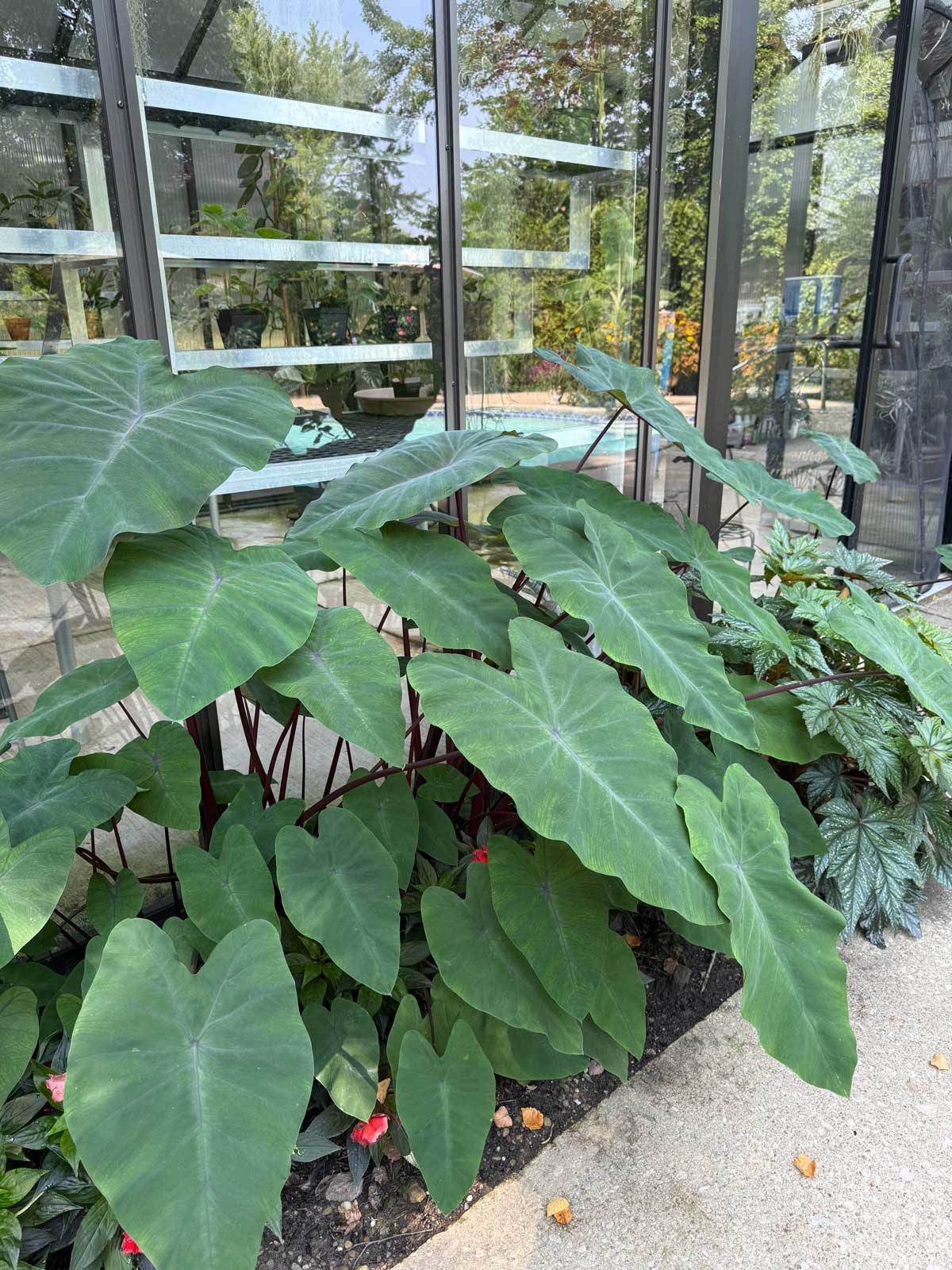
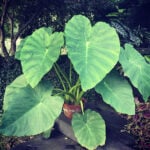
My most recent example of plants that are hardy in my area that are not supposed to be is shown in the photo above. I live in hardiness zone 6a, and the Colocasia 'Heart of the Jungle' in the photo above has been coming back every single year, despite being rated as hardy in zone 8 or above!
I first planted it in front of my greenhouse, about 3 years before taking the photo above, and I was shocked when I first discovered that it came back after the winter. I thought it was maybe a fluke, but it kept coming back each year, including after the 2025/2026 winter which was exceptionally cold and brutal where I live.
I said to myself, if it comes back after that horrible winter, it will come back forever, and I'm glad that is a permanent resident of my gardens. But the question, why did it come back even though I live two zones colder than its minimum recommended zone for growing?
Even though I planted this Colocasia in the middle of the bed (which isn't deep at all, at only 2 feet deep), the plants come back right up against the concrete base of the greenhouse. The greenhouse is heated in the winter, so right up against the concrete, it will stay warmer and clearly it has been enough to keep these plants coming back yearly.
This Colocasia forms runners once it matures, so they ONLY come back right up against the concrete. I have another example later on in this post with a different scenario, but equally as interesting.
Table of Contents
HOW THE USDA HARDINESS ZONE WORKS
The USDA hardiness zone map divides the United States into 11 main growing zones. Each zone is further divided into "a" and "b" sub-zones.
The coldest winter regions are 1a and 1b, where the average annual minimum winter temperatures are -60°F to -55°F, and -55°F to -50°F, respectively. You'd be hard-pressed to grow anything there!
And for those of you that are lucky enough to live in zone 11a and 11b, the respective average minimum winter temperatures are 40°F-45°F and 45°F-50°F. Maybe someday I will retire in zone 11b!
In my area of the country, my growing zone is 6a. The average annual minimum temperature for this zone is -5°F to -10°F.
If a plant is rated for zones above where you live, its likelihood of surviving is greatly diminished. Literature tells me that I will not be able to have plants rated for zones 6b and above survive my winters.
If you don't know your hardiness zone, you can easily find it by clicking on this Farmer's Almanac site and simply entering your zip code.
HOW TO BEAT YOUR HARDINESS ZONE
You CAN beat your hardiness zone! I already gave you one example, but I actually came about this by accident once when we were still living in our old house. I love "elephant ears", and decided to plant some Colocasia esculenta several years ago.
You may know these plants as taro root, a food staple for many parts of the world. In Ohio, I only grow these for their gigantic and showy foliage. I probably picked up a value pack of elephant ear corms at a hardware store or Costco, and planted them in my backyard garden.
I sited them near our air conditioning unit, and that particular location faced East. In addition, it was right next to the brick base of the house. They grew beautifully the first year. I was shocked to find that the following year after I planted them, they returned.
And they kept returning year after year. They grew into the most magnificent clump of elephant ears that I've seen! The clump was probably 5 feet tall and equally as wide. Certainly very unexpected and delightful to see in an Ohio garden! It was a sad day when we moved out of that house! I lost my gorgeous Colocasia clump!
PLANT IN A MICROCLIMATE
What I described earlier (with planting next to the concrete base of my greenhouse, and also next to the brick base of our old house) is basically a microclimate.
A microclimate is simply an area in your garden that is different from the surrounding area in some way. The microclimate could create a little pocket that is better or worse than your rated zone.
It could be an area that stays warmer than the rest of the garden due to proximity of the plants to a sheltered location away from wind and extreme temperatures. It could also be an area that has soil that drains particularly well.
Or perhaps you planted something directly next to your brick home which helps to buffer temperatures and help to dry out the soil.
On the opposite end, it could even be an area situated lower, or in a valley, which is colder than the surrounding flatter regions. In this particular case, it would work against your favor in plant hardiness.
Would you like to save this post?
In my case, I attribute the hardiness of my Colocasia esculenta to the following.
The soil where I planted them was a bit raised from the rest of the garden, so this allowed for better drainage. The soil in that location was well-drained to begin with, but it was further enhanced by that bed being higher than the surrounding walking path. In addition, the area was heavily mulched which further helped to protect the corms.
The drier soil, especially in the winter, was a huge plus. Cold and wet conditions in the winter would spell disaster for even plants that ARE rated for your hardiness zone!
The Colocasia plants were right next to the brick part of the house. This played a big role in regulating the soil temperature, especially in the winter.
Be sure not to miss my blog post on how to care for Colocasia, or elephant ears.
OTHER PLANTS THAT HAVE DEFIED MY ZONE
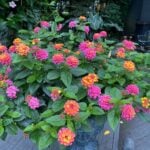
Here are some more examples of plants that defied my hardiness zone. Take a look at this 4 O'Clock plant right in front of my grandmother's house.
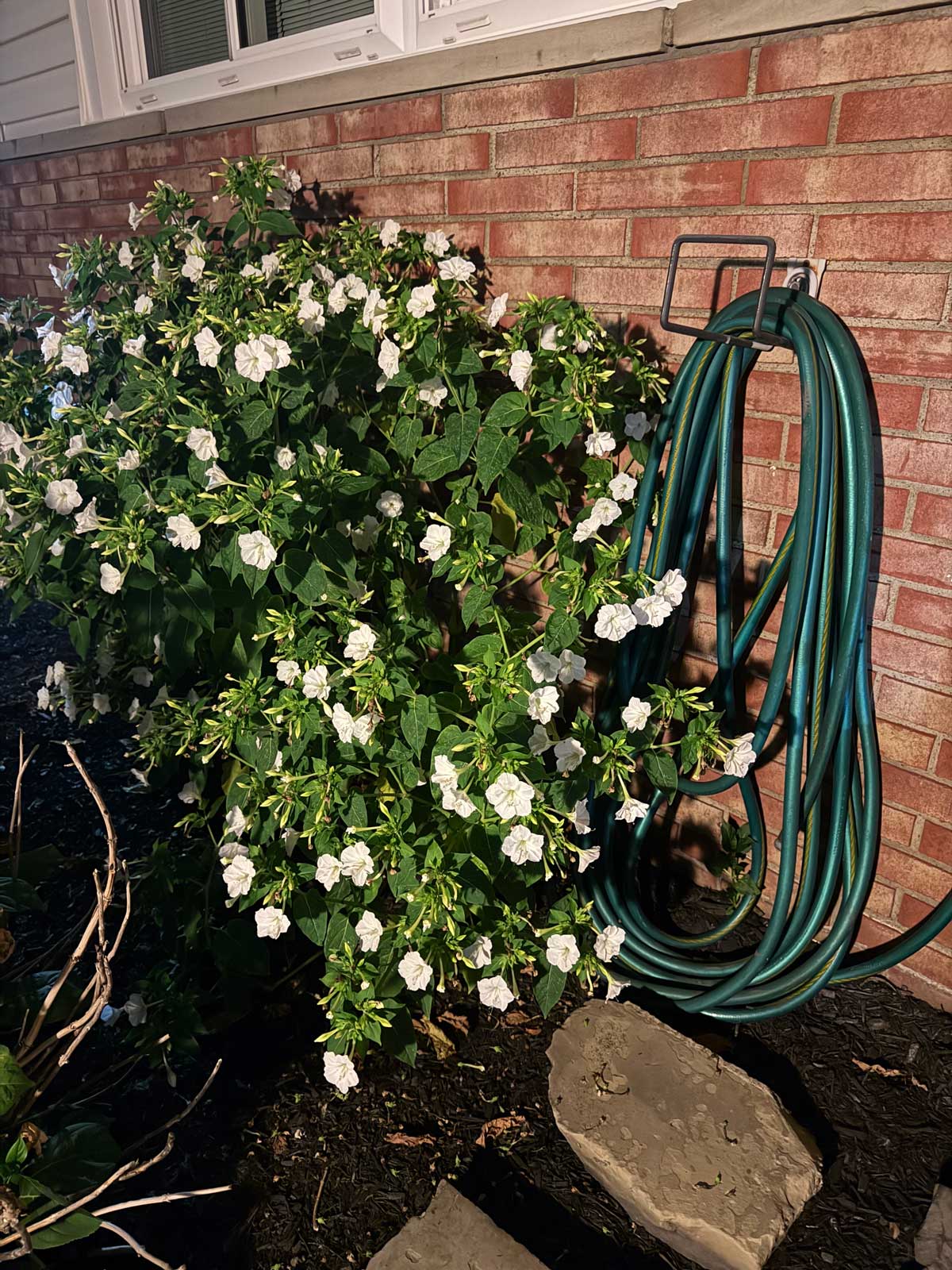
I grew that 4 O'Clock (Mirabilis jalapa) from seed and gave it to my grandmother years ago. But they form tubers that you can dig up and overwinter. However, the plant in the photo comes back with no problems after each winter in zone 6a even though the plant is rated for hardiness zones 9 or higher. The reason is the same as what I described before. Since the plant is right up against the brick wall of the house (the soil is also very well drained), this plant continues to defy my growing zone and comes back yearly.
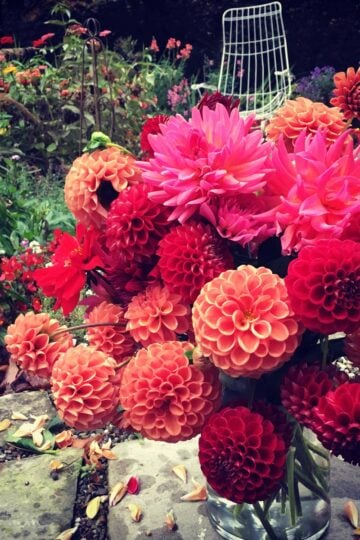
Would you believe me if I said I've had dahlias come back and that were not dug up in cold, wintery Ohio?
I've actually witnessed this in my childhood home while growing up, as well as in my first house, and at my grandmother's house. I am not going to lie though. I plant dahlias every year and I do dig them up and overwinter the dormant tubers. Since they are an important part of my summer garden, I can't risk having my collection wiped out.
In most of those cases where the dahlias survived in the ground, the dahlias were planted right next to a brick wall. Anytime you plant something right next to a stone pathway, a brick wall, or even a concrete path, this creates a microclimate.
Any masonry, stones or brick will absorb heat during the day, and then will slowly release the stored heat at night. Many times this will mean the difference between your plant surviving the winter and thriving, or perishing after a cold winter!
Of course, this only goes for plants in the ground.
I am not including plants that are in pots made out of stone or concrete. Pots are subject to rapid fluctuations in temperature, moisture levels, and freeze/thaw cycles so this may spell disaster for your borderline-hardy plants in pots.
If you do have something in pots that you care about, you can always overwinter inside of your home, or let it go dormant and store it in a cool/dark basement or a heated garage.
Another plant that I have had success with is Musa bajoo, the hardy banana plant. With protection, this plant is reportedly hardy in all 50 states!
Depending on the source, the minimum zone for growing this plant varies. Some sources say zone 5 minimum, and others have 6b minimum or above. The photo below is of my garden two years ago. You can see the Musa basjoo on the left.
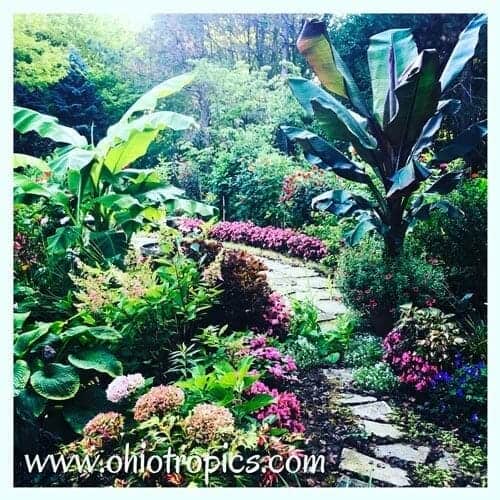
I planted two of these stunning specimen plants into my Ohio garden two years ago. They survived their first winter successfully! However, I heavily mulched both plants with a mound of leaves.
After the second growing season, I chose not to mulch them. Partly out of laziness, and partly to experiment.
They had grown into beautiful clumps and were established, so I thought maybe they would survive without any mulch. I was wrong and they did not survive their second winter. With so many variables in the weather, it is hard to say if they would have survived if I had mulched them that second year.
The winter turned out to be very erratic and cold, even by Ohio standards. Regardless, if you apply several inches of mulch, it will help guard against extremes in moisture as well as help moderate the temperature of the soil in the winter.
This could potentially "add" a couple of hardiness zones because of the microclimate you created! I purchased one more plant and will be sure to mulch it every single year from now on.
Be sure not to miss my blog post on growing Musa basjoo and other banana plants in your garden. I also grow Red Abyssinian Banana plants, which I overwinter and let them go dormant.
CLOSING REMARKS
Don't be afraid to push the limits of your hardiness zone! It is part of the fun of gardening. The unexpected things in gardening are what make is so rewarding. Experiment with different microclimates, keep a garden journal, and monitor the results.
You will be surprised at what you can really grow. So go out there and defy your hardiness zone! Take a risk! It might be the best thing you've ever done.
I meant they (hydrangeas) succumb to high heat
Ooooh how much would I love to be able to defy my hardiness zone a few zones lower. I live in zone 11b and love hydrangeas, but here they live only the spring season after that they succumb high heat. So great that you created microclimates to defy your zone. Thanks for sharing
Glad you enjoyed the post! I see you have the opposite problem as me 🙂 I would love to live in zone 11b!
You're very welcome Teresa! And I have zone envy because I'm in 6a. I guess we all crave what we don't have 🙂 I would love to be able to grow more tropical plants in the ground without them freezing...