What exactly does it mean when you hear that you are overwatering a plant? What happens when you overwater a plant? This post will discuss the VERY misunderstood topic of properly watering a plant.
You will also learn about signs of underwatering plants as well as signs of overwatering plants. And I actually hate the term overwatering, so I will give you my take on what it means to most people, but also what it really means.
Would you like to save this post?
Enter your email, and I will send this link straight to you!
I believe the term "overwatering" is a very dangerous term and this post will aim to demystify the topic once and for all.
First let's get into some symptoms of both underwatering and overwatering your houseplants.
It is important to understand BOTH. It can be a confusing topic because the signs can be the same!
Table of Contents
Signs of Under Watering Houseplants
There are many different indications that you can look for that will tell you if you are underwatering your houseplant.
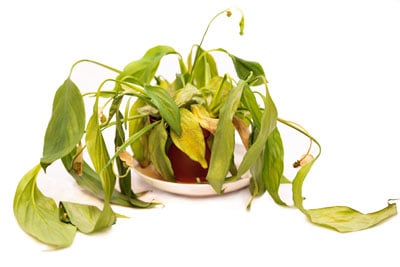
One indication of underwatering is that the lower leaves of your plant will turn yellow. In more extreme cases, if the plant continues to be very dry, the entire plant will wilt and collapse.
For anyone that has a peace lily (Spathiphllym), you'll know that it will quickly tell you that it needs a drink of water! Give it a good drink of water, drain the excess away, and your plant will recover quickly.
If you notice that your plant has wilted, but the soil is still moist and you haven't watered it in a while, then clearly underwatering is not your issue.
Keep reading to learn about other things that may have gone wrong. I'll get into overwatering later.
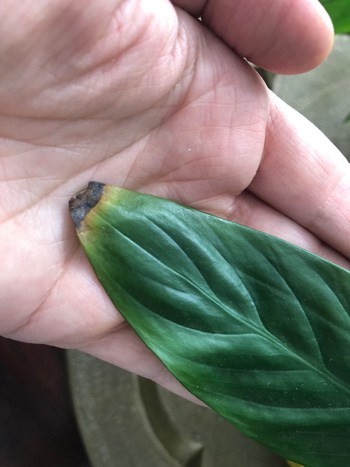
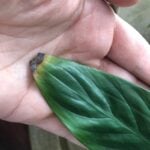
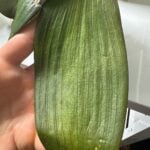
Underwatered plants also typically can have edges of leaves that have turned brown and are crispy. Crispy and brown edges can also be due to other things such as over-fertilizing.
There are a few things that can cause brown leaf tips on your houseplants. If you continually let your soil dry out for extended periods of time, this will surely happen.
You can also get brown, crispy leaf tips if your watering practices are not up to par.
If you are not watering your houseplant thoroughly, the plant will use up all the water that it can, and when there is no water left to travel to the tips of the leaves, they will not have the moisture they need, and the tips will turn brown.
If you are not throughly watering the potting mix of your houseplant until the water drains out of the drainage hole in your pot, it may result in dry pockets of soil.
Assuming that your houseplant has the correct combination of light, potting mix type, and well drained soil, you should always be watering thoroughly and completely moistening the potting mix.
If you are doing what I described above, and you are still getting dry tips, it could be that your houseplant is very potbound and thus not able to use water as well as it should be.
Once a plant leaf turns brown, there is really nothing that you can do except simply cut off the brown areas. It will never turn green again. What you can do though is to remedy your cultural practices to prevent further damage to your plant.
How to Revive a Plant That Has Dried Out
If your houseplant has dried out severely, one thing you will probably notice is that when you do water it, the water will very quickly start to rush out of the drainage hole and will not seem to moisten the potting mix much.
You may also see that the soil has pulled away from the perimeter of the pot. Potting soil that has dried out severely may take a little work to moisten it up again, depending on the composition of the potting mix.
If you can move your plant to a sink, move it there and water it repeatedly until you are sure that the soil is thoroughly moistened.
It may take several times in order to accomplish this, but it is very important! If you don't do this, your plant may suffer severe harm and even die.
Signs of Over Watering Houseplants
There are many signs that you are overwatering your houseplant. One of the leading indicators for severe cases is that your plant will be wilted despite the soil being moist.
This means that your plant has gotten to the point where the roots have rotted and the plant is starting to wilt as a result.
Another indication can be brown leaves, which you will also get if your plant is too dry. However the difference is that your leaves will be limp and mushy, instead of dry and crispy, if you have overwatered.
Other indications that you have overwatered are the following: yellowing and dropping leaves, including newer leaves and not just the old ones.
Stunted growth can also be a result of overwatering, especially when it is found in combination with the above symptoms.
Do you have mushrooms growing on your soil? This is a very good indication that your soil is staying too wet! Otherwise the fungi will not be able to survive and grow.
Finally, if you take your plant out of its pot and you notice mushy roots, and even a sour, rancid odor, this means that your roots have rotted from staying wet for too long.
Saving an Overwatered Plant
First of all, you should NOT fertilize a plant that has been overwatered! A plant that is in stress should never be fertilized. You will actually make the situation worse.
If your plant has symptoms of "overwatering", such as the whole plant starting to wilt despite the soil being moist, I would recommend the following steps:
If you have your plant in a dim location, immediately move it to a brighter location, but that is still appropriate light for your particular plant.
Don't water again until the soil has dried out completely.
Your plant should slowly recover if the damage caused by root rot is not severe.
If you are afraid that your plant won't make it, you can always take some cuttings to propagate the plant and start from scratch!
How to Water Plants and How Not to Overwater
This all comes down to proper houseplant culture! So how can you make sure that your plant is not overwatered?
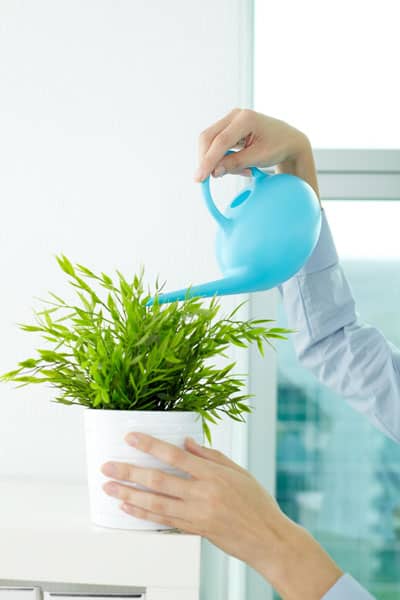
First of all, I encourage everyone to thoroughly water your houseplants. Water until all of the soil is thoroughly moistened and running out of the drainage hole. Then discard any extra water.
All this is very critical in order to have a healthy houseplant!
Overwatering a houseplant does NOT mean that you are adding too much water at a single watering! The goal is to thoroughly moisten the soil and ensure that any excess is drained away.
This is the proper way to water. But if some other fundamental things are not met, your plant will suffer.
What are these fundamental items that I'm referring to?
Make sure your plant has the correct light! This is number 1. If you shove your houseplant in a dark corner of the house, it will minimize growth, and therefore the plant will not be able to use water up like it should.
The soil can potentially stay wet for a very long time if your plant is kept too dark.
Ensuring that your plant is situated in appropriate light (meaning very close to a window!) is critical.
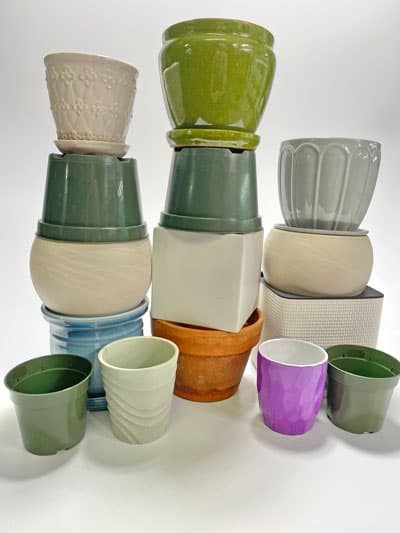
Use a well draining potting soil. I personally love using Miracle-Gro potting soils. Even for succulents, I like the Miracle Gro Cactus, Palm and Citrus mix. Not all potting mixes are created equal.
If you have any that are not draining as well as you'd like, I like to mix in a good amount of either perlite or ¼" pumice (links to Amazon). I use both perlite and pumice for different cases.
I tend to add some additional perlite to any potting mix for tropicals to increase porosity in the soil and increase drainage. I tend to use pumice for succulents. Either one will do the job.
The bottom line is that you want your soil to dry out to some extent between watering.
By ensuring that your plant is receiving proper light, has a well draining potting mix, and an appropriately sized pot, you should be good to go!
These ideal conditions, in combination with proper watering, is the "secret" to make your houseplants thrive!
I have recently bought a Norfolk Island Pine but am concerned that it may not get enough light where it is sitting. Would a grow light help? How do I know I am meeting its light requirements? Thanks for any "light" you can shed on this issue.
you didn't explain HOW overwatering happens or at what point it happens. I saw people do the bottom watering method where they submerge the whole pot in water and another where they blast the pot with water.
So when does "overwatering" happens?
My other question is some times the top soil is dry but the bottom soil is wet, do we water at this point?
I don't like to think of it as "overwatering", because this drives the wrong behavior in my opinion...and instead, I think of it as potting mix staying too wet. If potting mix is not drying out, it can be caused by a number of things. Not enough light is a huge one, as well as pots that are too big (large excess of potting mix), pots without drainage holes, and using a poorly drained potting mix, and others as well. And if you have a combination of more than one of these things, it's even worse. I hope this helps a bit!
Thanks for information, it helps me a lot. The houseplants are alright but I must spend more time on the outdoor plants. They tend to suffer even after a rainstorm.
I love your site so much. I always find exactly the info I need. Also I live in Indy so it's nice to get tips and tricks from someone else that has to endure a winter in the Midwest. 💚
hi there! i was wondering if you could help me out ? i have been struggling to find a solution for my monstera and you seem to know what you are talking about! my monstera has grown a lot in the past couple months, and now it is the middle of winter and currently -30 average. I have it in my room and have my humidifier and space heater at a comfortable temperature. Over the past couple weeks my monstera has developed some really contradicting signs. some leaves are very dry and even have holes developing that break open and are very crusty and brown. however some leaves are yellow limp and have a mushy dark spot. it seems like overwatering and underwatering signs and i am very confused. also underneath the leaves i can tell when they will develop little holes because in that spot goes black, then opens up and is very crust and dry. please help me!!
NEWBIE HERE! LOVING your site so far! Have been asked by a friend to "doctor" her philodendron. Big responsibility! As it was her deceased mother's! Don't want to lose this plant! Its mostly all stem and no leaves! Help!
Hi Joyce! I'm glad you're enjoying my site :-). It sound like it could use a good trim, may be best to propagate and start a new one from scratch. I'd have to see photos though to be more specific.
I love reading your explanations.! You do a wonderful job by painting a picture that's easy to understand as far as the correct way to do things. You have given me a very clear understanding of what I may be doing wrong to my calatheas
Thank you so much for sharing all of your knowledge. Kathy
@Kylie, I have found gnats in Miracle Gro. The same with Vigaro potting soil that is owned by Scott’s, they own MG too.
I have been battling these gnats for over a year and tried every method to rid them.
I finally bought some Katchy traps on Amazon and that got rid of them. I bought a Boston fern and the next day the trap was full of gnats. That plant is hanging outside and will be tossed out at the end of the season. It was such a beautiful fern.
The only soil I use is Perfect Plants and I buy it on Amazon. It is dry when you open the bag not damp like MG and Vigaro. It’s the best and they have different types. I also store it in an airtight container I bought from Home Depot.
Gnats are horrible insects that are not good for anything. They like carbon dioxide so they will try to get in you nose or mouth. I hate them.
If anyone has a gnat problem, Katchy traps are the best, I run them at night, they have a blue light that attracts them and they get sucked into the trap that has a glue board they stick to and can’t get back it. Every gnat you kill is preventing 200 - 300 eggs laid by a single gnat.
Good luck to anyone battling these disgusting insects.
@Kylie, I know I left a lengthly reply about gnats but I forgot to say the soil on top of all your plants should be dry so bottom water if you can. I use watering globes on all my plants. If I am transplanting or have bought a new plant I use a coffee filter to cover the drainage holes, they can get in that way, and the coffee filters let any water drain and it keeps the soil from coming out and the gnats from getting in. If I buy a new plant, I take some of the topsoil off and replace it with my dry Perfect Pants soil, gnats can’t lay eggs in dry soil.
Good luck.
What is the reason for the leaves on my Swiss Cheese plant not unfurling? Some will unfurl and some won't. I haven't found a reason anywhere for this. Hope you can help me.
Hi Emma. Are you providing good light for your plant? Is it right in front of a window? In most cases, it may be due to improper soil moisture. Either way too dry, or too wet (you need to feel your soil). Does any of this resonate with your particular case? I have a post on Monstera deliciosa actually, so check that out if you haven't read it yet.
I'm not sure if this is leaving an entire new comment or responding to you, but thanks for the reply! The fungus gnat one is on my list of posts to read haha I have a fair amount of my succulents in terra cotta pots but when I first got started with plants a little over a year ago, I DEF was putting plants in too big of pots. I think I often made the mistake of going off of the size of the entire plant vs the size of the roots. I think I'll just have to try watering a little less but still making sure it gets saturated enough. Always a tricky balance haha, and I'll definitely make sure to read those other posts too!
This is definitely some helpful info! I have found that watering more thoroughly but less often definitely keeps my plants happier. I tend to be better with succulent care and have had a few leafier tropical plants die because of root rot, fungus, fungus gnats, etc. I definitely have had some ups and downs and learn along the way! The way of the plant people haha.
One issue I do continue to have is too much water when watering thoroughly. In wintertime, even if I really space out my watering, when I water enough to let the water go through the drainage holes, I often find some mold/fungus or fungus gnats on that top layer of soil later because it just doesn't dry out as well as during the summer time (even for plants right up against a south-facing window). I've used some sand and rocks to help deter fungus gnats from the top layer but I find that the soil still doesn't dry out enough.
I don't really want to re-pot all my 30 some plants with more porous soil just for the winter so is there anything I am missing here? I'm afraid that when I decrease the amount of water AND the frequency, I will have some of the issues you touch on here. Sorry for such a long comment and I know there really might not be a magical fix for this, I just cant tell if I am missing something! haha
Hi Emily. This is a challenge many of us face! With decreased light and cooler temperatures, plants do take longer to dry out during the winter. I think if you top the pots with sand though for fungus gnats, it will make your situation worse though as far as drying out soil. Did you see my fungus gnat post? It's hard to provide more specific recommendations without asking a million questions or seeing your pots. Do you have any plants that are perhaps in bigger pots than they should be? Terra cotta pots are another option as well, but those can dry out very quickly and then you will have the opposite problem! It is an option though. If all else fails, you can maybe try watering a little less thoroughly maybe just for the winter months, but don't water too shallowly...



I have recently bought a Norfolk Island Pine but am concerned that it may not get enough light where it is sitting. Would a grow light help? How do I know I am meeting its light requirements? Thanks for any "light" you can shed on this issue.
Yes, a grow light would definitely help. These are gigantic trees in nature, so they can take plenty of light!
you didn't explain HOW overwatering happens or at what point it happens. I saw people do the bottom watering method where they submerge the whole pot in water and another where they blast the pot with water.
So when does "overwatering" happens?
My other question is some times the top soil is dry but the bottom soil is wet, do we water at this point?
I don't like to think of it as "overwatering", because this drives the wrong behavior in my opinion...and instead, I think of it as potting mix staying too wet. If potting mix is not drying out, it can be caused by a number of things. Not enough light is a huge one, as well as pots that are too big (large excess of potting mix), pots without drainage holes, and using a poorly drained potting mix, and others as well. And if you have a combination of more than one of these things, it's even worse. I hope this helps a bit!
Thanks for information, it helps me a lot. The houseplants are alright but I must spend more time on the outdoor plants. They tend to suffer even after a rainstorm.
You're very welcome Johan!
I love your site so much. I always find exactly the info I need. Also I live in Indy so it's nice to get tips and tricks from someone else that has to endure a winter in the Midwest. 💚
Glad you're enjoying my site Jamie! :-).
I just wanted to say thank you thank you for your advice on plants. Finally I have help, haha.
You're very welcome Jasmin!
Thank you for your help. I hope i am able to make my peace lilly look pretty now. Keep on posting....it's educational
Glad you found it useful Eva! :-). Thanks for taking the time to comment.
Thank you! This was extremely useful and informative. Really happy I discovered your site 🤩
Glad you enjoyed the post! 🙂
hi there! i was wondering if you could help me out ? i have been struggling to find a solution for my monstera and you seem to know what you are talking about! my monstera has grown a lot in the past couple months, and now it is the middle of winter and currently -30 average. I have it in my room and have my humidifier and space heater at a comfortable temperature. Over the past couple weeks my monstera has developed some really contradicting signs. some leaves are very dry and even have holes developing that break open and are very crusty and brown. however some leaves are yellow limp and have a mushy dark spot. it seems like overwatering and underwatering signs and i am very confused. also underneath the leaves i can tell when they will develop little holes because in that spot goes black, then opens up and is very crust and dry. please help me!!
NEWBIE HERE! LOVING your site so far! Have been asked by a friend to "doctor" her philodendron. Big responsibility! As it was her deceased mother's! Don't want to lose this plant! Its mostly all stem and no leaves! Help!
Hi Joyce! I'm glad you're enjoying my site :-). It sound like it could use a good trim, may be best to propagate and start a new one from scratch. I'd have to see photos though to be more specific.
I love reading your explanations.! You do a wonderful job by painting a picture that's easy to understand as far as the correct way to do things. You have given me a very clear understanding of what I may be doing wrong to my calatheas
Thank you so much for sharing all of your knowledge. Kathy
Thank you so much Kathy, and I'm happy that you found this post useful! It's a very important topic that everyone would benefit from knowing 🙂
Have you ever found miracle gro soils to be infested with gnats
I personally have not. I've been using it for a long time!
@Kylie, I have found gnats in Miracle Gro. The same with Vigaro potting soil that is owned by Scott’s, they own MG too.
I have been battling these gnats for over a year and tried every method to rid them.
I finally bought some Katchy traps on Amazon and that got rid of them. I bought a Boston fern and the next day the trap was full of gnats. That plant is hanging outside and will be tossed out at the end of the season. It was such a beautiful fern.
The only soil I use is Perfect Plants and I buy it on Amazon. It is dry when you open the bag not damp like MG and Vigaro. It’s the best and they have different types. I also store it in an airtight container I bought from Home Depot.
Gnats are horrible insects that are not good for anything. They like carbon dioxide so they will try to get in you nose or mouth. I hate them.
If anyone has a gnat problem, Katchy traps are the best, I run them at night, they have a blue light that attracts them and they get sucked into the trap that has a glue board they stick to and can’t get back it. Every gnat you kill is preventing 200 - 300 eggs laid by a single gnat.
Good luck to anyone battling these disgusting insects.
@Kylie, I know I left a lengthly reply about gnats but I forgot to say the soil on top of all your plants should be dry so bottom water if you can. I use watering globes on all my plants. If I am transplanting or have bought a new plant I use a coffee filter to cover the drainage holes, they can get in that way, and the coffee filters let any water drain and it keeps the soil from coming out and the gnats from getting in. If I buy a new plant, I take some of the topsoil off and replace it with my dry Perfect Pants soil, gnats can’t lay eggs in dry soil.
Good luck.
What is the reason for the leaves on my Swiss Cheese plant not unfurling? Some will unfurl and some won't. I haven't found a reason anywhere for this. Hope you can help me.
Hi Emma. Are you providing good light for your plant? Is it right in front of a window? In most cases, it may be due to improper soil moisture. Either way too dry, or too wet (you need to feel your soil). Does any of this resonate with your particular case? I have a post on Monstera deliciosa actually, so check that out if you haven't read it yet.
Is there a way to privately pm you?
Hi Lani. You can email me at theohiotropics@gmail.com
I'm not sure if this is leaving an entire new comment or responding to you, but thanks for the reply! The fungus gnat one is on my list of posts to read haha I have a fair amount of my succulents in terra cotta pots but when I first got started with plants a little over a year ago, I DEF was putting plants in too big of pots. I think I often made the mistake of going off of the size of the entire plant vs the size of the roots. I think I'll just have to try watering a little less but still making sure it gets saturated enough. Always a tricky balance haha, and I'll definitely make sure to read those other posts too!
This is definitely some helpful info! I have found that watering more thoroughly but less often definitely keeps my plants happier. I tend to be better with succulent care and have had a few leafier tropical plants die because of root rot, fungus, fungus gnats, etc. I definitely have had some ups and downs and learn along the way! The way of the plant people haha.
One issue I do continue to have is too much water when watering thoroughly. In wintertime, even if I really space out my watering, when I water enough to let the water go through the drainage holes, I often find some mold/fungus or fungus gnats on that top layer of soil later because it just doesn't dry out as well as during the summer time (even for plants right up against a south-facing window). I've used some sand and rocks to help deter fungus gnats from the top layer but I find that the soil still doesn't dry out enough.
I don't really want to re-pot all my 30 some plants with more porous soil just for the winter so is there anything I am missing here? I'm afraid that when I decrease the amount of water AND the frequency, I will have some of the issues you touch on here. Sorry for such a long comment and I know there really might not be a magical fix for this, I just cant tell if I am missing something! haha
Hi Emily. This is a challenge many of us face! With decreased light and cooler temperatures, plants do take longer to dry out during the winter. I think if you top the pots with sand though for fungus gnats, it will make your situation worse though as far as drying out soil. Did you see my fungus gnat post? It's hard to provide more specific recommendations without asking a million questions or seeing your pots. Do you have any plants that are perhaps in bigger pots than they should be? Terra cotta pots are another option as well, but those can dry out very quickly and then you will have the opposite problem! It is an option though. If all else fails, you can maybe try watering a little less thoroughly maybe just for the winter months, but don't water too shallowly...
I love all your posts ,keep posting you are great.
Thank you for your kind words. I'm glad you enjoy my blog!