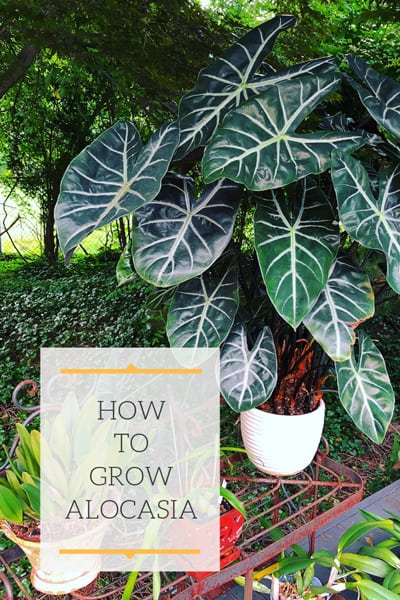
The notorious Alocasia amazonica. Everyone wants to grow it, but the problem is that a lot of people kill it! This is a challenging houseplant, but don't despair! This plant is also known as Alocasia x amazonica and is actually a cross between Alocasia longiloba and Alocasia sanderiana.
Would you like to save this post?
Enter your email, and I will send this link straight to you!
Alocasia x amazonica care is not insurmountable by any means once you understand it. Like many people, I was seduced by the dark green, glossy leaves with sharply contrasting veins, as well as by the striking shape and form of the leaves.
My plant looks beautiful now, but it wasn't always in tip-top shape. See, I'm human too. I've also become notorious on Instagram and have been offering so much advice that I decided to write a blog post. I got tired of explaining what to do repeatedly, so here we are!
Anyway, I've learned through the years not only how to keep this plant from dying, but how to make it thrive. I wanted to share my tips with you so keep reading!
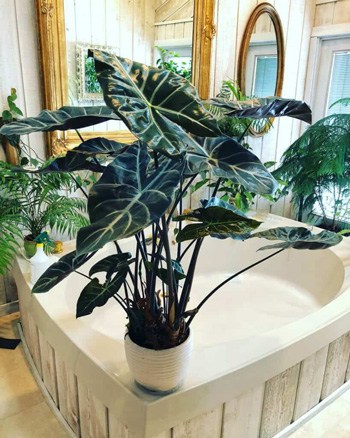
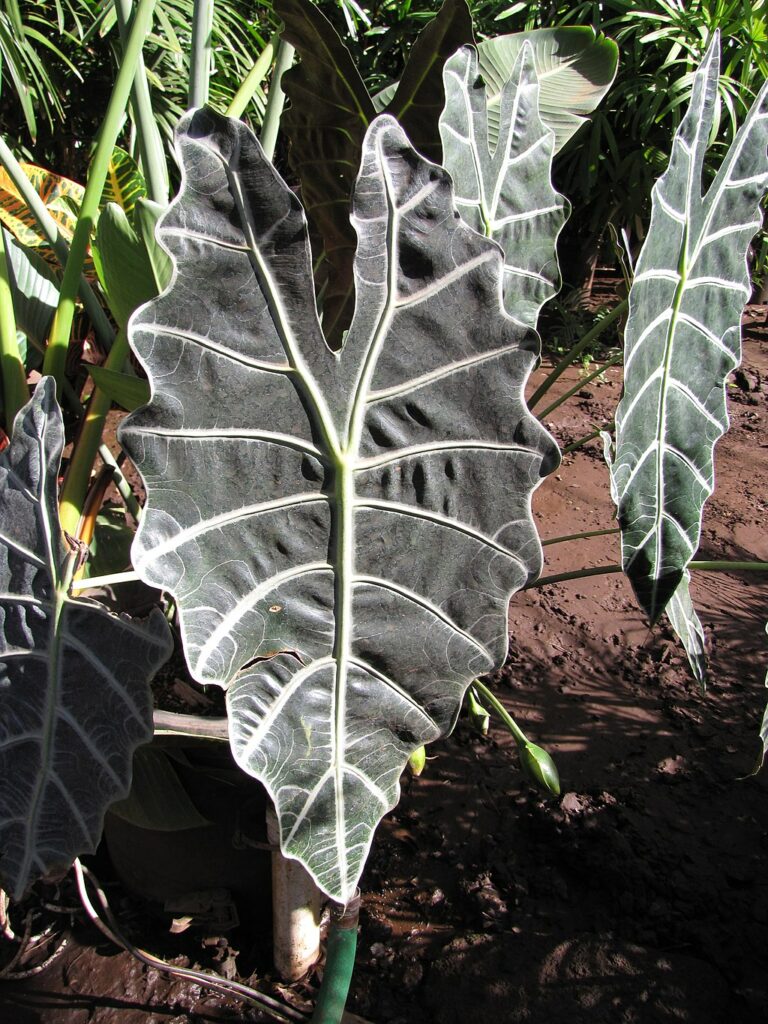
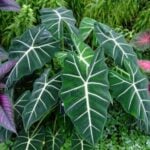
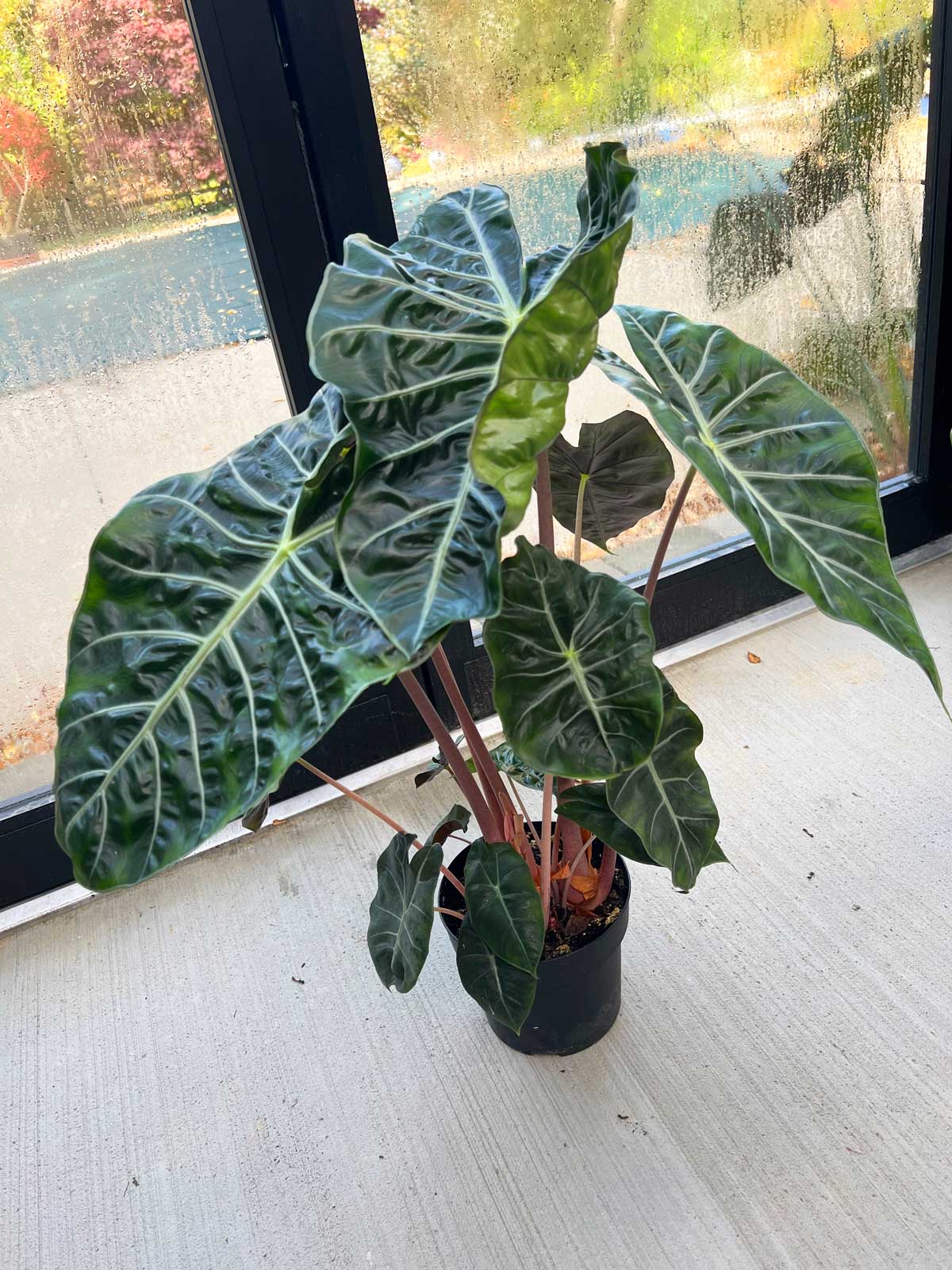
Alocasia longiloba
The plant shown in the photo above is actually Alocasia longiloba, after doing some research, but the care is identical to Alocasia amazonica. After all, the longiloba species is one of the parents of the Alocasia amazonica artificial hybrid.
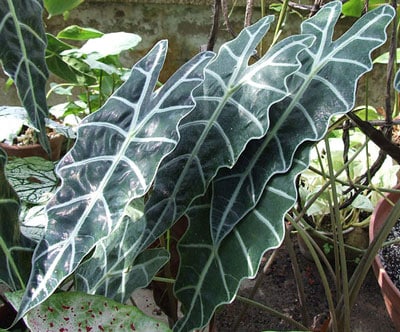
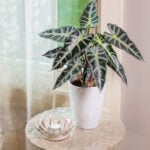
Alocasia amazonica and Alocasia Polly are different varieties, but Polly is a bit smaller. You can treat the care as identical.
Origins of Alocasia amazonica
Even the name of this plant is misleading! When you see Alocasia amazonica, you might think that it is a a species that comes from the Amazon rainforest.
In fact, it is NOT a species and it doesn't even come from the Amazon.
Like I mentioned previously, it is supposedly a hybrid between Alocasia longiloba crossed with Alocasia sanderiana, both of which are Asian species. The name amazonica comes from the name of the nursery where this hybrid was created in Florida.
These plants need bright indirect light to do their best. A little bit of morning sun or filtered sunlight is great, but keep this plant away from harsh, direct sunlight.
This is definitely a plant that you do need to keep very close to a window. And by very close, I mean right in front of it, but without touching the window.
There are some plants that can survive locations far from a window, but this is not one of them.
If you can not place this plant right in front of a window to receiver proper light, then I would suggest you look for another plant because it'll just end up in disappointment!
These plants can be finicky enough, so don't set yourself up for failure!
I find it important to really specify that it needs to be in front of a window, because many people think that they can place a houseplant anywhere, and then they are surprised when it dies.
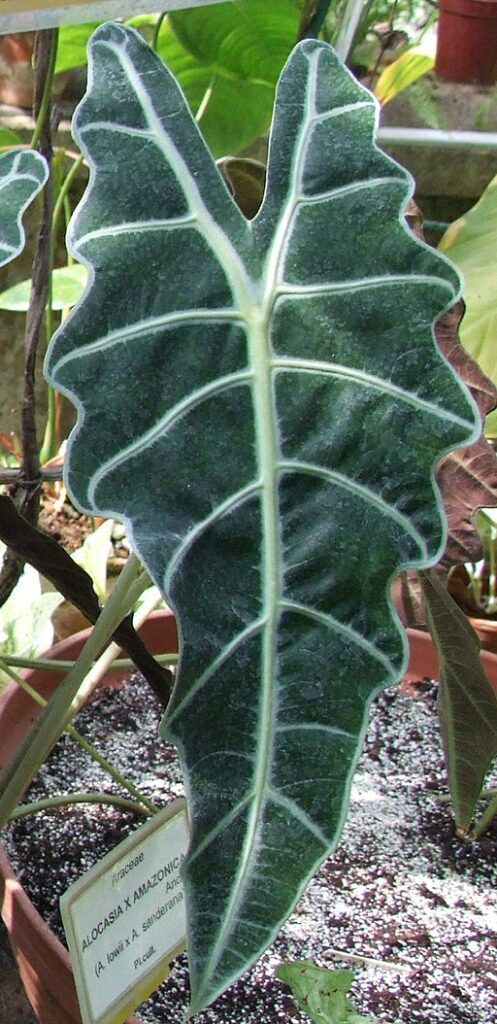
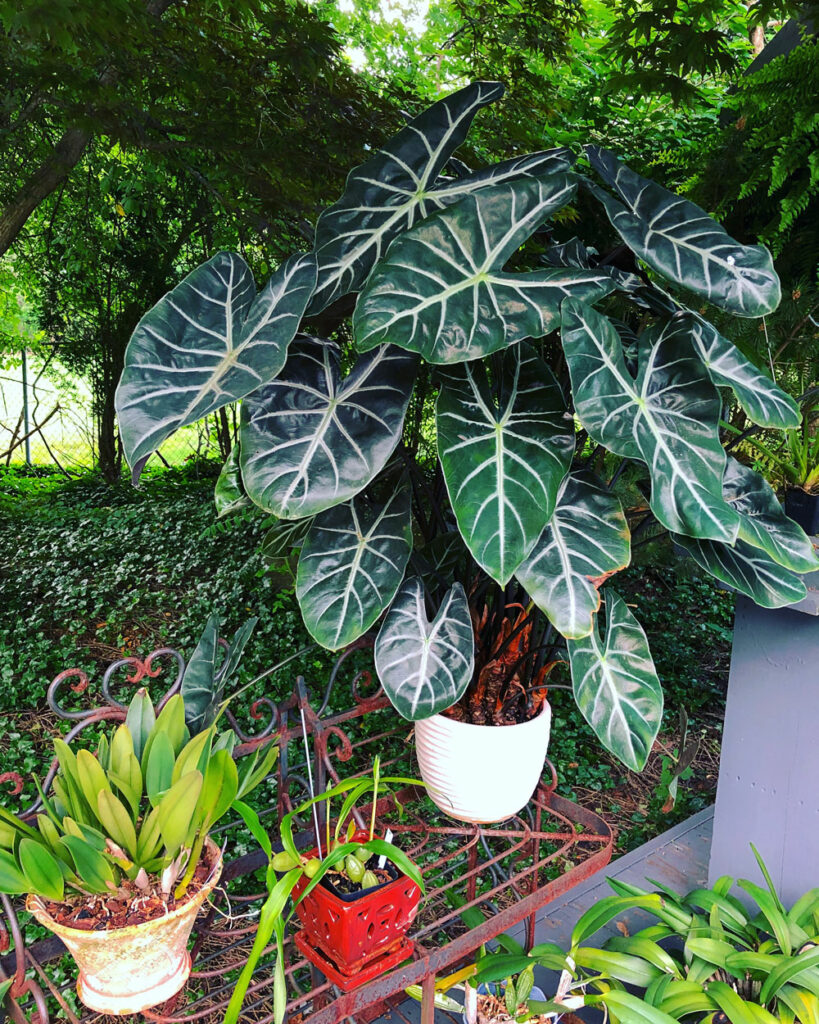
Alocasia x amazonica, Photo credit: Jerzy Opioła, CC BY-SA 4.0
Sure there ARE plants that can SURVIVE and even sometimes do pretty well several feet from a window....or even in rooms that have no windows (but that have plenty of bright overhead lights), but this plant is NOT one of them.
If you DO want to know good plants that you can grow away from a window or in darker conditions, be sure to read my blog post about plants that can grow in the dark! Ok, growing in the dark is a bit of an exaggeration, but you won't want to miss this post.
Remember, plants use light to photosynthesize and make their own food, so if you're not giving your plant the light that it needs, you are basically starving your plant. Shame on you!
Situating your plant in an area with proper lighting should be the single most important concern that you need to take care of.
My own Alocasia amazonica (ok, technically I have an Alocasia longiloba, but the care is identical) is growing in my sunroom right in front of a large Eastern exposure sliding door so it gets plenty of light.
There is also a skylight in that room, and a large wall of Northern exposure windows.
Next to adequate light, proper watering is the next most important thing in keeping your Alocasia amazonica in good shape. Actually, EVERYTHING I'm mentioning in this blog post is probably equally important so take note. These plants LOVE their water and do not take neglect very kindly.
Years ago, my specimen was growing in a terra cotta pot and this was a big mistake. The soil dried out very quickly, and the plant was kept much too dry for its liking.
I kept losing leaf after leaf and it looked pretty pathetic, but it was still alive! After that, I repotted it into a glazed ceramic container and it was much easier to manage its moisture requirements.
We all make mistakes! This was before I really had read more about this plant and researched its need.
Except in the winter time, you'll want to keep this plant pretty evenly moist. In the winter, I let the top of the soil dry out a little before I water again.
But don't let your Alocasia amazonica get TOTALLY dry otherwise it will start to go dormant. This is not a plant that you can neglect the watering. If you're looking for a carefree houseplant, then go buy something else.
If you want plants that you can neglect, you may be more suited to Sansevieria and there are plenty of varieties to keep your interest!
You'll have to be very vigilant and careful with the watering with this Alocasia. When winter is over and the days are getting longer, the plant is growing and the lighting is brighter, so you can increase the watering.
Alocasias in general are moisture loving plants so bone dry soil spells disaster for these plants. On the other hand, I would also generally avoid these plants sitting in water for extended periods of time. It's all about a balance!
Alocasia Amazonica Care Outdoors
The best thing that I do for my Alocasia is place it outside in the summer. It absolutely flourishes outside in the summer! Make sure that you place it in a protected place though. One year, my plant blew over and the pot broke and part of the plant got damaged!
After that happened, I made sure to secure the pot well so that the wind could not blow it over.
When this plant is placed outside, the wonderful air circulation, higher humidity, rainwater, and brighter light really work wonders for this plant. Place it in a sheltered spot in the shade or in filtered/dappled sunlight at the very most.
Anytime you place a houseplant outdoors, after it has been indoors for a while, you must harden your plant off. This means that you need to gradually acclimate your plant to outdoor conditions so it doesn't go into shock.
Be sure to read my blog post on how to transition your houseplants to go outside. I have had one too many people complain to me that they burned their plants because they didn't properly harden them off.
In the heat of the summer, I'll even water my Alocasia daily sometimes when it is outside! Remember that you should NOT worry about how often you water. Don't look at your calendar when you water. Especially when you have plants outside.
Instead, you should just go by how dry the soil is to determine when you should water. Whether the plant is indoors or outdoors.
The rapid growth and warm temperatures will dry out the soil much more quickly than indoors so you'll need to provide plenty of water for your plant if you move it outdoors.
And don't worry if daily seems too frequent...it's NOT during the heat of the summer. Don't judge when to water a plant by the frequency! "Oh I watered it two days ago...it should be good. I don't want to overwater it."
That will prove hideously false if it's hot outside and the plant is totally dry. Especially when it is hot outside, it will need all the moisture it can get.
Water when it NEEDS it, not when your schedule tells you to. And throw everything out the window if you move a houseplant outside for the summer.
Your weekly indoor watering routine that you may have been doing suddenly may not work anymore, so you'll have to pay attention to your plants when they are outside because the environmental conditions are very different from your indoor conditions.
When your Alocasia is outside, each consecutive leaf grows bigger and bigger, and it really increases in size beautifully.
But you'll only want to keep it outside if it is warm enough, which brings us to...
Alocasia Amazonica Temperature Requirements
We all know that one person that always seems to be cold. Everywhere. Always wearing a sweater even when it seems comfortable to other people.
Well, this plant is like your frigid friend. They're going to complain at every chance they get.
If you place this plant outside, please make sure that the minimum nighttime temperature stays at LEAST 50-55 degrees Fahrenheit (approximately 10-13 Celcius) if not warmer! A safer bet would be a minimum of 60F.
If the temperature dips below 50F (10C) or so, especially for extended periods, you may as well kiss this plant goodbye. They detest the cold and will protest with yellowing leaves and start to go dormant.
Keep it cold long enough, and you will have to start planning a funeral. This goes for indoors as well.
If it is consistently below the 50-55F range, it'll start going dormant and you will lose one leaf at a time until there is nothing left.
Many people have reached out to me about their leaves yellowing and falling one by one. In a few cases, it turned out that the rooms where their Alocasias were growing had plunged into the 40s Fahrenheit.
This is MUCH too cold for these plants and they simply will not tolerate it. So make sure you have a mild to warm spot for your plant!
If you can not provide these conditions and you acquire one of these plants anyway, then you may as well start planning that Alocasia funeral...
Also, try to avoid placing this plant in areas that have cold drafts. Conversely, try avoiding placing these plants right next to a heating vent. Demanding isn't she?
Alocasia Amazonica Fertilizer Requirements
I just use whatever all-purpose fertilizer I have on hand, and use a variety of fertilizers depending on the season. Check out my recommendations below, available on Amazon for convenience:
Right now I'm using Dyna-Gro Grow fertilizer on most of my houseplants. Do not feed your plant in the winter since it will be either growing very slowly or not at all.
In general, I like to fertilize at every watering when my plant is indoors, but the concentration is more dilute since I'm applying at every watering. The exception is the winter when I don't fertilize at all.
In the summer, I like to use the fish emulsion fertilizer mentioned above about once a week.
Alocasia Amazonica Humidity Requirements
Humidity is very important for these plants. There are many things that you can do to increase the humidity for your Alocasia.
Firstly though, let me explain a common practice that actually does NOT increase the humidity and can actually be dangerous if you do it incorrectly.
Many people mist their houseplants. This actually does nothing for the humidity. Humidity is a measure of moisture in the air. All you're doing by misting is wetting the leaves.
You're not changing the humidity of the air. In fact, it can be dangerous if you mist too frequently, especially if the temperatures are cooler, because you might be encouraging bacterial and fungal infections.
Misting at night is especially dangerous because the cooler temperatures and wet leaves can encourage diseases particularly well at that time. I never mist my Alocasia.
This is not to say that I never mist any of my plants. For example, my cast iron plant used to get spider mites in the winter, but I took care of that problem and found that I was able to prevent that issue from occurring by misting it during the winter.
Some viable ways to increase the humidity for your Alocasia are the following:
My preferred way is to get a humidifier and run it in the room where your plants are. There are many varieties out there, but I use a warm-mist humidifier with a pretty large water reservoir.
My absolutely FAVORITE humidifier is the Levoit humidifier. You can run it on cold mist or warm mist, has a remote control, operates very quietly and is just amazing! I highly recommend this humidifier and I have been very happy with it.It'll actually operate for several hours and then it automatically shuts off when the water is depleted. Sometimes I forget to turn it on, but when I do run it, I make sure to start running it in the morning or at the latest by early afternoon.
I avoid running humidifiers in the evening and I use them mainly in the winter months when forced air heat really dries out the air! I live in a cold-winter climate. Some of my readers live in sub-tropical and tropical areas so you can probably ignore this section of the blog post altogether!
Grouping plants together is another way to increase the local humidity around your plants. Plants naturally release water through their leaves in a process called transpiration.
If you group a lot of plants closely together in one area, you'll create a mini microclimate with higher humidity.
The last way I will mention is to set the plant on a tray with pebbles to which water has been added. This will increase humidity as the water evaporates.
You'll want the water level to be below the top pebbles. This ensures that the plant is not sitting in water. I don't use this method because I have too many plants, but it is a viable option.
ALOCASIA DORMANCY
This is a finicky plant to grow indoors and dormancy can occur for a variety of reasons. It's hard to pinpoint one reason, and often times it can be a combination of reasons.
Keeping in mind that Alocasia are natives of steamy jungles of southeast Asia, it is no wonder that they can hate our typical indoors conditions which are typically a lot cooler and plagued with dry air.
Dormancy can be triggered by:
Cooler temperatures or drafts. It is said that this plant may go dormant when temperatures drop below 55F.
Dry soil
Constantly changing or unstable conditions (light, moisture, etc.)
The dormancy phenomenon in this plant is really not well understood in a home environment.
If you notice that your plant isn't budging, go easy on the watering. Allow the soil to partially dry out, but not completely. Once growth starts back up again, you can increase the watering.
As long as the tuber is firm, the plant is not dead so have some patience and the plant will start to grow again in good conditions. I highly recommend placing your plant outside in the warm summer months (in complete shade outdoors).
Final Remarks
So there you have it! I didn't mean to scare anybody here. I am here to tell you that you CAN grow this plant successfully if you provide the environment that it likes, though it can be challenging as this plant loves warmer temperatures and higher humidity than the typical home environment can offer.
If you try and force a plant to grow in an environment that it doesn't like, it will end up in disappointment and you will continue telling people that you have a black thumb.
It's better to select a plant that will like the light and temperature conditions that the selected growing area offers. You can always work on your watering habits and you can always find a way to increase humidity.
Heck, you can even add additional grow-lights if needed. If you can marry up your selected plant to a suitable area for the plant, you will start to be successful! Don't force a plant into a location that is not compatible with its growth.
No one is born with a green thumb! It's not something that you have or don't have. It is developed and takes time, understanding, work, and practice. So read up on your plant's requirements. Knowledge is power.
If you are obsessed with Alocasias, be sure not to miss my Alocasia types post where you can explore over two dozen striking types that you can grow indoors.
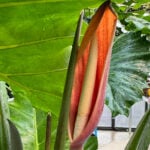
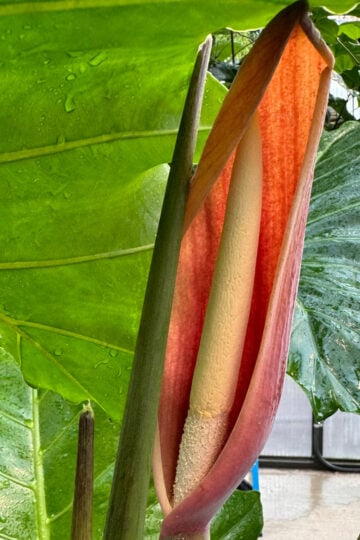
Do you have an Alocasia amazonica? Any questions or stories to share? Make a comment below! I'd love to hear from you. And I forgot to mention, if your plant really loves you, she'll even bloom.
Hi! It is winter here and my alocasia seems to have leaves that are turning yellow then brown one by one. The room would get to about 14 degrees Celsius. The top of soil is dry but when I stick a moisture metre in it shows a regular level of moisture (not soggy or wet). I am worried that it could have root rot as I’ve lost one of these plants to root rot before... it I didn’t think I watered it much at all this time? Also the leaves that are falling off don’t have any signs of mushyness. I did have to treat it with confidor once as when I brought it home from the supplier I was unpleasantly surprised to find mealy mugs 🙁 but they are all gone now! Wondering whether you think it’s winter? Root rot? Or could it be loosing leaves due to confidor? Thanks so much!
Hi Kim! How long does it stay 14C? That's pretty chilly for this plant. If that's just a night time temperature, that's OK, but if it's like that all the time, it can be an issue. Also, I would recommend not using a moisture meter. They can be very dangerous and lead you to the wrong behavior. I've known many people that trusted their meter to a fault and killed their plants from drought because the meter said the soil was still moist. I'd recommend using your finger to judge the dryness of the soil. If you let the top inch or two of soil dry out, you have no danger of overwatering. Hope this helps!
Thank you for this blog post. I just got one from someone who didn't want hers anymore. It had brown tips and a yellowing leaf and one new leaf. Should I leave the yellow one? I can tell it is dying.
My alocasia leaves turning yellow after I repotted it and changed it soil. It was originally red soil . I changed to soil sand and vermicompost . For four days it's was fine then over night it's three leaves were yellow an done was drooping. Help. I am.from.india delhi. Temperature is around 39 to 42 degrees during day a d night is ,32 degree. It's kept in shande and in a group of plants .
It sounds like it maybe didn't like your soil, or maybe you let it dry out too much? In that heat, you would need to water it very frequently. I'm not familiar with what you're calling red soil.
Thank you for you very informative and interesting blog! I laughed when I read this as I was just giving hubby a little talk on this lovely plant this morning which we currently have( not sure which one! Amazonica or Longiloba , I think the former!) I was explaining how it comes from the Amazonian forest! Well well you sure do learn something everyday! Now I know it’s an Asian species, from Florida! Thanks to you:)
This is my second year with this baby! Last year she went dormant! ( now I know why I had her in the cold dining room!) today she sits happily in my kitchen under a long light underneath overhead cabinets! I think it is a LED light I have this on during most days! She has two medium size leaves and I’m proud and thrilled to say she has new growth of a big new leaf about to open! It’s wonderful to watch the development each new day! I thought winter wasn’t the time for this growth! But I guess she’s making up for lost growth last year while being in dormancy. Humidity is good in this corner stays at around 55-65 sometimes higher and temperature is usually 20-21cel, I am looking forward to putting her out next summer under my Gleditsia tree,With my orchids! I am planning to read your blog on transitioning from indoors to outdoors.so I do it right!
I hope mine gets as big and lovely as yours does! I’m glad I read your blog as I thought this plant liked being a bit on the dry side so I will give it a drink tomorrow. I agree with you about people that have green thumbs aren’t just blessed with that special’luck’ or ‘gift’ it is definitely all about learning and applying that info to the plants! I’m a huge Hoya fan as well and I’m like a sponge with info arsonal to keep all my green lovelies alive and thriving! It’s a challenging job but with a beautiful reward! My Alocasia Amozonica gives me so much pleasure every morning! Im greeted when I go to make my English Breakfast tea! She is a stunner and looks divine against my ovo/gold white and grey marble tiles! I’m in love with this plant! Can’t wait for this new leaf to open:)
Thanks for sharing your story Robyn, and I'm happy that you're enjoying my blog and all your plants! I enjoyed reading your comments and have fun with all your plants! 🙂
Hello, my plant has new growth, but the stem grew white and soggy. The potential new leaf was also soggy and eventually just slumped over so I cut it off. Can I send you some pictures so you can see what the issue might be?
Hi, Ive had my Amozonica for about 6-7 months. Seems to love it's window position. But every time it spreads out a new leaf the oldest leaf browns off and dies. Any idea in what I could be doing wrong.
Hi Mickey, this is normal to some extent! But it can be accelerated if you're keeping the plant too dry. Can you describe your soil moisture situation for your plant and your watering routine? How you determine when to water, how you water, how dry the soil gets, etc.
Hi! Simply amazing article. Thank you for all of the information and the time you put into writing this and helping us! I bought an Alocasia a year ago from Trader Joe's. Put it in the window of my north-facing bathroom. It grew well, no complaints. Then winter came and the plant became dormant. I recently moved and my kris plant now lives in my bedroom, on a bookshelf about 10 feet from a west-facing window. I live in Southern California, and the window has light literally all day long. It is now getting warmer, but my plant has absolutely no new growth. The leaves look the same as they did when I first bought it, plus a new leaf or two since purchase. I purchased some indoor plant food spikes and put one in the soil, but nothing has changed. I follow the watering instructions and have a large Monstera right next to the plant, as well as an aloe plant about 1 foot away. Is the plant still dormant? Any advice? Thank you in advance!
Hi Madeleine, I'm glad you enjoyed the article! I would say 10 feet away from a window is much too far. The light intensity decreases dramatically the further you get from a window. Does your west window get a ton of afternoon sun? Or are there any obstructions? You want to avoid a lot of direct sun, but your plant needs to be moved much closer to that window. Or if you have an Eastern facing window, put it there. Or back to the North window where you had it. If you have poor light, you can't expect much growth. Hope this helps!
Hi! Thanks for the article.This will be a long story-sorry in advance!
I’ve had my Amazonica now for about 7 months. It’s doing pretty well-but winter has been a bit like ????? I wish I had a science book on you, Alocasia!
I live in Utah and I work in a greenhouse, so I’m pretty familiar with plant care and watching the effects of over and underwatering on many species of plants. I typically ignore the general guidelines for tropical plants In my own home [“keep moist at all times”] and have found that a deep watering followed by nearly dry or totally dry works very well in our climate.
My Alocasia started off in my room(a few feet from a large western window) and while I was playing around with the watering needs, winter hit and my bedroom consistently sank in the low 50s, even upper 40s!(it’s above an uninsulated garage). The rest of my plants just became frozen in time but didn’t put up a fuss. Whenever I decided to water my Alocasia from this point(generally after it was dry) the edges of the leaves would turn a darker shade, almost translucent and would eventually fade to yellow all the while transpiring. Everything about that yelled “no more water!” I eventually decided that my plant was in a semi-dormant state in my bedroom, like it was cold enough that the foliage should have dropped and only the corm should remain, but that isn’t what happened. The foliage actually looks pretty darn good, just no new growth in months.
After several rounds of this aggressive transpiration and leaf edge discoloration(again only watering once soil was dry because anymore and it freaked out) I decided to move the Alocasia to a warmer room. That has seemed to help, because since I’ve watered it again, it didn’t discolor the edges as badly but boy was it transpiring for days.
I suppose I don’t know exactly what my question is here, but more
just wanted to have a discussion of dormancy with these plants and the ways in which that can look. I’m also curious if it will just return back to normal when it gets a bit warmer outside and I can start watering regularly again. It’s been weeks of no water and my plant looks much better bone dry than it does when I water it ?(again the opposite of recommendations)
Thanks for reading and I can send photos over later if you’d like! 🙂
Hi Marly! These plants detest being cold and it will trigger dormancy. Also, having your plant cold and wet is a recipe for disaster. Try your best to keep these plants warm at all times. Your plant should bounce back though for sure! The old foliage that has been damaged won't come back of course, but the new growth should look good if you keep your plant warm and resume normal care. A summer outdoors will be very good for it. Hope this helps!
My alocasia plant is tipping over and seems to be separated for the other section of it. Not sure how to explain this correctly. It also has brown spots on the edges, which I understand is due to under-watering. Also I transplanted it from a smaller pot, but maybe a mistake because I don't think it's root bound. However, roots at the top are popping up above the soil line.
I acquired an Alocasia Amazonica because I was told that they can thrive in low-light conditions, and I had one small North-facing window at the time. (I've since moved and will now be able to provide it with the light it requires though!) Shortly after I brought it home, it produced two flowers! I was so happy and felt like such a proud plant mom. This didn't last, however. I've noticed that four of the outermost leaves have begun to droop and the stems kinked, and one of them has completely turned yellow and gotten a bit crispy. I tucked the other ones behind some leaves that are still upright in hopes that their stems wouldn't be completely cut off and the leaves would still receive some water for the time being. My question is, should I cut the droopy ones off? I believe that two new leaves are being pushed out from where the flowers were, but it may be a little too soon to tell.
Hi Kelly! I'm glad you have brighter conditions now for your plant. I'd have to see a photo to best advise you so go ahead and email me one if you'd like. The ones that droop likely won't go upright again. The plant will keep growing though if you care for it well and you won't miss the old leaves once they eventually have to be cut off. Just be very attentive to the watering and try to follow everything exactly as I describe in my blog post. These are not plants that can be neglected, especially the younger plants. Hope this helps!
I have an amazonica and I am already doing everything mentioned in this blog. The one issue I did notice was that I replanted It in a terra-cotta pot. But before that change I was noticing many leaves turn yellow and drop off. I still have quite a few and seems to be doing ok. The one issue I am facing is that I have had the plant for about 4 months now and it’s only grown one leaf and that leaf didn’t seem to unravel all the way. It’s not flat and large like the others, rather still pretty small and wrinkled. It’s been like that for weeks now. The plant is growing a flower now, so I figure I’m doing something right. I don’t have much light in my apartment, but all my plants grow under grow lights which I keep on at least 14 hours a day. Any suggestions as to why the leaf isn’t reaching its full size?
Hi Robert! The only thing I can potentially think of is that maybe your soil is drying out too quickly in between. As new leaves are developing, if your soil is too dry, it could result in deformed leaves. Have you been having a hard time keeping up with watering your plant in its new terra cotta pot? I find that these plants are too hard to manage in terra cotta. It's not impossible...just more difficult. Does this help?
Hi! I have an alocasia amazonica I believe, that seemed to be doing very well when I first got her in September last year, pushing out new leaves very regularly. I live in Massachusetts, where it gets very cold. I run a large humidifier and keep the heat up pretty warm in my room, as I have monsteras and orchids other tropical type plants in here as well. The alocasia flowered for me, about a month or two ago, but has stopped putting out new leaves. The existing leaves are crunchy on the tips and have yellow spots. What am I doing wrong? I usually allow the first inch or two to dry out completely between waterings.
Hi Kelly! It could be that you're maybe letting it drier than you think. Can you send me a photo or two so I can take a look? Also, as far as it not growing any leaves, it's not unusual for plants to take a break during winter so I wouldn't be concerned. But...do you have your plant right in front of a window?
Hi, apologies my last post stated we had an Amazonica and it is a Polly
Y...
Our last alocasia Polly started turning purple and yellow on the leaves and no matter what we tried we couldn’t save it. The same has happened again and the leaves have small purple areas on them and are dying. Do you know what this could be? Thank you
Hi, our last alocasia Amazonica started turning purple and yellow on the leaves and no matter what we tried we couldn't save it. The same has happened again and the leaves have small purple areas on them and are dying. Do you know what this could be? Thank you
Hello, thank you for such a useful article. Its very confusing when it comes to Alocasia advice as every website and blog seems to provide different information. I bought my Amazonica a few months ago from Lidl (I'm based in the UK) and it was absolutely beautiful at first. Then it started getting yellowing leaves, some of them now fell off. Remaining 3 have brown spots in the middle. Im worried that it is dying. Up to now I kept it in the kitchen as its bright but north facing and quite humid. The temperature does drop to 15c at night but during the day its 18-19c. During a recent visit to the zoo I saw a great specimen growing in a tropical fish tank, above water. It was all hot and humid with water dripping off it and it looked very healthy. In my desperation to save my alocasia I have purchased a glass jar terrarium for it but I have not planted it yet. Now I am not sure if it is even a good idea to do that? What do you think? Maybe my Amazonica just needs more light. I do have full spectrum LED grow light I am using to overwinter my Agave Americana (they really dont like all the rain in this part of the world so I have to overwinter it indoors under a grow light). Would Alocasia enjoy being under a growlight as well or is that like being in a direct sun? I dont think there is a lack of moisture in the soil. In fact it never seems to be dry at all. I am only having to water my Alocasia once a month. Thank you in advance
Hi Katherine. Light is certainly very important. I'd have to see a photo of your plant in front of its window to make a better judgement call. But the short answer about the grow light is YES you can use one for Alocasia! What kind of grow light is it? Any details you can share?
Hello! Your article gave me more useful information in one place than several others together. I'm so happy to have found yours! I currently have 1 amazonica but want more, it is so beautiful. She has an "ancient" look I think-around with the dinosaurs perhaps. Thankfully I seem to be doing ok with her in the 4 months I've had her so no questions....you addressed everything I was unsure of already. Thanks for the great information and the easy flow of your writing made me feel as if my smart plant neighbor came for coffee and sharing. Thanks for a great post!


Hi! It is winter here and my alocasia seems to have leaves that are turning yellow then brown one by one. The room would get to about 14 degrees Celsius. The top of soil is dry but when I stick a moisture metre in it shows a regular level of moisture (not soggy or wet). I am worried that it could have root rot as I’ve lost one of these plants to root rot before... it I didn’t think I watered it much at all this time? Also the leaves that are falling off don’t have any signs of mushyness. I did have to treat it with confidor once as when I brought it home from the supplier I was unpleasantly surprised to find mealy mugs 🙁 but they are all gone now! Wondering whether you think it’s winter? Root rot? Or could it be loosing leaves due to confidor? Thanks so much!
Hi Kim! How long does it stay 14C? That's pretty chilly for this plant. If that's just a night time temperature, that's OK, but if it's like that all the time, it can be an issue. Also, I would recommend not using a moisture meter. They can be very dangerous and lead you to the wrong behavior. I've known many people that trusted their meter to a fault and killed their plants from drought because the meter said the soil was still moist. I'd recommend using your finger to judge the dryness of the soil. If you let the top inch or two of soil dry out, you have no danger of overwatering. Hope this helps!
Thank you for this blog post. I just got one from someone who didn't want hers anymore. It had brown tips and a yellowing leaf and one new leaf. Should I leave the yellow one? I can tell it is dying.
Hi Michelle! I would leave it until it is completely yellow, and then cut it off. Good luck, and I hope you can rejuvenate it!
My alocasia leaves turning yellow after I repotted it and changed it soil. It was originally red soil . I changed to soil sand and vermicompost . For four days it's was fine then over night it's three leaves were yellow an done was drooping. Help. I am.from.india delhi. Temperature is around 39 to 42 degrees during day a d night is ,32 degree. It's kept in shande and in a group of plants .
It sounds like it maybe didn't like your soil, or maybe you let it dry out too much? In that heat, you would need to water it very frequently. I'm not familiar with what you're calling red soil.
Thank you for you very informative and interesting blog! I laughed when I read this as I was just giving hubby a little talk on this lovely plant this morning which we currently have( not sure which one! Amazonica or Longiloba , I think the former!) I was explaining how it comes from the Amazonian forest! Well well you sure do learn something everyday! Now I know it’s an Asian species, from Florida! Thanks to you:)
This is my second year with this baby! Last year she went dormant! ( now I know why I had her in the cold dining room!) today she sits happily in my kitchen under a long light underneath overhead cabinets! I think it is a LED light I have this on during most days! She has two medium size leaves and I’m proud and thrilled to say she has new growth of a big new leaf about to open! It’s wonderful to watch the development each new day! I thought winter wasn’t the time for this growth! But I guess she’s making up for lost growth last year while being in dormancy. Humidity is good in this corner stays at around 55-65 sometimes higher and temperature is usually 20-21cel, I am looking forward to putting her out next summer under my Gleditsia tree,With my orchids! I am planning to read your blog on transitioning from indoors to outdoors.so I do it right!
I hope mine gets as big and lovely as yours does! I’m glad I read your blog as I thought this plant liked being a bit on the dry side so I will give it a drink tomorrow. I agree with you about people that have green thumbs aren’t just blessed with that special’luck’ or ‘gift’ it is definitely all about learning and applying that info to the plants! I’m a huge Hoya fan as well and I’m like a sponge with info arsonal to keep all my green lovelies alive and thriving! It’s a challenging job but with a beautiful reward! My Alocasia Amozonica gives me so much pleasure every morning! Im greeted when I go to make my English Breakfast tea! She is a stunner and looks divine against my ovo/gold white and grey marble tiles! I’m in love with this plant! Can’t wait for this new leaf to open:)
Thanks for sharing your story Robyn, and I'm happy that you're enjoying my blog and all your plants! I enjoyed reading your comments and have fun with all your plants! 🙂
Hello, my plant has new growth, but the stem grew white and soggy. The potential new leaf was also soggy and eventually just slumped over so I cut it off. Can I send you some pictures so you can see what the issue might be?
Yes please send me some photos and also a description of how you care for it (light, watering, etc.)
Hi, Ive had my Amozonica for about 6-7 months. Seems to love it's window position. But every time it spreads out a new leaf the oldest leaf browns off and dies. Any idea in what I could be doing wrong.
Hi Mickey, this is normal to some extent! But it can be accelerated if you're keeping the plant too dry. Can you describe your soil moisture situation for your plant and your watering routine? How you determine when to water, how you water, how dry the soil gets, etc.
Hi! Simply amazing article. Thank you for all of the information and the time you put into writing this and helping us! I bought an Alocasia a year ago from Trader Joe's. Put it in the window of my north-facing bathroom. It grew well, no complaints. Then winter came and the plant became dormant. I recently moved and my kris plant now lives in my bedroom, on a bookshelf about 10 feet from a west-facing window. I live in Southern California, and the window has light literally all day long. It is now getting warmer, but my plant has absolutely no new growth. The leaves look the same as they did when I first bought it, plus a new leaf or two since purchase. I purchased some indoor plant food spikes and put one in the soil, but nothing has changed. I follow the watering instructions and have a large Monstera right next to the plant, as well as an aloe plant about 1 foot away. Is the plant still dormant? Any advice? Thank you in advance!
Hi Madeleine, I'm glad you enjoyed the article! I would say 10 feet away from a window is much too far. The light intensity decreases dramatically the further you get from a window. Does your west window get a ton of afternoon sun? Or are there any obstructions? You want to avoid a lot of direct sun, but your plant needs to be moved much closer to that window. Or if you have an Eastern facing window, put it there. Or back to the North window where you had it. If you have poor light, you can't expect much growth. Hope this helps!
Hi! Thanks for the article.This will be a long story-sorry in advance!
I’ve had my Amazonica now for about 7 months. It’s doing pretty well-but winter has been a bit like ????? I wish I had a science book on you, Alocasia!
I live in Utah and I work in a greenhouse, so I’m pretty familiar with plant care and watching the effects of over and underwatering on many species of plants. I typically ignore the general guidelines for tropical plants In my own home [“keep moist at all times”] and have found that a deep watering followed by nearly dry or totally dry works very well in our climate.
My Alocasia started off in my room(a few feet from a large western window) and while I was playing around with the watering needs, winter hit and my bedroom consistently sank in the low 50s, even upper 40s!(it’s above an uninsulated garage). The rest of my plants just became frozen in time but didn’t put up a fuss. Whenever I decided to water my Alocasia from this point(generally after it was dry) the edges of the leaves would turn a darker shade, almost translucent and would eventually fade to yellow all the while transpiring. Everything about that yelled “no more water!” I eventually decided that my plant was in a semi-dormant state in my bedroom, like it was cold enough that the foliage should have dropped and only the corm should remain, but that isn’t what happened. The foliage actually looks pretty darn good, just no new growth in months.
After several rounds of this aggressive transpiration and leaf edge discoloration(again only watering once soil was dry because anymore and it freaked out) I decided to move the Alocasia to a warmer room. That has seemed to help, because since I’ve watered it again, it didn’t discolor the edges as badly but boy was it transpiring for days.
I suppose I don’t know exactly what my question is here, but more
just wanted to have a discussion of dormancy with these plants and the ways in which that can look. I’m also curious if it will just return back to normal when it gets a bit warmer outside and I can start watering regularly again. It’s been weeks of no water and my plant looks much better bone dry than it does when I water it ?(again the opposite of recommendations)
Thanks for reading and I can send photos over later if you’d like! 🙂
Hi Marly! These plants detest being cold and it will trigger dormancy. Also, having your plant cold and wet is a recipe for disaster. Try your best to keep these plants warm at all times. Your plant should bounce back though for sure! The old foliage that has been damaged won't come back of course, but the new growth should look good if you keep your plant warm and resume normal care. A summer outdoors will be very good for it. Hope this helps!
My alocasia plant is tipping over and seems to be separated for the other section of it. Not sure how to explain this correctly. It also has brown spots on the edges, which I understand is due to under-watering. Also I transplanted it from a smaller pot, but maybe a mistake because I don't think it's root bound. However, roots at the top are popping up above the soil line.
Hi Leslie. Can you email me some photos? Are you following everything I have in the blog post concerning light and watering?
Hello! Great article, it was very helpful.
I acquired an Alocasia Amazonica because I was told that they can thrive in low-light conditions, and I had one small North-facing window at the time. (I've since moved and will now be able to provide it with the light it requires though!) Shortly after I brought it home, it produced two flowers! I was so happy and felt like such a proud plant mom. This didn't last, however. I've noticed that four of the outermost leaves have begun to droop and the stems kinked, and one of them has completely turned yellow and gotten a bit crispy. I tucked the other ones behind some leaves that are still upright in hopes that their stems wouldn't be completely cut off and the leaves would still receive some water for the time being. My question is, should I cut the droopy ones off? I believe that two new leaves are being pushed out from where the flowers were, but it may be a little too soon to tell.
Please help! I don't want to lose Clive!
Thanks much 🙂
Hi Kelly! I'm glad you have brighter conditions now for your plant. I'd have to see a photo to best advise you so go ahead and email me one if you'd like. The ones that droop likely won't go upright again. The plant will keep growing though if you care for it well and you won't miss the old leaves once they eventually have to be cut off. Just be very attentive to the watering and try to follow everything exactly as I describe in my blog post. These are not plants that can be neglected, especially the younger plants. Hope this helps!
Hello!
I have an amazonica and I am already doing everything mentioned in this blog. The one issue I did notice was that I replanted It in a terra-cotta pot. But before that change I was noticing many leaves turn yellow and drop off. I still have quite a few and seems to be doing ok. The one issue I am facing is that I have had the plant for about 4 months now and it’s only grown one leaf and that leaf didn’t seem to unravel all the way. It’s not flat and large like the others, rather still pretty small and wrinkled. It’s been like that for weeks now. The plant is growing a flower now, so I figure I’m doing something right. I don’t have much light in my apartment, but all my plants grow under grow lights which I keep on at least 14 hours a day. Any suggestions as to why the leaf isn’t reaching its full size?
Hi Robert! The only thing I can potentially think of is that maybe your soil is drying out too quickly in between. As new leaves are developing, if your soil is too dry, it could result in deformed leaves. Have you been having a hard time keeping up with watering your plant in its new terra cotta pot? I find that these plants are too hard to manage in terra cotta. It's not impossible...just more difficult. Does this help?
Hi! I have an alocasia amazonica I believe, that seemed to be doing very well when I first got her in September last year, pushing out new leaves very regularly. I live in Massachusetts, where it gets very cold. I run a large humidifier and keep the heat up pretty warm in my room, as I have monsteras and orchids other tropical type plants in here as well. The alocasia flowered for me, about a month or two ago, but has stopped putting out new leaves. The existing leaves are crunchy on the tips and have yellow spots. What am I doing wrong? I usually allow the first inch or two to dry out completely between waterings.
Hi Kelly! It could be that you're maybe letting it drier than you think. Can you send me a photo or two so I can take a look? Also, as far as it not growing any leaves, it's not unusual for plants to take a break during winter so I wouldn't be concerned. But...do you have your plant right in front of a window?
Hi, apologies my last post stated we had an Amazonica and it is a Polly
Y...
Our last alocasia Polly started turning purple and yellow on the leaves and no matter what we tried we couldn’t save it. The same has happened again and the leaves have small purple areas on them and are dying. Do you know what this could be? Thank you
Can you send me some pictures? Can you also describe in detail what light you have it growing in and how you're watering?
Hi, our last alocasia Amazonica started turning purple and yellow on the leaves and no matter what we tried we couldn't save it. The same has happened again and the leaves have small purple areas on them and are dying. Do you know what this could be? Thank you
Hello, thank you for such a useful article. Its very confusing when it comes to Alocasia advice as every website and blog seems to provide different information. I bought my Amazonica a few months ago from Lidl (I'm based in the UK) and it was absolutely beautiful at first. Then it started getting yellowing leaves, some of them now fell off. Remaining 3 have brown spots in the middle. Im worried that it is dying. Up to now I kept it in the kitchen as its bright but north facing and quite humid. The temperature does drop to 15c at night but during the day its 18-19c. During a recent visit to the zoo I saw a great specimen growing in a tropical fish tank, above water. It was all hot and humid with water dripping off it and it looked very healthy. In my desperation to save my alocasia I have purchased a glass jar terrarium for it but I have not planted it yet. Now I am not sure if it is even a good idea to do that? What do you think? Maybe my Amazonica just needs more light. I do have full spectrum LED grow light I am using to overwinter my Agave Americana (they really dont like all the rain in this part of the world so I have to overwinter it indoors under a grow light). Would Alocasia enjoy being under a growlight as well or is that like being in a direct sun? I dont think there is a lack of moisture in the soil. In fact it never seems to be dry at all. I am only having to water my Alocasia once a month. Thank you in advance
Hi Katherine. Light is certainly very important. I'd have to see a photo of your plant in front of its window to make a better judgement call. But the short answer about the grow light is YES you can use one for Alocasia! What kind of grow light is it? Any details you can share?
Hello! Your article gave me more useful information in one place than several others together. I'm so happy to have found yours! I currently have 1 amazonica but want more, it is so beautiful. She has an "ancient" look I think-around with the dinosaurs perhaps. Thankfully I seem to be doing ok with her in the 4 months I've had her so no questions....you addressed everything I was unsure of already. Thanks for the great information and the easy flow of your writing made me feel as if my smart plant neighbor came for coffee and sharing. Thanks for a great post!
Hi Vicki! You're very welcome. I'm so glad you enjoyed the post, and I wish you continued success with your plants!