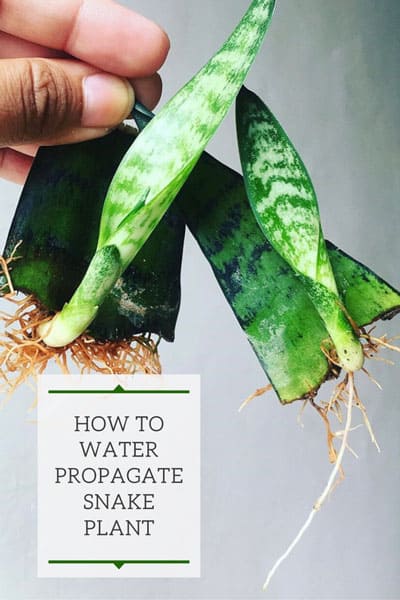
Rooting and propagating snake plant, or Sansevieria, in water has got to be one of the most fun propagation projects. It is very quick and simple to set up. The hardest part is waiting!
Let's take a look now at how to water propagate snake plant!
Would you like to save this post?
Enter your email, and I will send this link straight to you!
Another common name for this plant is mother-in-law's tongue. Depending on where you come from, the common name can vary! The genus, Sansevieria, is the botanical name so this is the accepted universal name.
It really is super simple to root Sansevieria in water. The process is as follows:
Choose a healthy leaf, but not one that is too old.
Cut the leaf off with a sharp pair of scissors.
Allow the leaf cuttings to sit for a couple days to let the cut scab or callous over.
Place in water and wait.
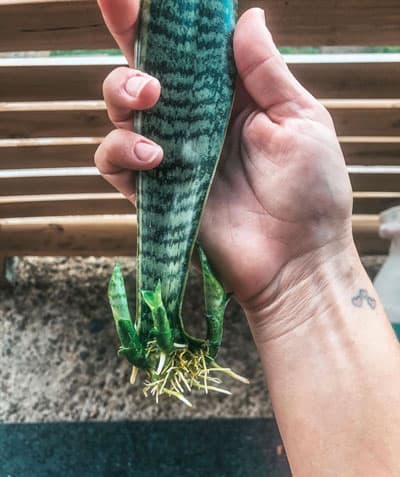
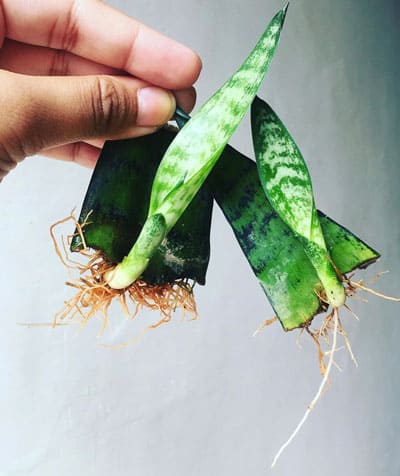
Photo credit: @marissalmcgraw on Instagram
Simple right! Now why do we do all these steps? Let me explain a little more in detail now.
Choose a healthy leaf, but not one that is too old. Plants are like people. As we get old, we no longer function like we used to, and are not quite as vigorous 😀
To increase your chances, take a few cuttings if you can!
Cut off the Leaf
Cut the leaf off the plant with sharp, preferably sterilized scissors. You can use a single leaf, or even cut the leaf into sections.
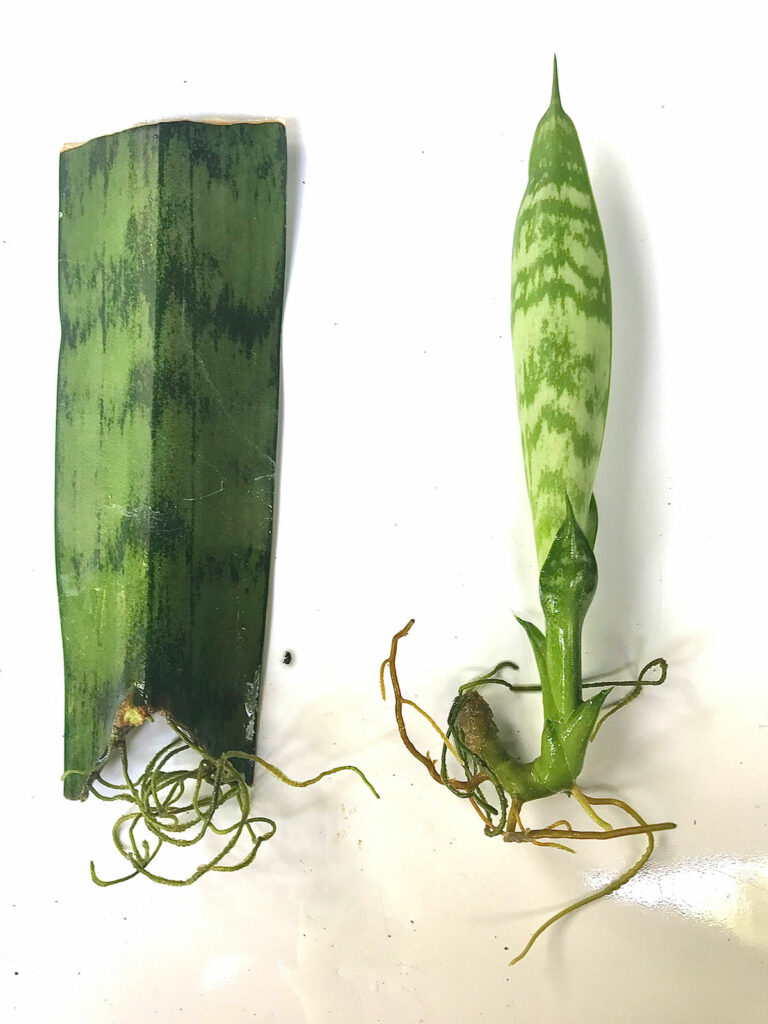
Each section will actually grow baby plants! So from a single leaf, you can get multiple plants.
Aim to have leaf segments that are at least 2-3 inches or so (5-7.5 cm). Or you can use the whole leaf.
Allow the Cuttings to Air Dry
This is not absolutely 100% critical for Sansevieria, but I like to let the cuttings sit for a couple days before placing them in water just in case. I have had success both ways.
This is so that the cuts on the leaf will dry, callous over, and help prevent rotting.
Place in Water and Wait!
This is the hard part! It takes a LONG time to root Sansevieria. However, rooting Sansevieria in water is actually quicker than rooting them in soil. Substantially quicker!
There is one important tip to remember if you decide to cut each leaf into multiple segments.
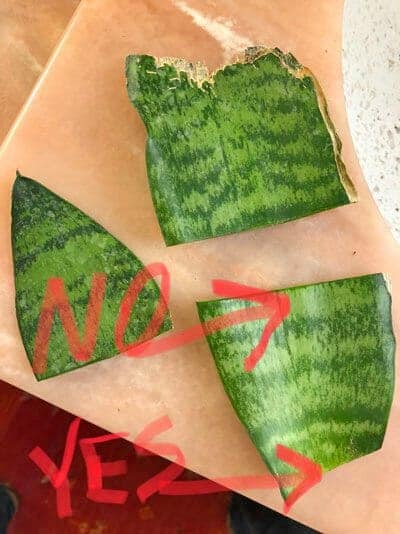
You must keep the leaf segments in the same orientation as they were growing on the plant.
As you can see in the photo above, on the right, you can see that I cut one leaf in half. You can NOT turn the leaf segments upside-down or they will not root.
Place the whole leaves, or leaf segments, in a glass or jar with at least an inch of water or so.
If you use a glass that is narrower at the bottom, it can hold the leaf in place so that the bottom of each leaf doesn't rest at the bottom of the glass.
You can also use small orchid clips or hair clips to hold the leaves up securely to propagation vessel but so they're not resting at the bottom on the glass.
This will allow room for the roots to grow. The roots will grow anyway, but this is a little better.
THE SECRET TO SUCCESS
Be sure to change the water frequently. I would start with once or twice a week. If you notice that the water is getting cloudy or dirty, change it more frequently.
Even if you do this, you can still run into issues so here is the real secret to success with water propagation of Sansevieria that no one is talking about!
This is critically important! You may notice especially in the beginning part of the water propagation process that your leaf cuttings will get slimy.
Gross right? Check your cuttings in water often!
Take them out and feel the parts of the leaves that were underwater. If they are slimy, rinse the leaves off under warm or tepid water in the sink and gently rub them with your finger to remove the slime.
Once all your cuttings are clean, you should also clean the container that you have your cuttings in with soapy water. Rinse completely, add the cuttings back in, and add fresh water.
This should greatly diminish the chances of your cuttings from rotting!
Place the rooting cuttings by a window. Bright indirect light, or even a little bit of sun, would be fine. I would avoid placing the cuttings in full sun though, and definitely avoid placing them in the dark.
One last note, if your home uses a water softening system, don't use this water for your plants! These systems typically place sodium in the water, which is toxic to plants.
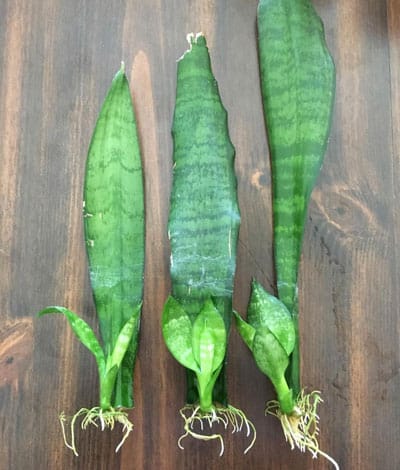
Photo credit: @houseplantdiaries on Instagram
How Long Will The Roots Take to Grow?
Like I mentioned, if you use the water propagation method, it will be MUCH quicker!
From all the people that I've communicated with on Instagram, the quickest I've heard is 15 days. This is pretty rare and exceptionally fast. These results are not typical.
I would say the average is about 2 months before you'll see any roots emerging.
Sometimes it takes much longer. (Soil propagation of sansevieria can take several months for roots to form, and even longer for the pups to form.)
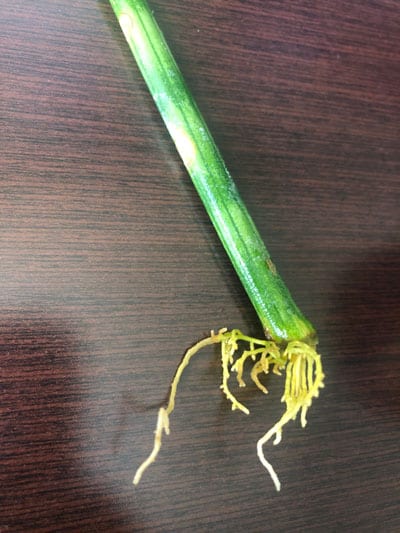
After the roots form, you will have to wait a bit longer for the pups to form. The roots will form first, and then perfectly formed little pups will start to grow.
Photo Credit: @thegirlwithplants_ on Instagram
Another tip to remember, is that if you have a variegated plant, the resulting pups that grow from leaf cuttings will NOT be variegated!
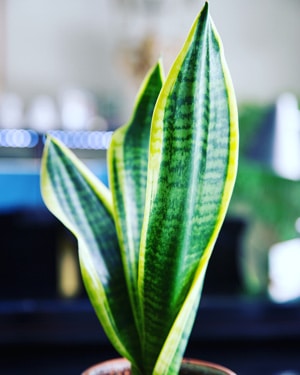
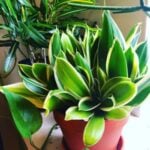
Take this beautiful variegated Sansevieria of mine:
See those beautiful yellow edges? If I were to take leaf cuttings of this snake plant and root them, the resulting pups will not be variegated.
If your goal is to have variegated offspring, you will have to divide the plant itself at the roots, if your plant has multiple crowns, and just split the plant and pot up the individual sections.
Here is one of my own water propagations and it took less than 6 weeks to root, which is pretty good!
This vessel was placed right in front of an Eastern window so it would get some morning sun.
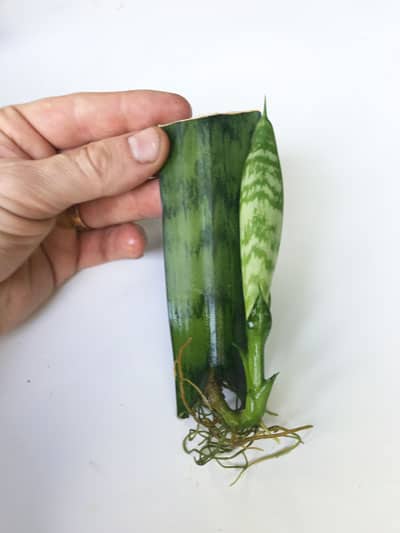
Take a look at this beautiful pup that grew from one of the leaf cuttings!
You CAN grow them permanently in water! In the post I also show you how to separate the pup from the leaf.
Pot Up Your Rooted Sansevieria Cuttings
If you'd rather plant the pups in soil, then follow the procedure below and you use pick wonderful potting mixes from my best soil for snake plants post.
After your leaves have about an inch of roots, you can pot them up into soil. Some people wait until they can see the pups growing, and then pot them up. Honestly, either way is fine.
Here is another rooted Sansevieria (Sansevieria cylindrica) that I rooted in water. This one took a few months and it still doesn't have pups!
Photo credit: Me! (@ohiotropics) My Sansevieria cylindrica
It's fun to actually see the pups growing in water before you pot them up! Don't wait too long though if your intention is to grow them in soil. I will probably pot this cutting up before the pups start to form.
They will establish better, but really, either way is just fine.
What kind of soil is good for Sansevieria? Check out my blog post on Sansevieria care where I talk about this topic.
If you'd like to propagate Sansevieria in soil instead of water, be sure to check out my blog post on soil propagation of snake plants. The process is a little different and takes longer, but requires less maintenance.
Do I need to cut a V at the bottom of my snake plant cutting?
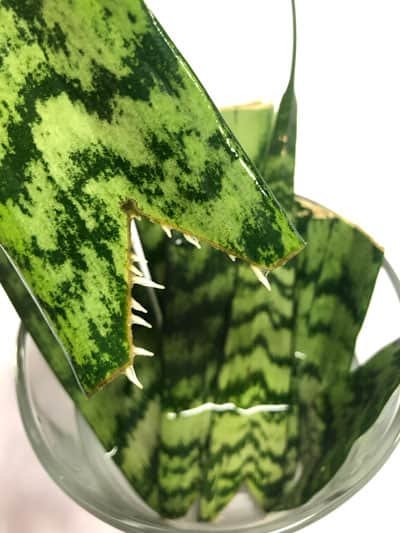
Cutting a V at the base of the cutting is not absolutely necessary, but it is very helpful for the following reasons:
It allows you to tell which end is the bottom of the cutting. The end with the upside-down V will go underwater. Remember, snake plant cuttings can not be turned upside down from how they grew on the mother plant otherwise they won't grow.
The V allows for the future pups to have enough room at the bottom of your propagation vessel so they're not cramped.
The V allows for more surface area so that you will get more snake plant pups.
How many cuttings can I make from one snake plant leaf?
A lot! The main issue is not making your Sansevieria leaf cuttings too small where they end up falling completely underwater.
As long as you can support them so only the bottom part of the cuttings are underwater, you can make any many cuttings off of a single leaf as you want.
Or if you want to cut a lot of smaller pieces that wouldn't be able to stand on their own in your vase or jar (or whatever vessel you're using), you can always gently clip your cuttings to the side of the vessel to secure them so that they don't fall completely in water.
The more cuttings you can make from a single leaf, the more new pups that you will grow.
How long does it take for snake plant pups to grow?
Typically, your cuttings will start to grow new roots first and then the pups (new baby plant) will grow afterward.
Depending on your growing conditions, you will be waiting a long period of time. Rooting can start to take place in as little as a couple weeks to a couple months or more.
Plan on waiting about 2-4 months before you see any new pups growing. You can shorten the time by placing your propagation vessel on top of a propagation mat that will gently warm the water.
Starting off by choosing healthy leaves to make your cuttings should give you quicker and better results. Don't use any sickly-looking leaves and leaves that have started to yellow.
Why are my snake plant cuttings rotting in water?
In order to help prevent your snake plant leaf cuttings from rotting, here are some important tips. If you implement all of these tips, you will be able to greatly minimize rotting.
After you make your cuttings with sharp shears or a sharp knife (make sure you sterilize them with isopropyl alcohol), allow them to air dry for a couple days. Make sure you have a clean cut and the cutting is not frayed. After a couple days, feel the bottom of the cutting. It should feel dry at that point and you can then place the bottom ends of the cuttings in water to start the rooting process. Make sure that the bottom of the cuttings stay below the water level.
Initially, you will want to change the water very frequently. Change it at least once or twice a week, or more if you notice that the water is getting cloudy. Dirty water will encourage rotting! Fresh water will also introduce more oxygen, which will also helps prevent rotting.
Rinse and clean your propagation vessel with soap and water to get it squeaky clean.
Lastly, especially at the beginning of your propagation process, take your cuttings out of the propagation vessel and run them under running water. Use your finger to gently rub the cuttings and remove any slime that has formed on the cuttings.
Water propagation slime. What is it and why is it on my cuttings?
The slime that you feel on your snake plant cuttings (or any cuttings that you are propagating in water), is likely a bacterial slime. This biofilm (even if it's a beneficial strain of bacteria) can cause your cuttings to rot if enough of it grows on your cuttings.
So be sure to regularly rinse off the slime from your cuttings using running water, while your fingers gently rub the cuttings.
When is the best time to take snake plant cuttings?
The best time to take cuttings is during the growing season when the plant is actively growing and there is plenty of light.
This will greatly speed up and increase your chances of success. Anytime from late water through spring and summer works well.
Avoid taking cuttings in the middle of winter, especially if you live in an area with dark, short days or you will be waiting forever for new growth to occur.
When can I cut the pups off of my snake plant cuttings in water?
I like to wait until the pups have some roots of their own before I snip them off and pot them up in a small pot. Remember that your cuttings will form tiny roots first, and then the pups will grow. The pups will start to grow their own roots too, and you can snip it as I show in the photo below.
What is the best soil to use for my snake plant pups?
Avoid using plain succulent soil by itself since I find the drainage is not great for many of the commercially available mixes. I like to add some ¼" pumice (link to Amazon) in order to accomplish a more well-draining soil.
If you don't want to bother mixing your own, I highly recommend the Tropical Succulent Soil Blend from Oh Happy Plants. It can be used straight out of the bag and is wonderful stuff! If you use my link, you will also get 10% off automatically at checkout.
Avoid using a bigger pot for your cuttings. Start out smaller, and then as your plants grow, you can go up a pot size.
I hope you've enjoyed this post on water propagation of Dracaena trifasciata (previously known as Sansevieria trifasciata). Although there different methods to propagate your snake plants or mother-in-law's tongue, water propagation is definitely the most fun to watch!
That's all folks! Have you tried Sansevieria propagation in water? Keep in mind that there are other ways to propagate snake plants too.
I would wait until the pups themselves start to get some roots. At that point, you can cut them off and plant them separately. But I've also accidentally broken pups off before they had their own roots and placed them in soil and they did just fine! They're pretty resilient...
These plants can take quite a bit of sun despite their common classification as "low light" plants. You will just need to water more frequently since your soil will dry out more. Otherwise, you are ok! Be careful of extreme changes though. If your plant was in a low light area and then suddenly you place it in a lot of sunlight, it may burn. You'll want to gradually acclimate it to higher light. But once acclimated, these plants CAN take a lot of direct sun. Hope this helps!
It's just a biofilm forming and it can cause the cuttings to rot. You should routinely keep an eye on it and follow the steps I indicated in the post for best success!
Hey, my snake plant cuttings have been rooting for about 2 months now - no sign of any pups. Can I plant them in soil now? Or should I wait for the pups?
You really can do either! Some people like to watch the pups develop, and then plant them in soil. But you can plant them right now in soil if you don't care about it.
Hi. I just got a pup and the plant is still in water. When I plant it in soil how deep do I plant it? Should I wait until the pup becomes more Of a dog ?? I’m afraid to kill it.
I did a cutting of mine and been trying to propagate in water for about 2 months and I’ve got no sign of roots. We’ve been changing water weekly and it sits at the kitchen window. It’s still green and looks much like it did when we cut it but we gave noticed some clear cloudy stuff forming even with water changes. Is this normal? Any advice?
Hi Jen! My advice is to keep changing the water anytime you notice cloudiness, and keep waiting! These require a lot of patience. Also, when you change your water, feel your cuttings. If they are slimy, gently clean and rub them with your finger under warm, running water. Other than that, you'll just have to sit tight and wait. Timing for rooting varies, but as you can see, it's a slow process 🙂
Can you keep the plants growing in water? I saw someone had several of them just growing in clear vases without water. So I got the vases and now that I read your article, it seems like you're not supposed to question mark once they root you're supposed to put them in soil? I was actually going to take my plants out of the pot because they're not doing so good and put them in the vases with water instead. Will this kill them?
You can really grow anything hydroponically, but I've never tried transferring a fully rooted potted plant to water. I think it would be too tricky with Sansevieria. You'd have to remove all the soil and the rhizomes can be pretty brittle. Why not try and propagate some and let them root in water and then keep them in water. Did you read my snake plant care blog post? It will help you figure out why your potted plant isn't looking good.
Hi! What do you mean by dividing ”the plant itself at the roots, if your plant has multiple crowns, and just split the plant and pot up the individual sections.”
Could you explain where and when you split it? And what are the multiple crowns referring to?
Thanks:)
Hi Kelly, if you have multiple plants in one pot, you can just take the plant out of the pot and divide it up into any many plants as you want. That's really all I'm talking about. It's hard to really explain just by describing in words!
Hi there ! I have some snake plans but most of them after I reported they don’t have any established root systems ! But they are somehow just surviving! What did I do wrong ?
It's hard to say without knowing how you cared for it and what conditions you provided for the plant. It could have been that there were extremes in soil moisture. Either too dry for too long, or maybe it suffered root rot from the soil staying wet for too long. Do either of these cases seem probable?
I have a fully formed moonshine bulb with several tall leaves on it. I’ve noticed it is wrinkling and shriveling. I took it out of the soil to see if it was root rot and it looks totally fine aside from it oddly not having any roots really at all. Head scratcher. Can I put the whole thing in water to root it and save it or should I just keep it in the soil and keep the soil moist? It just doesn’t seem to be getting any water I guess since it doesn’t have roots. This is a new plant btw and I hadn’t repotted it yet to know it didn’t have any roots. I’m so confused by it.
Hi Lindsey, I assume that it was that way by the time you received the plant. It might be easier on the plant if it kept it in soil. Maybe put a small support stake in the pot so the plant doesn't wobble around. You want it securely in the pot. Place the plant right in front of a window. It will be OK even if it gets some morning sun. Eastern exposure windows are great. Water thoroughly and let the top inch or two dry out. Then repeat. If you keep an eye on it, it should bounce back for you. Hope this helps! You could also put it in water to root, but it will probably be easier on the plant this way in your case.
I didnt know you could keep them in water until the pups grew! They won't drown? I put mine in water for about 3-4 weeks and then planted in soil but its been about 2-2.5 months and I dont have any pups yet so I think Im going to put them back in water. Would love to watch them grow 🙂 Thanks so much for this post, really helpful! x
I'm watee propagating a sansevieria leaf right now! It has just sprouted a little pup and it is growing FAST! I came here to find out how long I should wait before transferring to soil. Thanks for the detailed information!
I will have to update the post showing how to plant them. You can gently separate the pup from the leaf once the pup is big enough and has its own roots (the leaf cutting will have its own roots, and then when the pup starts to grow, it will grow its own roots). Or if you're not sure or are too scared, you can just plant the entire leaf cutting that has the pup on it. As the pup grows, you can cut off the original leaf cutting that it was growing from. I will update my post at some point showing how I do this. I hope this helps!
@Raffaele, I’m ready to soil my water propagated cutting. Curious about how often I should water it once I move it to soil? Should I consider it like the momma plant and only water when needed - or because it’s going from full water does it need to transition slowly? If that makes sense? Lol



When I cut my snake plant to put in the water will the end that's part of the big plant grow back??
No it unfortunately will not grow back 🙁
How big should the new pups get before cutting off of the leaf used for propagation and planted by itself?
I would wait until the pups themselves start to get some roots. At that point, you can cut them off and plant them separately. But I've also accidentally broken pups off before they had their own roots and placed them in soil and they did just fine! They're pretty resilient...
Hi! i put my mine near a window and it gets quite a lot of sunlight is that bad should i move it to a shady area?
These plants can take quite a bit of sun despite their common classification as "low light" plants. You will just need to water more frequently since your soil will dry out more. Otherwise, you are ok! Be careful of extreme changes though. If your plant was in a low light area and then suddenly you place it in a lot of sunlight, it may burn. You'll want to gradually acclimate it to higher light. But once acclimated, these plants CAN take a lot of direct sun. Hope this helps!
Hello,
what is the slimy substance?
Can it kill the plant? if its alot will it kill the cuttings?
It's just a biofilm forming and it can cause the cuttings to rot. You should routinely keep an eye on it and follow the steps I indicated in the post for best success!
Hey, my snake plant cuttings have been rooting for about 2 months now - no sign of any pups. Can I plant them in soil now? Or should I wait for the pups?
You really can do either! Some people like to watch the pups develop, and then plant them in soil. But you can plant them right now in soil if you don't care about it.
Can you leave them. In water for ever?
You certainly can grow them hydroponically, yes! I would make sure to add a good fertilizer though if you choose to do this.
Hi. I just got a pup and the plant is still in water. When I plant it in soil how deep do I plant it? Should I wait until the pup becomes more Of a dog ?? I’m afraid to kill it.
It's hard to describe. I'd have to see a photo if you'd like to send me one. Just try not to bury the crown of the pup.
Wonderful video! Very informative. Thank you for s117@gmail.comharing.
Nice.
I did a cutting of mine and been trying to propagate in water for about 2 months and I’ve got no sign of roots. We’ve been changing water weekly and it sits at the kitchen window. It’s still green and looks much like it did when we cut it but we gave noticed some clear cloudy stuff forming even with water changes. Is this normal? Any advice?
Hi Jen! My advice is to keep changing the water anytime you notice cloudiness, and keep waiting! These require a lot of patience. Also, when you change your water, feel your cuttings. If they are slimy, gently clean and rub them with your finger under warm, running water. Other than that, you'll just have to sit tight and wait. Timing for rooting varies, but as you can see, it's a slow process 🙂
Can you keep the plants growing in water? I saw someone had several of them just growing in clear vases without water. So I got the vases and now that I read your article, it seems like you're not supposed to question mark once they root you're supposed to put them in soil? I was actually going to take my plants out of the pot because they're not doing so good and put them in the vases with water instead. Will this kill them?
You can really grow anything hydroponically, but I've never tried transferring a fully rooted potted plant to water. I think it would be too tricky with Sansevieria. You'd have to remove all the soil and the rhizomes can be pretty brittle. Why not try and propagate some and let them root in water and then keep them in water. Did you read my snake plant care blog post? It will help you figure out why your potted plant isn't looking good.
Hi! What do you mean by dividing ”the plant itself at the roots, if your plant has multiple crowns, and just split the plant and pot up the individual sections.”
Could you explain where and when you split it? And what are the multiple crowns referring to?
Thanks:)
Hi Kelly, if you have multiple plants in one pot, you can just take the plant out of the pot and divide it up into any many plants as you want. That's really all I'm talking about. It's hard to really explain just by describing in words!
Hi there ! I have some snake plans but most of them after I reported they don’t have any established root systems ! But they are somehow just surviving! What did I do wrong ?
It's hard to say without knowing how you cared for it and what conditions you provided for the plant. It could have been that there were extremes in soil moisture. Either too dry for too long, or maybe it suffered root rot from the soil staying wet for too long. Do either of these cases seem probable?
I have a fully formed moonshine bulb with several tall leaves on it. I’ve noticed it is wrinkling and shriveling. I took it out of the soil to see if it was root rot and it looks totally fine aside from it oddly not having any roots really at all. Head scratcher. Can I put the whole thing in water to root it and save it or should I just keep it in the soil and keep the soil moist? It just doesn’t seem to be getting any water I guess since it doesn’t have roots. This is a new plant btw and I hadn’t repotted it yet to know it didn’t have any roots. I’m so confused by it.
Hi Lindsey, I assume that it was that way by the time you received the plant. It might be easier on the plant if it kept it in soil. Maybe put a small support stake in the pot so the plant doesn't wobble around. You want it securely in the pot. Place the plant right in front of a window. It will be OK even if it gets some morning sun. Eastern exposure windows are great. Water thoroughly and let the top inch or two dry out. Then repeat. If you keep an eye on it, it should bounce back for you. Hope this helps! You could also put it in water to root, but it will probably be easier on the plant this way in your case.
I didnt know you could keep them in water until the pups grew! They won't drown? I put mine in water for about 3-4 weeks and then planted in soil but its been about 2-2.5 months and I dont have any pups yet so I think Im going to put them back in water. Would love to watch them grow 🙂 Thanks so much for this post, really helpful! x
Hi Whitney! The pups take a while to form. Sometimes several months! No, they will not drown in just plain water.
I'm watee propagating a sansevieria leaf right now! It has just sprouted a little pup and it is growing FAST! I came here to find out how long I should wait before transferring to soil. Thanks for the detailed information!
Hi Lisa! You can plant them right now. No need to wait. 🙂
@Raffaele, my cutting bos showing pup...I am not sure how to put it in soil. Please guide
I will have to update the post showing how to plant them. You can gently separate the pup from the leaf once the pup is big enough and has its own roots (the leaf cutting will have its own roots, and then when the pup starts to grow, it will grow its own roots). Or if you're not sure or are too scared, you can just plant the entire leaf cutting that has the pup on it. As the pup grows, you can cut off the original leaf cutting that it was growing from. I will update my post at some point showing how I do this. I hope this helps!
@Raffaele, I’m ready to soil my water propagated cutting. Curious about how often I should water it once I move it to soil? Should I consider it like the momma plant and only water when needed - or because it’s going from full water does it need to transition slowly? If that makes sense? Lol
Hi Andrea! Just go by the soil dryness. When the soil is mostly dry, give it a good soak.