Thrips are arguably the most frustrating and persistent houseplant pest that you will encounter. I know the struggle all too well, so in this post, I will cover everything that you need to know about how you can practically and effectively deal with thrips on houseplants.
I'll touch on the lifecycle of thrips, which is really important to understand so that you can effectively treat for them. This is not a pest that you can spray once and be done with it. This goes for many pests, but particularly thrips.
I also have some photos showing thrips damage so that it can help you correctly identify the problem. I'll also recommend some products that I like to use to manage and eliminate thrips on houseplants.
I've learned that all it takes is ONE female thrips in order to cause a big infestation in your houseplants. There are about 6,000 species of thrips, and many will devastate commercial crops, but only about a dozen or so appear on our houseplants.
Also, before we continue, I'd like to mention that the singular and plural is...thrips. One thrips and two thrips are both correct...but in the end, we want ZERO thrips, so let's get into it.
Table of Contents
WHAT ARE THRIPS?
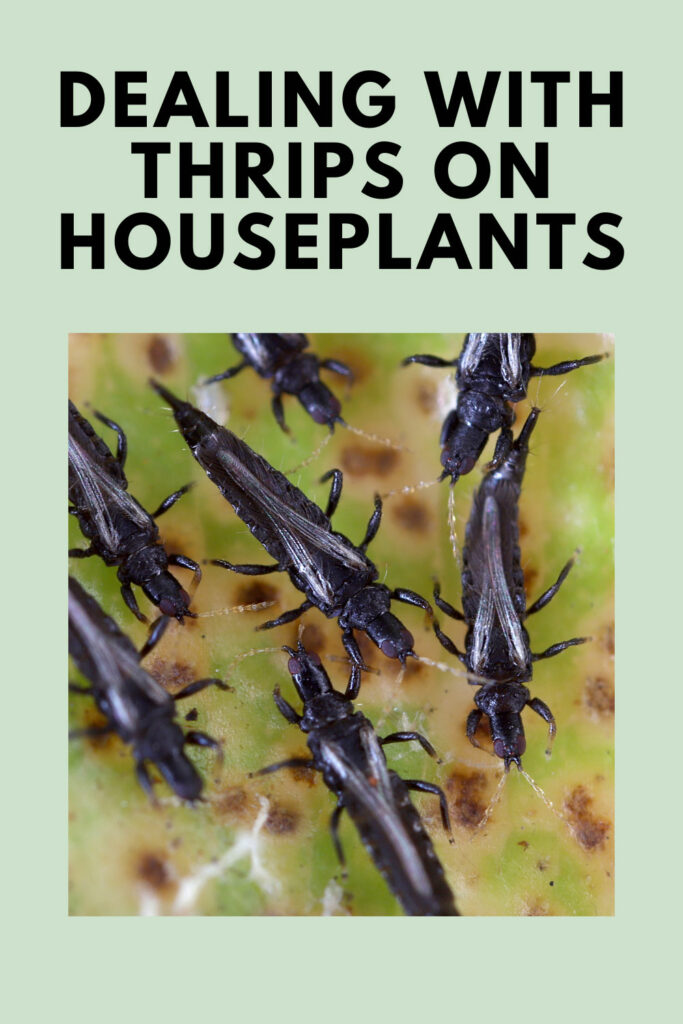
Thrips are very small pests and often times, you will see the damage that they cause before you actually notice the pests themselves. Most thrips are only about 1mm long or so and are very narrow.
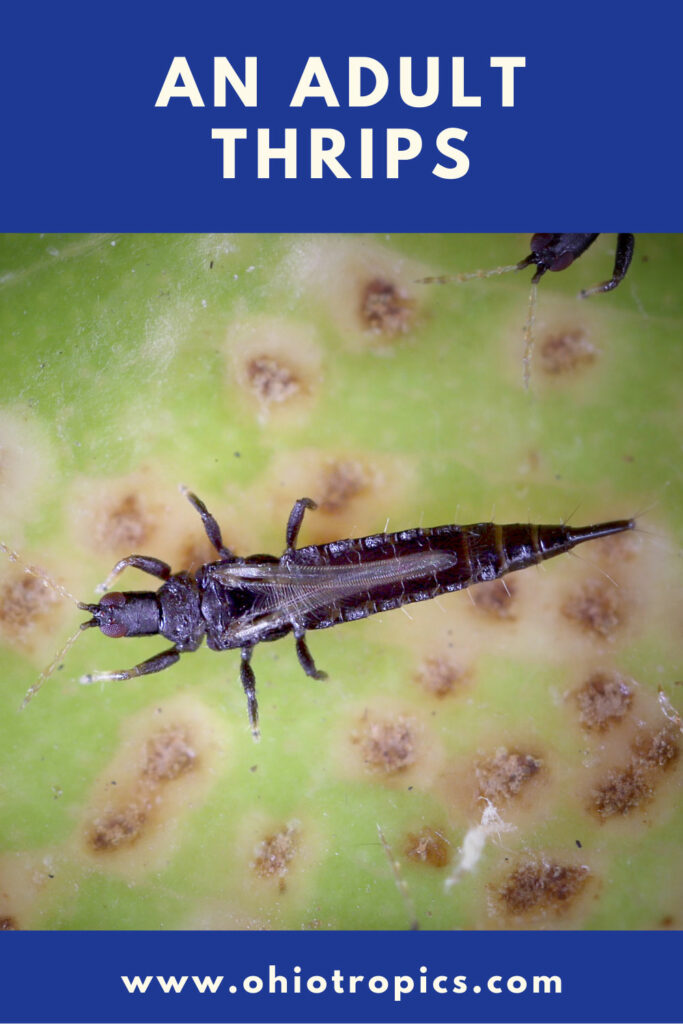
Most of the adult thrips that I've seen are black in color, but they can also be other colors as well. Immature thrips, called nymphs, will be lighter in color.
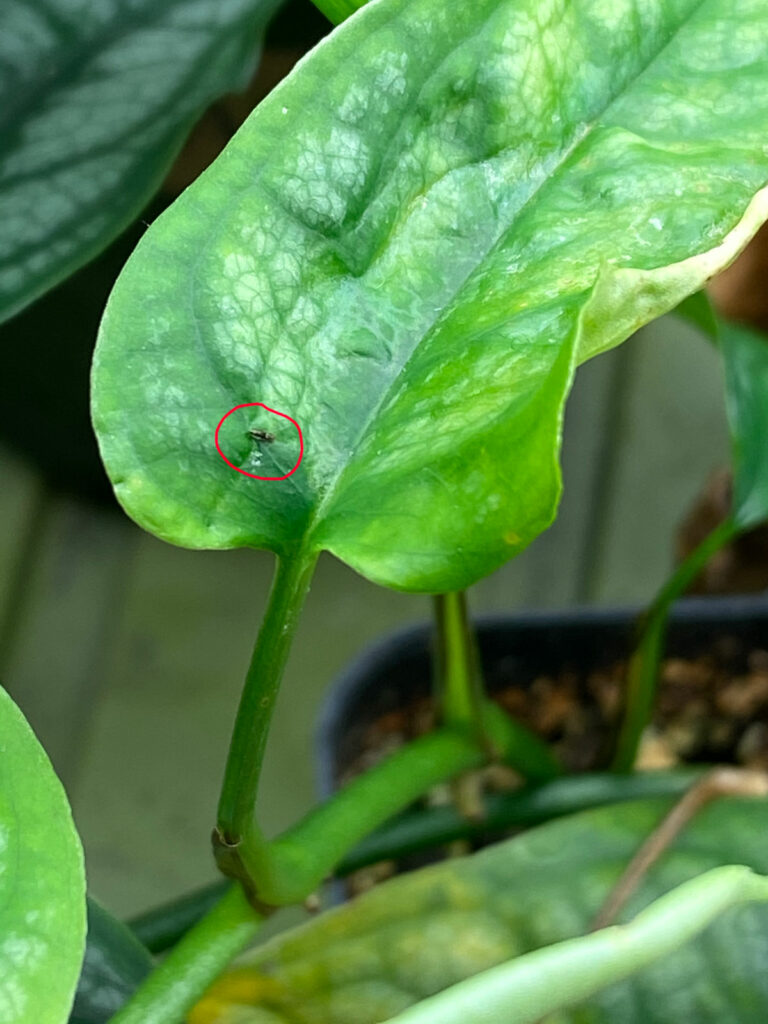
Here is a closeup of an adult thrips:
Here are some nymphs that I found scattered all over on my Peperomia polybotrya, or Raindrop Peperomia. Note the pale color:
Thrips nymphs on my Raindrop Peperomia (Peperomia polybotrya)
THRIPS DAMAGE ON HOUSEPLANTS
How do thrips damage your plant?
Thrips basically pierce holes into your plants (leaves, flowers, etc.), and then they literally suck out your plant's sap and juices.
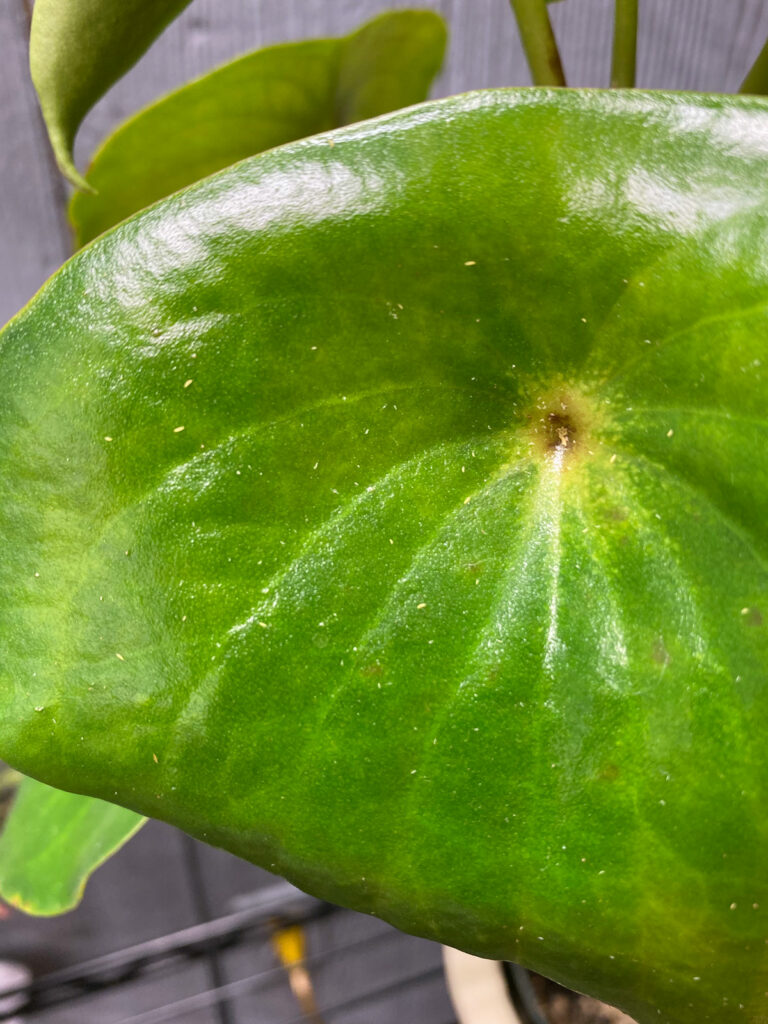
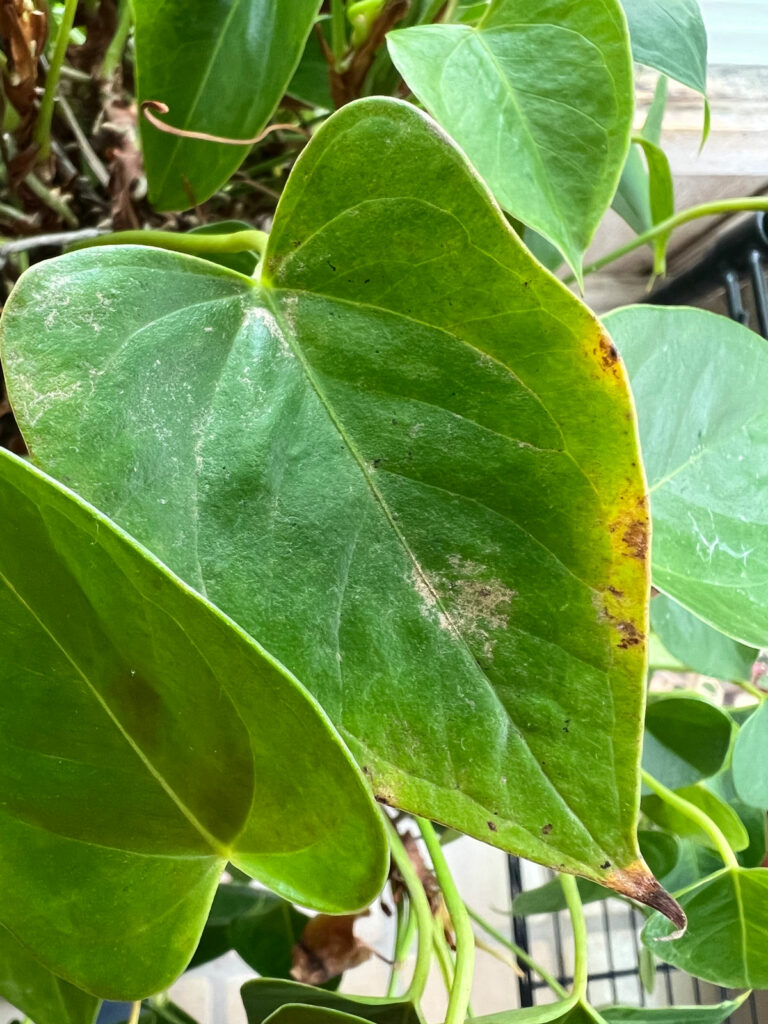
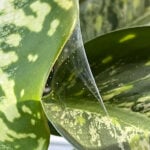
The resulting damage will typically look like silvery or brownish marks on your foliage. Some species of thrips even leave dark deposits (which is basically thrips poop!) Gross.
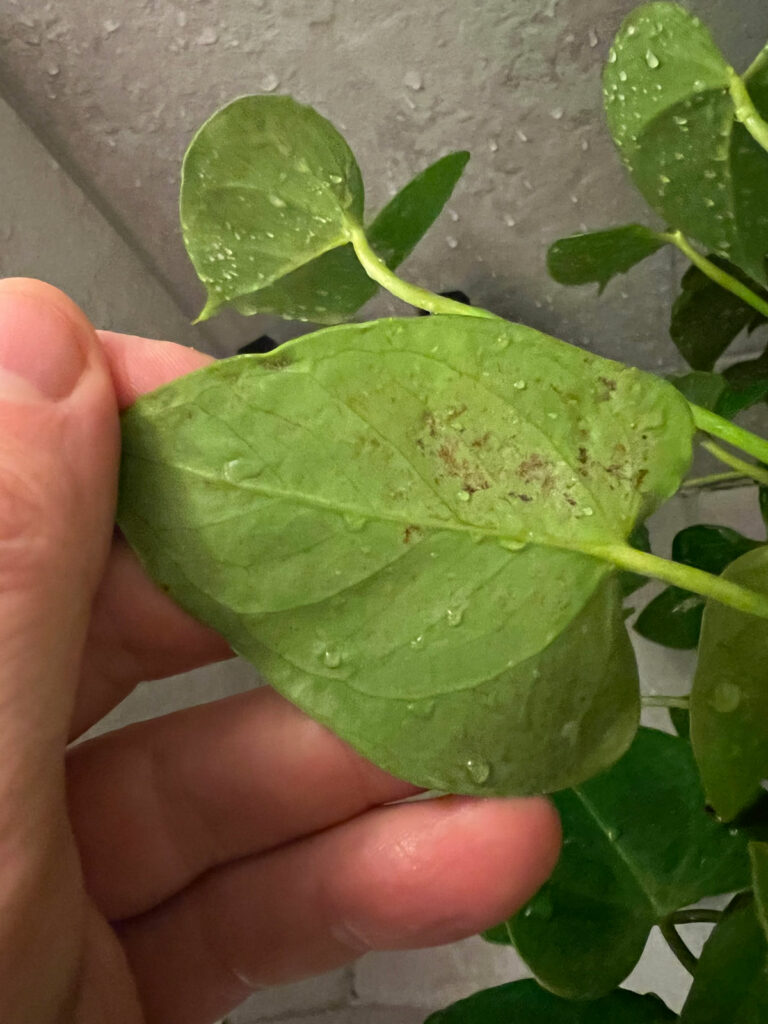
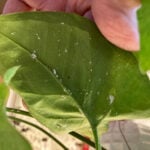
Be sure to also inspect the bottom of your leaves as well. In the photo below, the top of the Anthurium leaf looked fine, but take a look at the thrips damage at the bottom.
Thrips damage on the underside of my Anthurium leaf
Flowers and leaves can even develop silvery streaks, and the new growth or growing points of your plants can seem gnarly and contorted.
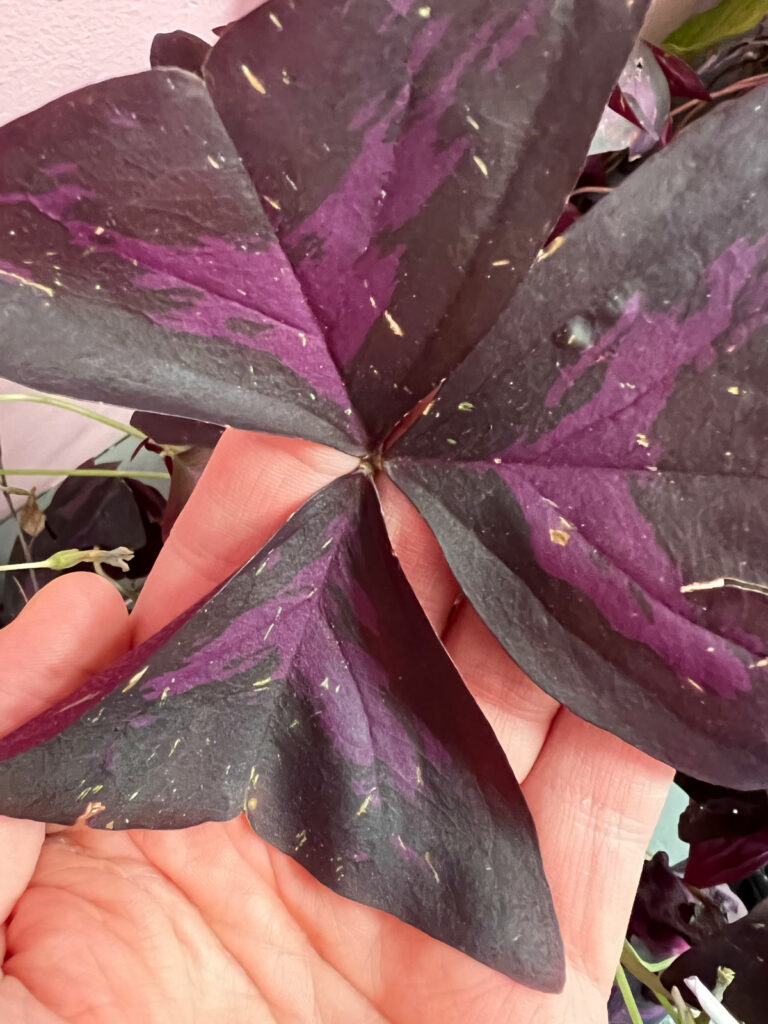
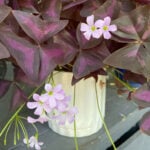
Here is some thrips damage on an Oxalis triangularis leaf.
Thrips damage on Oxalis triangularis
Female thrips will insert their eggs into your plant's foliage, flowers and stems. Then the eggs will hatch and the juvenile thrips, called nymphs, start feeding on your plant.
In most species of thrips, the fully grown nymphs will often drop to the soil where they will undergo the pupal stage. After this part of the lifecycle, they will then transform into adults and fly back up to your plant and perpetuate a cycle of destruction.
Under the right temperatures and conditions thrips can go from eggs to adult in as soon as 2 weeks.
One of the reasons that thrips are so difficult to manage, is that even if you use an insecticide spray on your plant, it will kill any nymphs and adults, but the eggs will not be affected since they are buried in your plant's tissue.
Read this post in its entirety because I will discuss the best ways to treat thrips on houseplants so that you can enjoy the most success.
Thrips can come from a number of places including:
If you've summered your plant outdoors, they could have attacked your plant and you could have proceeded to bring thrips indoors when you've brought your plant back inside.
Thrips could have been lurking on new houseplants that you've purchased or brought home. They are often very difficult to see, especially at the beginning of the infestation.
Among the most susceptible houseplants to thrips are: Aroids (Monstera, Alocasia, ZZ Plant, and many more), palms and Calathea.
HOW TO GET RID OF THRIPS ON HOUSEPLANTS
For plants that have suffered a severe infestation, it may be best to just throw away the plant. Unless it's something rare or special to you, often times, it is not worth fighting the battle if the plant is severely infested.
Please note that some plants can be sensitive to insecticidal soap, including some succulents, ferns and begonias.
If you are using insecticidal soap for the first time on a certain plant, test it first. Spray a leaf or two, and wait for 24 hours. If everything looks fine, go ahead and spray the entire plant.
Keep your plants out of direct sun when you spray them while the plant is still wet.
If you've noticed that the leaves had an adverse effect, try another spray. Always read the label carefully as they will often list which plants the product is not safe for.
Here is the process that I use to treat for thrips:
1. Remove heavily infested leaves/flowers
Cut off or trim away any heavily infested plant parts. Place them in the trash, tie the bag up tightly and discard.
Would you like to save this post?
Enter your email, and I will send this link straight to you!
2. Wash down your plant
Take your plant to a sink or shower, or even outdoors if you'd like if it's warm enough. Rinse off your entire plant as thoroughly as you can, including the undersides of the leaves.
This will help knock down the population of thrips on your foliage.
3. Spray with insecticidal soap
Next, after the plant is dry, I like to use a good insecticidal soap to spray on your plant. Cover all surfaces the best that you can, including the undersides of the leaves. Leave no surface unsprayed.
If you have any flowers that seem affected be sure to spray those as well (or just snip them off and throw them away).
The insecticidal soap will kill any nymphs as well as any adult thrips that come in contact with the spray.
Bonide makes a good insecticidal soap that you can use. Insecticidal soaps are considered to be non-toxic to humans and pets.
4. Apply a systemic insecticide
Like I mentioned earlier in this post, any type of insecticide spray that you apply will not work on the thrips eggs because they are found under the surface of the leaf inside of the plant's tissue.
This is where a systemic insecticide comes in. You can sprinkle the recommended amount of systemic insecticide into your soil and water it in.
The plant will then take up the insecticide from the roots. When thrips feed on your plant, it will essentially poison them and thus help stop the lifecycle from perpetuating.
This is available for home use in the U.S., but apparently is not available in some countries like Canada and others.
Using a systemic insecticide in combination with diligent spraying with insecticidal soap is very helpful.
If you don't want to use a systemic or can't obtain any, you can still treat with insecticidal soap but it will require a bit more diligence and multiple, weekly applications over a period of several weeks.
5. Use sticky traps to capture adult thrips
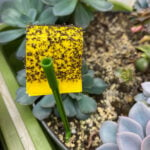
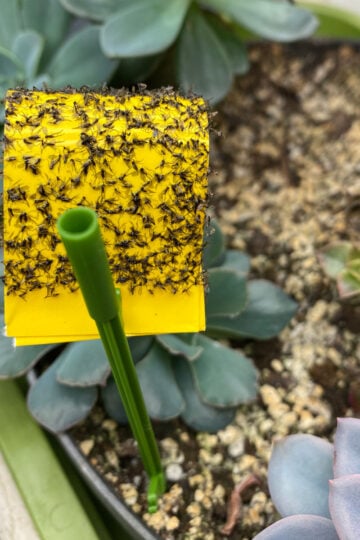
You may already be very familiar with yellow sticky traps used to capture adult fungus gnats. They will also work on thrips!
Place your yellow sticky traps in the pot of your infested plants and monitor them as they catch your thrips.
Blue sticky traps are particularly attractive to thrips, so you can use these as well. You can even use them in combination with yellow sticky traps. Place a yellow stick trap at the base of your plant near the soil, and maybe hang a blue sticky trap right above your plant.
Capturing as many as you can on the sticky traps will help knock down the population since they will no longer be able to lay eggs on your plants.
6. Repeat steps 2 and 3 weekly
Don't skip this step! This one is critical! It is important to repeat step 2 (washing down your plant) and step 3 (spraying with insecticidal soap) weekly, even after you don't see anymore new damage from thrips.
Try and be diligent and do this weekly because there are always thrips in different stages of their lifecycle, so this is necessary to kill as many thrips as possible.
Lastly, there is one practice that I wanted to mention that I've heard many plant parents do. Some people will wash off all the soil from the roots and repot into fresh potting mix.
I would recommend not taking this approach for the following reasons:
You can still have thrips dropping from the foliage above into your fresh soil, thus negating the reason you changed the soil out in the first place. This was stated by Keele University professor of entomology William Kirk, who also added that thrips sometimes pupate on the plant, but usually it's on the soil or surface of the soil.
Removing all of the soil from your plant will also unnecessarily shock your houseplant. Stressed plants will be even more prone to further pest attacks.
What are some things that you can do to prevent thrips from attacking your houseplant collection?
Give your plants weekly or biweekly showers if you can. This will not only knock off any thrips that happen to be on your plants, but it will also keep your plants free of dust and allow them to be healthier.
Inspect any new plants that you are purchasing very closely and avoid bringing home any potentially infested plants.
When you do bring any new plants home, it is a good idea to quarantine the plant for 2-3 weeks if you can. Place your new plant away from other plants while you monitor.
Increase humidity preferably with a good humidifier. Thrips (as well as spider mites) tend to prefer drier air, so providing a more humid environment will help to deter them.
Inspect your plants regularly! It is much easier to treat a pest issue when caught early.
RELATED CONTENT
If you've enjoyed this content on treating thrips on houseplants, check out my other blog posts on dealing with other pests on your houseplants:
Lastly, if you'd like to hear more details about thrips (from entomology professor William Kirk) check out Jane Perrone's excellent podcast (On the Ledge) episode where she interviews professor Kirk talking about thrips.
FREQUENTLY ASKED QUESTIONS
Will my plant recover from thrips?
Any plant parts that have already been affected will not return to normal. However, with proper treatment, you can monitor the new growth to ensure that your plant is thrips-free.
Do thrips spread to other plants?
Yes, they definitely can. Some plants tend to be more prone to thrips than others though. Aroids (like Monstera species), and Calathea species seem to be attractive to thrips.
Where do thrips lay eggs?
Most thrips will lay their eggs just below leaf surfaces. This makes it tricky to treat, but if you wash down your plant and apply insecticidal soap weekly with diligence for several weeks, and use a good systemic insecticide in the soil, you can effectively treat thrips. Also be sure to use sticky traps to capture adult thrips.
Do thrips like wet or dry soil?
Thrips and spider mites like hot and dry environments. If you can maintain high humidity and fairly moist soil, this can help to deter thrips.
Have you had thrips on your houseplants? I'd love to hear your struggles and how you've overcome them. Comment below!
This information about thrips was very helpful, especially the photos. I've had a thrips problem now for one year. I did all that you recommended last spring, plus placed every houseplant on a rack in my bathtub for 2 months while treating with insecticide and diatomaceous earth. We thought we won, but this fall they came back with a vengeance.
The key piece of information I want to share is that the thrips infestation I now have is almost completely occurring in covered terrariums. 75-95% humidity. Too many articles say they don't like humidity, but my experience says that's flat out wrong. I've since taken two large plant terrariums out of the house and tossed every single plant in the garbage (not compost). I suspect we will never be thrips free again unless we do a 100% removal of houseplants. It's heartbreaking. We got the thrips from a tiny fern we picked up at a plant store last winter. I regret that $5 purchase every day.
Hi Paulina. I would go to a garden center and ask for any systemic insecticide that they may sell where you are. There may be something similar, but I know that this type of product isn't able to be sold in every country.
Thank you so much for this article. This is my first time dealing with thrips and I'm honestly freaking out. I'm going to try what you recommended but would u recommend just throwing the plant out? If they're that difficult to get rid of then I worry about thinking they're gone and then more plants getting them. Also, I've only seen 1 adult thrip in the last few weeks but my plants keep getting these black circles that look somewhat shiny?? I used images of them to figure out it was thrips, but I just don't see many adults. Any advice?
Throwing the plant out is sometimes the best solution so that you're not spreading the thrips....thrips can be very difficult to get rid of and can spread very quickly!
I have been fighting thrips in my little greenhouse since September 2022. I have tried everything that you mentioned as well as many other things such as neem oil pyrethrins Spanosid acephate hydrogen peroxide mineral oil wiping down with alcohol just about everything but beneficial insects. It doesn’t matter what time of day or night. If I see the one I am out there trying to kill it before I can sleep. I finally decided to call my extension office here in Charleston where I live I was told by the officer that I should just throw all my plants away, I could always just get new ones. This was heartbreaking to me as I’m sure most plant people would understand the connection. We have two are plants especially individuals we’ve had for a long time all right, that was brought through rough time for many reasons that for me I was a garden designer and landscaper here in Charleston for 20 years ago, cancerous tumor, and became paralyzed and had to close my business my only connection to my former life due to the fact that I lost everything throwing them away is so painful I just keep hoping there is something I can do some hell thank you so much for this and for listening to what I have to say
Hi Danielle, I'm so sorry to hear of these struggles. I hope you are healthy now, and thrips are definitely a giant pain...if you're very persistent, you can manage them, but you have to be vigilant and treat your plants regularly. Good luck! I know the struggle!
Hello! And thanks so much for this detailed article about treating thrips! I have been battling thrips for about 2 years now (on and off) with varying degrees of success. Some of my plants I chose to trash and some I chose to treat. For many weeks in a row, I was using a combination of Insecticidal Soap and Captain Jack's Deadbug Brew. Those have worked pretty well for most of my mildly infested plants, but others . . . well, the bugs just would not stop reappearing--they are very good at keeping their species alive!! Recently, I switched to Diotomaceous Earth (DE), sprinkled on top of the potting soil or below the pot inside the decorative container. Left it there for many weeks and bottom-watered so as not to rinse it out. So far, I think this approach has given me the most control over the pesky thrips. Now, a few weeks after I removed the DE from the top of the soil, or let it rinse away with waterings, they are coming back again (!##!). So, I guess I will need to just leave the DE in place indefinitely. But after reading your article, I will try using the systemic granules (in combination with Insecticidal Soap, like you recommend).
Oh, me. It can be discouraging, having to treat bugs for so long, but I think once you get thrips, it'll probably be an ongoing battle. But, maybe it's worth it, with all that we get from our plants.
So glad you enjoyed the post Christie! And I'm sorry you're dealing with thrips. They are NOT fun to deal with! Keep up with it, and you can successfully manage them! Best of luck! (And it is ok to throw plants away if they are severely infested. Sometimes it's just not worth trying to remedy.).
I have a lot of plants in a small house. Have been trying need oil , soap but still see lots of pest 😩. Have you ever tried ladybugs? I guess I’m being lazy but it’s been so frustrating and upsetting to see my little plants damaged.
I haven't tried lady bugs indoors, but it would be fun to try :-). I would not recommend neem oil. Use either an insecticidal soap or horticultural soap.
@Raffaele, may I ask why you don't recommend neem oil? I've been using neem,insecticidal soap,horticultural oil rotations plus diatomaceous earth and stickies. I still have thrips its so absolutely frustrating I was fortunate that I caught it within 2 weeks of exposure so it didn't travel to all my plants but the three that have it I just can't seem to get rid of them I might have to cut my loses which will break my heart I've had these plants for a long time
I don't find neem to be nearly as effective as the other 3. Thrips are definitely a pain to deal with 🙁 Persistence will pay off though.
Hi, Thanks so much for this very helpful article about thrips. Thrips white fly and scale are the worst pests I’ve ever had to deal with. I have a large house plan collection with plants and different parts of the house. A few years ago I saw strange white scar like damage to my Sanseveria plants. I never dreamed those could have any kind of pests. I couldn’t figure out what it was until I finally saw that this could be a case of thrips and it certainly was. I used your methods, including the blue fly traps. Somehow I got rid of them. Now today suddenly I discovered a very small signs of thrips on a couple of plants, And a few thrips themselves. I just say for soap, bon eyed, and put up yellow and blue fly traps. I Inspected all the other plants, and certainly hope this is not going to continue! All best.
I have been struggling with thrips and gnats! I lost 5 of my indoor plants due to this. Now I use safer and the best friend is yellow sticky pad! They are super helpful to catch the gnats! I always check upper side of leaves in every now and then if there is any mark of thrips! Thank you for this article that advises many great ways to chase those! Hope all my indoor plants be happy and healthy! I don't want to lose them! 🙂
Great information!! I treat all my plants thru the growing season with the Bonide systemic, but should it be used during dormancy??
Thanks so much
Robyn
Thrips have been the bane of my existence this year!!! I never had them until I moved into a new apartment in April, and by the end of the summer they had destroyed my massive monstera and several of my pothos. My local garden center recommended Captain Jack's Deadbug Brew (by BONIDE) and it worked really well. They started in on my fiddle leaf fig, but I caught them early with Captain Jack's and I haven't seen any since! Thanks for the product advice, I will definitely check out some of those other insecticidal soaps.
Hi Sarah! Thanks for sharing this information. I've heard of others using the Captain Jack's Deadbug Brew as well and having success with thrips. The reason I didn't add this product to the post was that this product is only rated for outdoor use according to the label. I'd imagine that as long as you spray this outdoors, let the plant dry, and then bring it back inside, that it should be ok! I've never tried it myself, but I may add this information to the blog post to supplement with an additional option. Thanks again for sharing!
@Raffaele, I use been using Jack's Dead Bug Brew inside for about 5 years with no adverse side effects to any person or pet. I was hesitant to use it indoors because of the label, but both my vet and my Dr (I took the label with me to see them) said it should be safe to use indoors, but the cast-off is probably why they recommend spraying outside. It's best to avoid spraying plants inside because when you spray above and around a plant the spray will also land on everything else in about a 2-3 ft radius, and if it lands on any food contact surfaces, bedding, or other areas that could get into your eyes, nose, mouth, or prolonged contact on your skin, some people can be sensitive to it and there's a possibility of irritation. So to avoid the possibility of a lawsuit Bonide covers their butts by recommending it for outside use only. I have a greenhouse in a back room of my house that no one enters except me. Everything in the room is growing supplies and things that don't come in contact with the rest of the house. I use Jack's once a week in there, never had any adverse effects whatsoever. Spinosad is actually a fungus that was discovered in an old rum distillery, so I just avoid breathing in huge breaths while I spray it, just to be safe.
Hi Nikki. Thanks so much for all the details and the clarification!
Thanks for your article on thrips. I didn’t know what was causing the damage that I have seen so thanks for the photos. I had decided that any new plant that enters my house should be treated with the Bonide systemic treatment. I hadn’t thought about the insecticide wash. Your recommended regimen seems to be a great solution. So, again , thanks for your email.
Now I will have to go through your other articles. I have used the Bonide outside systemic treatment with great success.
Jane Kessler
I thank you for ur article on thrips. This past year I lost most all my plants due to black gnats . Now I try to follow preventive measures . I've already purchased the Bonide Systematic Insect Control . I never knew about the Bonide to wash plants . I'll be sure to buy some .
Thanks so much
Colleen


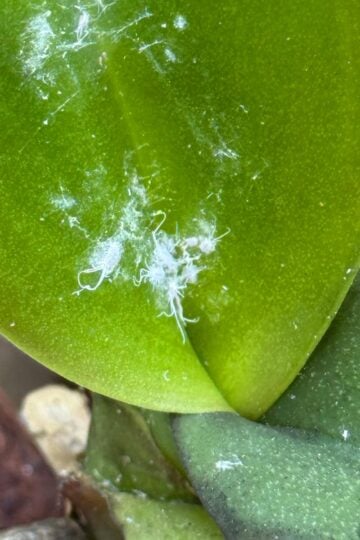
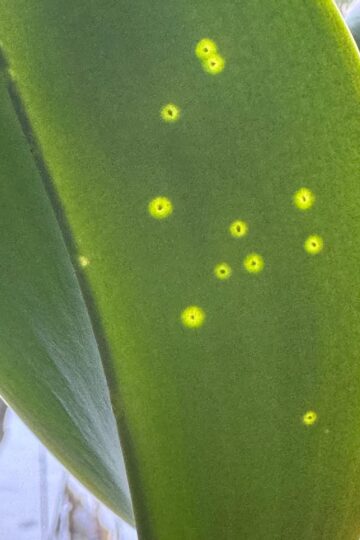
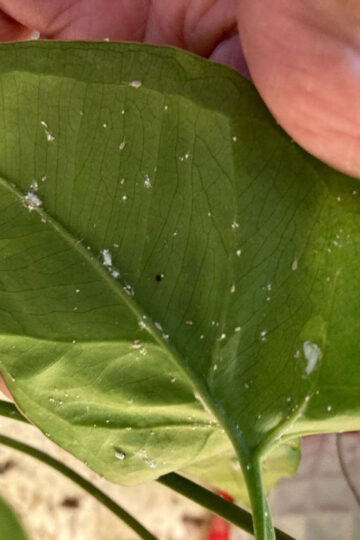
This information about thrips was very helpful, especially the photos. I've had a thrips problem now for one year. I did all that you recommended last spring, plus placed every houseplant on a rack in my bathtub for 2 months while treating with insecticide and diatomaceous earth. We thought we won, but this fall they came back with a vengeance.
The key piece of information I want to share is that the thrips infestation I now have is almost completely occurring in covered terrariums. 75-95% humidity. Too many articles say they don't like humidity, but my experience says that's flat out wrong. I've since taken two large plant terrariums out of the house and tossed every single plant in the garbage (not compost). I suspect we will never be thrips free again unless we do a 100% removal of houseplants. It's heartbreaking. We got the thrips from a tiny fern we picked up at a plant store last winter. I regret that $5 purchase every day.
Thrips can be really challenging unfortunately 🙁 Thanks for sharing your experiences Sue.
Thank you very much for article. Do you know what can I use istead this Bonide product because I'm not living in US I live in Nederlands.
Hi Paulina. I would go to a garden center and ask for any systemic insecticide that they may sell where you are. There may be something similar, but I know that this type of product isn't able to be sold in every country.
Thank you so much for this article. This is my first time dealing with thrips and I'm honestly freaking out. I'm going to try what you recommended but would u recommend just throwing the plant out? If they're that difficult to get rid of then I worry about thinking they're gone and then more plants getting them. Also, I've only seen 1 adult thrip in the last few weeks but my plants keep getting these black circles that look somewhat shiny?? I used images of them to figure out it was thrips, but I just don't see many adults. Any advice?
Throwing the plant out is sometimes the best solution so that you're not spreading the thrips....thrips can be very difficult to get rid of and can spread very quickly!
I have been fighting thrips in my little greenhouse since September 2022. I have tried everything that you mentioned as well as many other things such as neem oil pyrethrins Spanosid acephate hydrogen peroxide mineral oil wiping down with alcohol just about everything but beneficial insects. It doesn’t matter what time of day or night. If I see the one I am out there trying to kill it before I can sleep. I finally decided to call my extension office here in Charleston where I live I was told by the officer that I should just throw all my plants away, I could always just get new ones. This was heartbreaking to me as I’m sure most plant people would understand the connection. We have two are plants especially individuals we’ve had for a long time all right, that was brought through rough time for many reasons that for me I was a garden designer and landscaper here in Charleston for 20 years ago, cancerous tumor, and became paralyzed and had to close my business my only connection to my former life due to the fact that I lost everything throwing them away is so painful I just keep hoping there is something I can do some hell thank you so much for this and for listening to what I have to say
Hi Danielle, I'm so sorry to hear of these struggles. I hope you are healthy now, and thrips are definitely a giant pain...if you're very persistent, you can manage them, but you have to be vigilant and treat your plants regularly. Good luck! I know the struggle!
Hello! And thanks so much for this detailed article about treating thrips! I have been battling thrips for about 2 years now (on and off) with varying degrees of success. Some of my plants I chose to trash and some I chose to treat. For many weeks in a row, I was using a combination of Insecticidal Soap and Captain Jack's Deadbug Brew. Those have worked pretty well for most of my mildly infested plants, but others . . . well, the bugs just would not stop reappearing--they are very good at keeping their species alive!! Recently, I switched to Diotomaceous Earth (DE), sprinkled on top of the potting soil or below the pot inside the decorative container. Left it there for many weeks and bottom-watered so as not to rinse it out. So far, I think this approach has given me the most control over the pesky thrips. Now, a few weeks after I removed the DE from the top of the soil, or let it rinse away with waterings, they are coming back again (!##!). So, I guess I will need to just leave the DE in place indefinitely. But after reading your article, I will try using the systemic granules (in combination with Insecticidal Soap, like you recommend).
Oh, me. It can be discouraging, having to treat bugs for so long, but I think once you get thrips, it'll probably be an ongoing battle. But, maybe it's worth it, with all that we get from our plants.
Thanks for the great articles!!
So glad you enjoyed the post Christie! And I'm sorry you're dealing with thrips. They are NOT fun to deal with! Keep up with it, and you can successfully manage them! Best of luck! (And it is ok to throw plants away if they are severely infested. Sometimes it's just not worth trying to remedy.).
I have a lot of plants in a small house. Have been trying need oil , soap but still see lots of pest 😩. Have you ever tried ladybugs? I guess I’m being lazy but it’s been so frustrating and upsetting to see my little plants damaged.
I haven't tried lady bugs indoors, but it would be fun to try :-). I would not recommend neem oil. Use either an insecticidal soap or horticultural soap.
@Raffaele, may I ask why you don't recommend neem oil? I've been using neem,insecticidal soap,horticultural oil rotations plus diatomaceous earth and stickies. I still have thrips its so absolutely frustrating I was fortunate that I caught it within 2 weeks of exposure so it didn't travel to all my plants but the three that have it I just can't seem to get rid of them I might have to cut my loses which will break my heart I've had these plants for a long time
I don't find neem to be nearly as effective as the other 3. Thrips are definitely a pain to deal with 🙁 Persistence will pay off though.
Hi, Thanks so much for this very helpful article about thrips. Thrips white fly and scale are the worst pests I’ve ever had to deal with. I have a large house plan collection with plants and different parts of the house. A few years ago I saw strange white scar like damage to my Sanseveria plants. I never dreamed those could have any kind of pests. I couldn’t figure out what it was until I finally saw that this could be a case of thrips and it certainly was. I used your methods, including the blue fly traps. Somehow I got rid of them. Now today suddenly I discovered a very small signs of thrips on a couple of plants, And a few thrips themselves. I just say for soap, bon eyed, and put up yellow and blue fly traps. I Inspected all the other plants, and certainly hope this is not going to continue! All best.
Thrips are definitely horrible! It's hard to completely get rid of them, but if you keep up with it, you can manage them and it sounds like you have!
I have been struggling with thrips and gnats! I lost 5 of my indoor plants due to this. Now I use safer and the best friend is yellow sticky pad! They are super helpful to catch the gnats! I always check upper side of leaves in every now and then if there is any mark of thrips! Thank you for this article that advises many great ways to chase those! Hope all my indoor plants be happy and healthy! I don't want to lose them! 🙂
Hi Sharmin! Thrips are definitely very annoying!!!! Good luck in dealing with them! Just stay persistent, and you can manage them.
Great information!! I treat all my plants thru the growing season with the Bonide systemic, but should it be used during dormancy??
Thanks so much
Robyn
Glad you enjoyed the post! It wouldn't hurt if you used it during dormancy.
Thrips have been the bane of my existence this year!!! I never had them until I moved into a new apartment in April, and by the end of the summer they had destroyed my massive monstera and several of my pothos. My local garden center recommended Captain Jack's Deadbug Brew (by BONIDE) and it worked really well. They started in on my fiddle leaf fig, but I caught them early with Captain Jack's and I haven't seen any since! Thanks for the product advice, I will definitely check out some of those other insecticidal soaps.
Hi Sarah! Thanks for sharing this information. I've heard of others using the Captain Jack's Deadbug Brew as well and having success with thrips. The reason I didn't add this product to the post was that this product is only rated for outdoor use according to the label. I'd imagine that as long as you spray this outdoors, let the plant dry, and then bring it back inside, that it should be ok! I've never tried it myself, but I may add this information to the blog post to supplement with an additional option. Thanks again for sharing!
@Raffaele, I use been using Jack's Dead Bug Brew inside for about 5 years with no adverse side effects to any person or pet. I was hesitant to use it indoors because of the label, but both my vet and my Dr (I took the label with me to see them) said it should be safe to use indoors, but the cast-off is probably why they recommend spraying outside. It's best to avoid spraying plants inside because when you spray above and around a plant the spray will also land on everything else in about a 2-3 ft radius, and if it lands on any food contact surfaces, bedding, or other areas that could get into your eyes, nose, mouth, or prolonged contact on your skin, some people can be sensitive to it and there's a possibility of irritation. So to avoid the possibility of a lawsuit Bonide covers their butts by recommending it for outside use only. I have a greenhouse in a back room of my house that no one enters except me. Everything in the room is growing supplies and things that don't come in contact with the rest of the house. I use Jack's once a week in there, never had any adverse effects whatsoever. Spinosad is actually a fungus that was discovered in an old rum distillery, so I just avoid breathing in huge breaths while I spray it, just to be safe.
Hi Nikki. Thanks so much for all the details and the clarification!
Thanks for your article on thrips. I didn’t know what was causing the damage that I have seen so thanks for the photos. I had decided that any new plant that enters my house should be treated with the Bonide systemic treatment. I hadn’t thought about the insecticide wash. Your recommended regimen seems to be a great solution. So, again , thanks for your email.
Now I will have to go through your other articles. I have used the Bonide outside systemic treatment with great success.
Jane Kessler
You're very welcome Jane! Glad you enjoyed the post.
I thank you for ur article on thrips. This past year I lost most all my plants due to black gnats . Now I try to follow preventive measures . I've already purchased the Bonide Systematic Insect Control . I never knew about the Bonide to wash plants . I'll be sure to buy some .
Thanks so much
Colleen
Glad you enjoyed the post Colleen. Pests can be very frustrating, but if you catch the issue early, it is much easier to treat. Good luck!