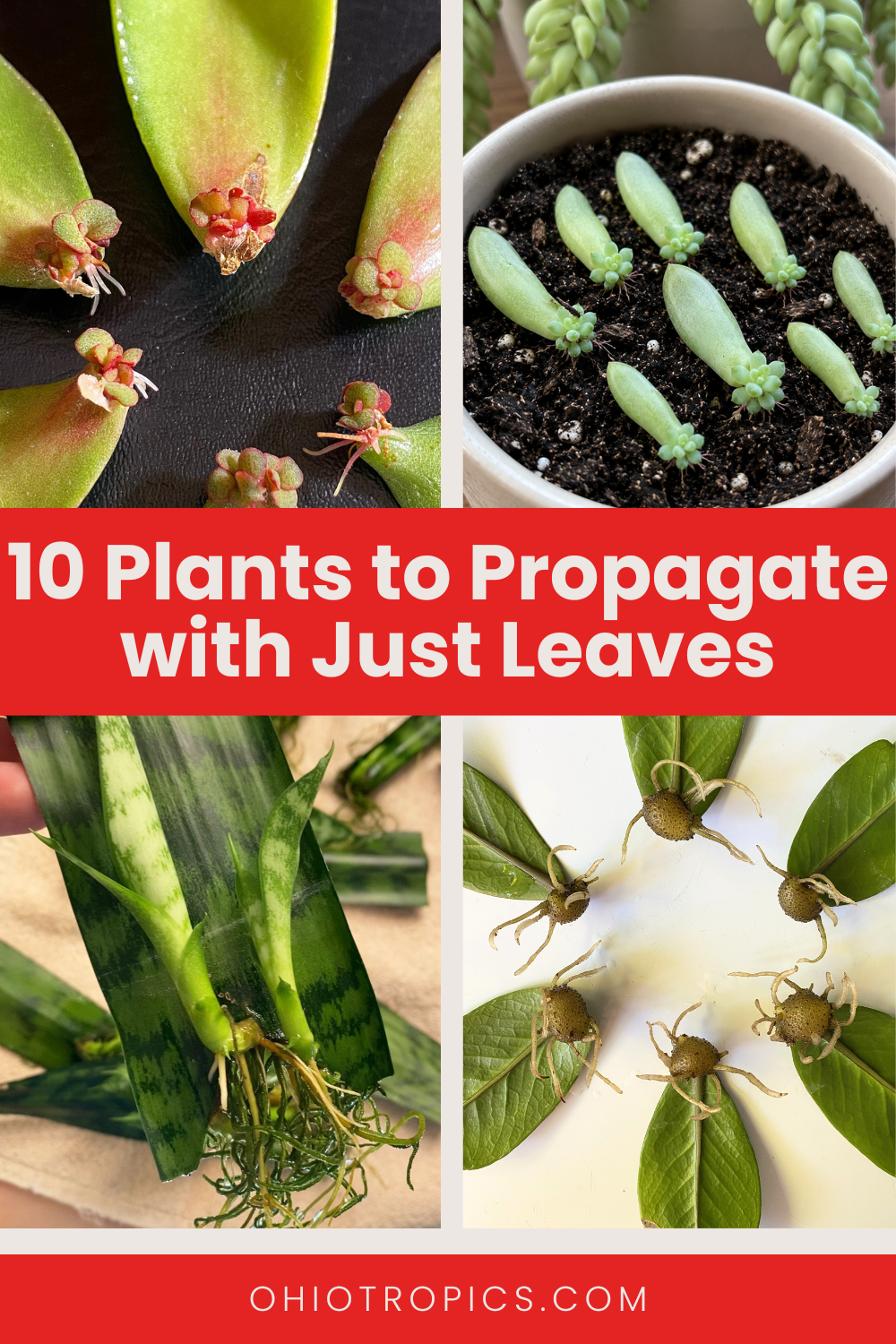
You don't always need stem cuttings or seeds to propagate plants. The ten houseplants in this post can be propagated from single leaves! The process is both fun and rewarding, as long as you have a little patience. The beauty of this method is that you can make a lot of new plants with not that much plant material.
Table of Contents
plants to propagate with single leaves
These are by no means the only plants that you can propagate from single leaves, but they are pretty popular and common plants to try it with.
1. African Violet
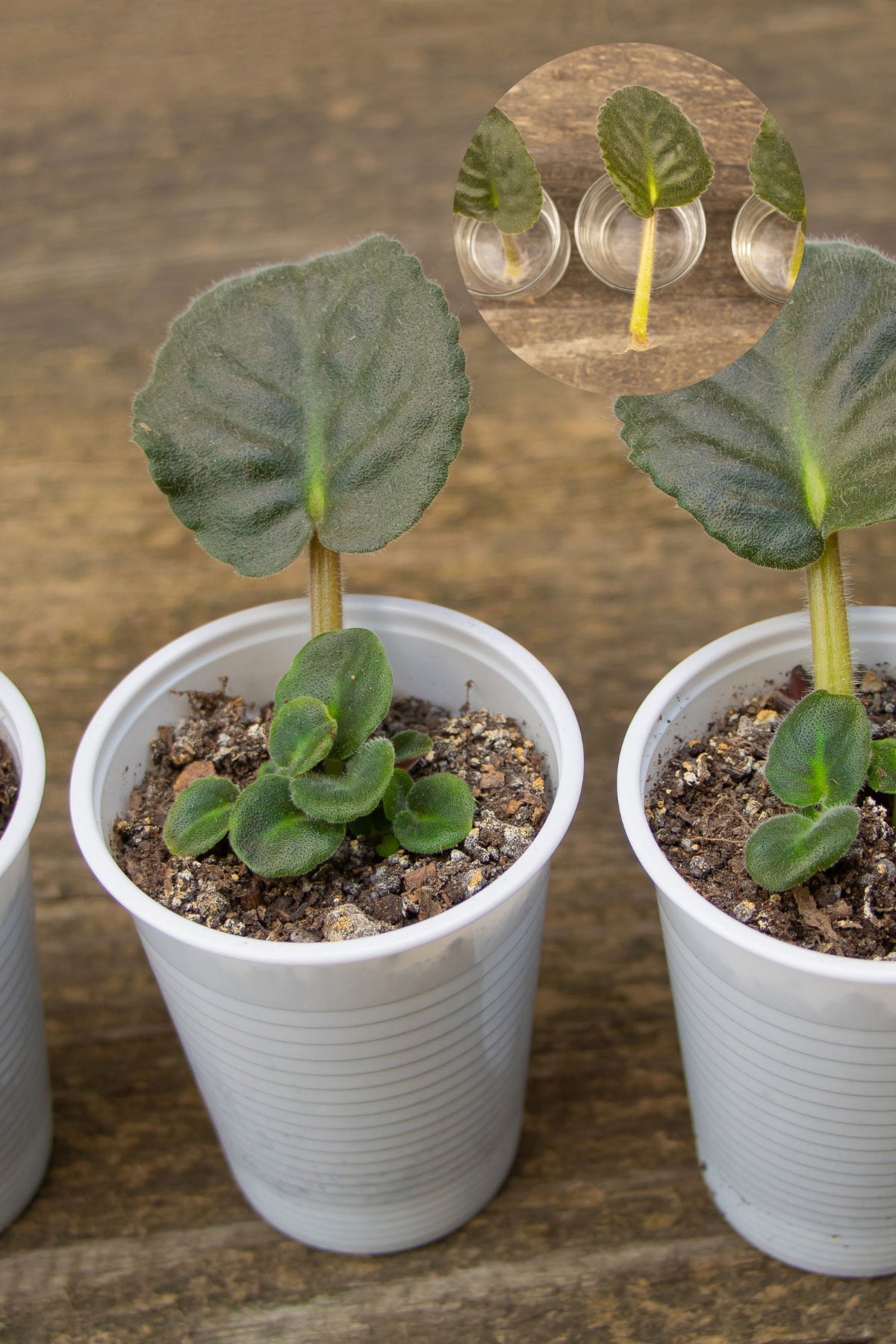
African violets (Saintpaulia) are super easy to propagate with single leaves. First, pick a healthy and mature leaf. Avoid the oldest leaves, especially if they are starting to yellow. Pick a leaf near the outer ring of leaves on the plant.
Then gently remove the leaf by bending it to the side until it snaps free. Make an angled cut at the bottom of the petiole (the "stem" of the leaf). Keep the petiole about 1-2 inches long. You want the cut to face upward. By cutting on an angle, you will allow for more surface area for the roots and plantlets to start growing.
Then insert the cutting straight into a small pot of soil, angled so that the leaf rests on the rim of the pot like in the photo above, but so that the bottom of the cutting is fully under the soil line. Half an inch under the soil line is plenty. You can root first in water too and then place in soil, but it's more efficient to place directly in a pot of soil. I like to use half African violet mix (which is mostly peat moss) and half perlite. You can also root in a mix of perlite and vermiculite. There are many possibilities.
Place in front of a window that doesn't get any direct sun (or at the most, gentle morning sun). Keep the potting mix moist. Once the surface feels dry, go ahead and water. In several weeks, you should start to see plantlets starting to grow and pop up out of the soil. Usually a leaf will grow multiple plantlets. When they are 1.5-2 inches tall, gently separate the plantlets and give them each their own pot.
2. Snake plant (mother in law's tongue)
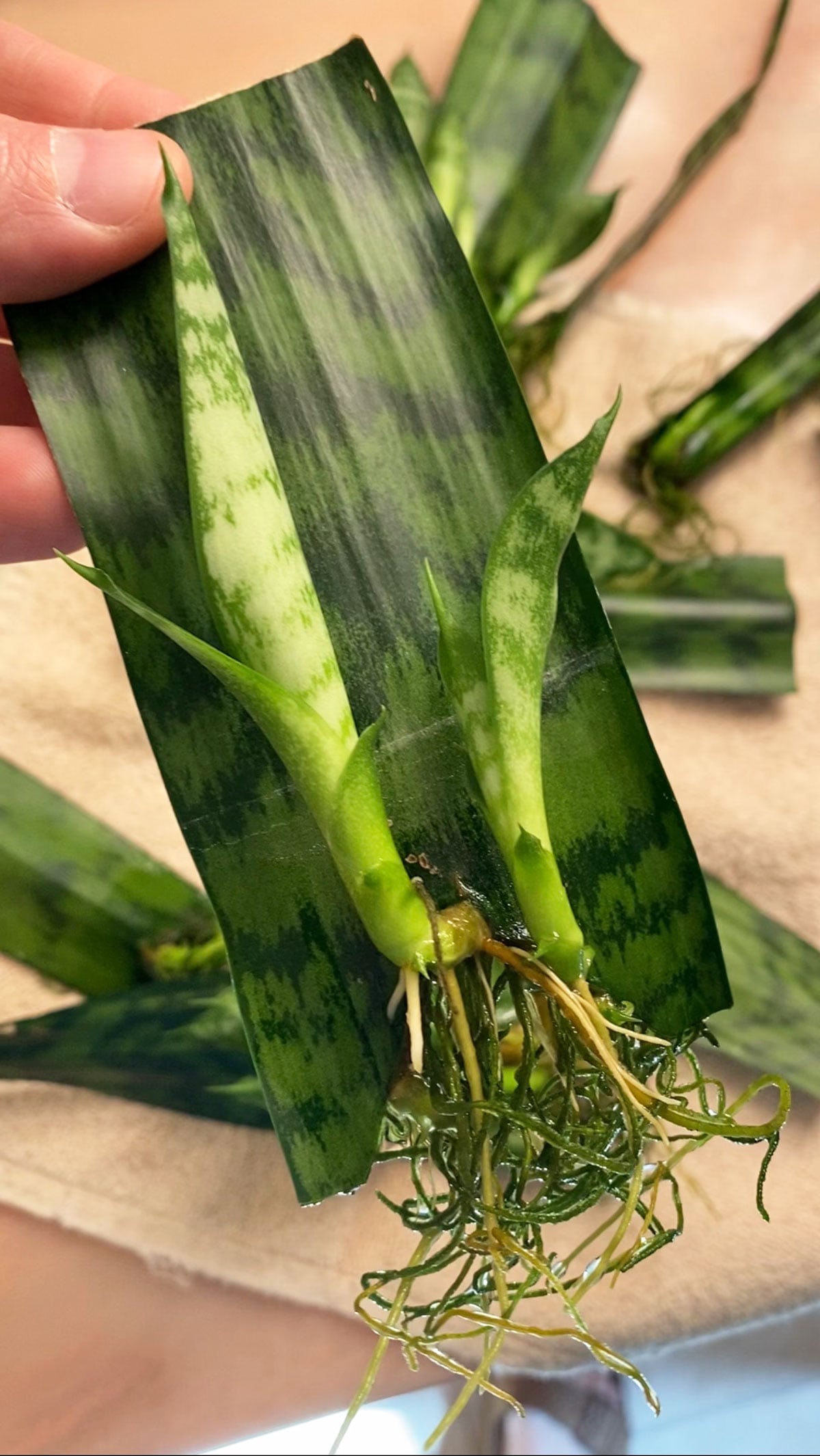
Snake plants are super fun to propagate. Simply cut an entire leaf off, and you can make multiple cuttings from each leaf. There are a couple of important keys for success. Make sure that you keep the orientation of the cuttings the same as they were when growing on the plant. Don't turn the cuttings upside down, otherwise they won't root!
One thing that I like to do is after I cut a leaf into multiple segments (3-4 inch long segments are plenty), make a V-shaped cut at the bottom of each cutting. This way, you know that V will go into water or soil. This also allows for more surface area for pups to grow.
After making the cuttings, allow the cuttings to air dry for a couple days, and then insert either into water or soil. I have detailed blog posts on exactly how to execute both methods, whether you want to propagate snake plants in water or propagate snake plants in soil.
3. echeveria
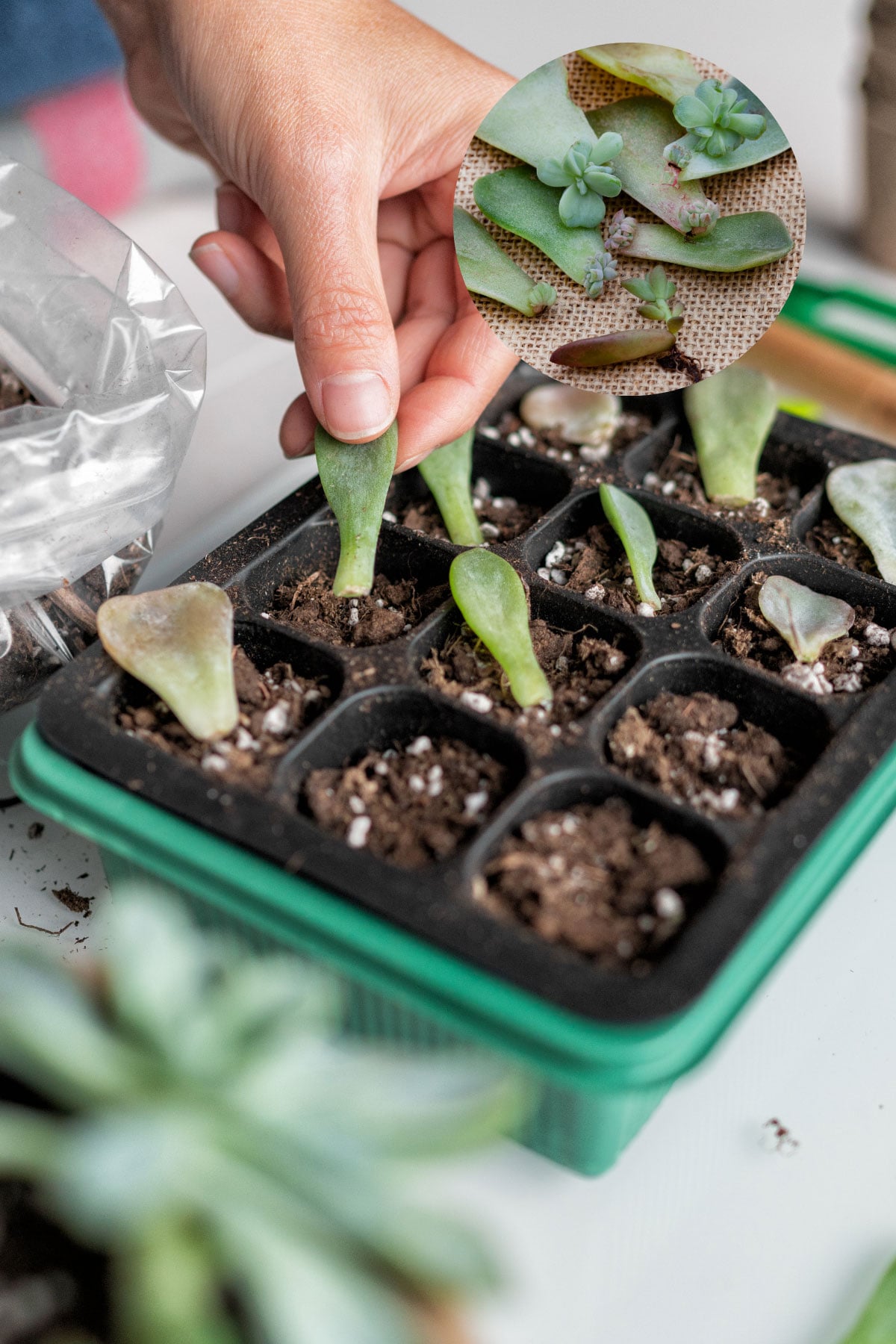
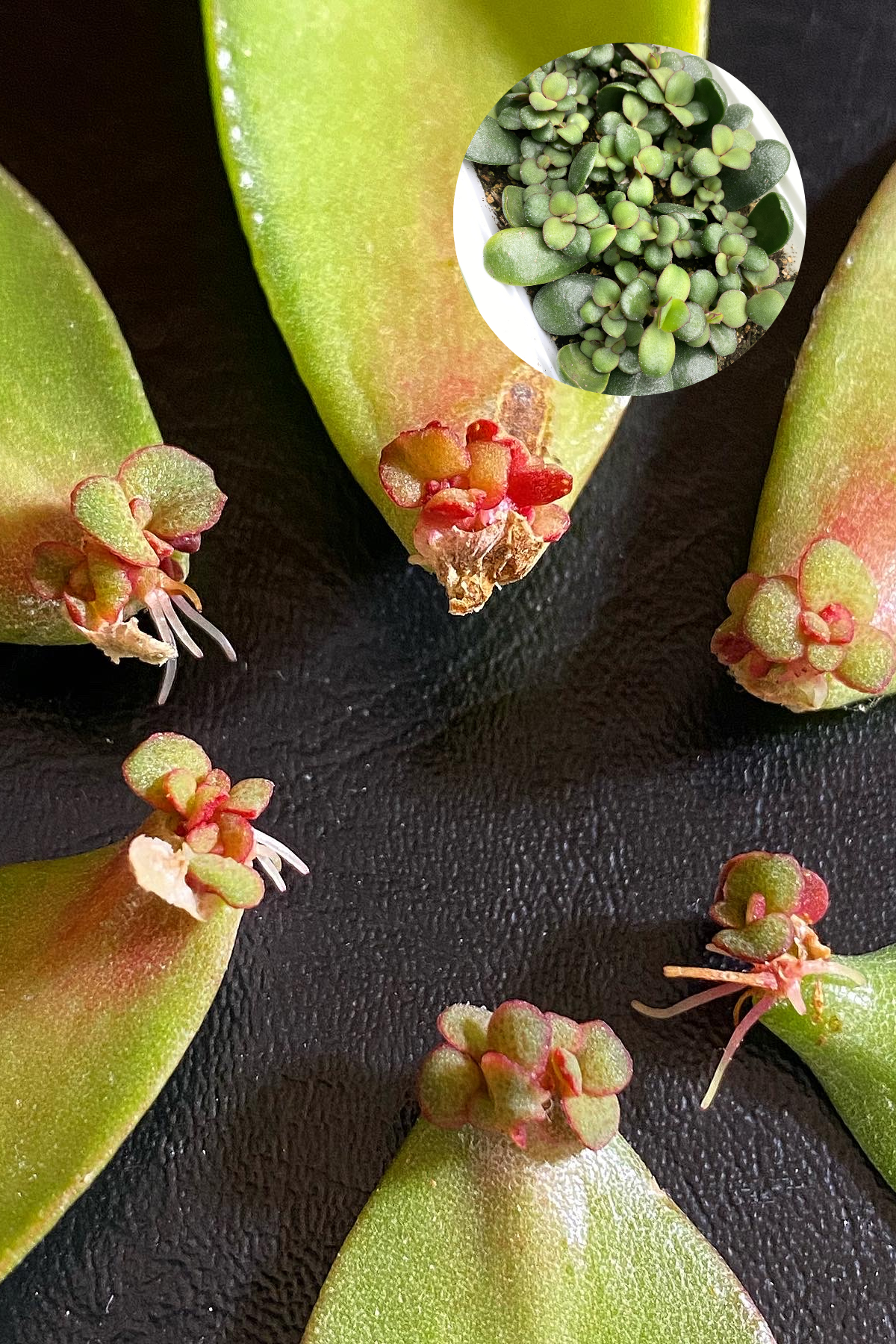
Succulents like Echeveria, and many others, can propagate from single leaves. Take more leaf cuttings than you think because not all of them may propagate.
Select plump, healthy leaves from the lower rows of your Echeveria rosette. You need to remove the leaves cleanly and not cause any irregular tears otherwise it may not work. Gently wiggle the leaf side to side until it cleanly snaps off the plant.
Then allow the leaves to callous over for a few days. 3-5 days is plenty. Set your leaves on the counter somewhere and let them air dry. The end where it pulled away from the plant will dry out, and this will help prevent rotting.
Then after a few days, simply lay the leaves right on top of a pot with soil in it. Just lay the leaves on top. Don't bury them. Mist the soil every few days as the soil dries out.
Each leaf will start to grow roots and little tiny rosettes within a few weeks or so. Once the planlet has a few leaves of its own, pot each one up in a small pot.
4. jade plant
To propagate jade plants from leaves, you follow the exact same procedure as Echeveria above. But there are also slightly different way to do it.
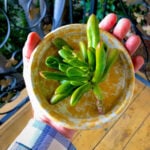
Either follow the Echeveria procedure above, or visit my blog post on propagating jade plant from leaves with step by step photos of the whole process. You can see a preview of my results in the photo above.
5. burro's tail
Would you like to save this post?
Enter your email, and I will send this link straight to you!
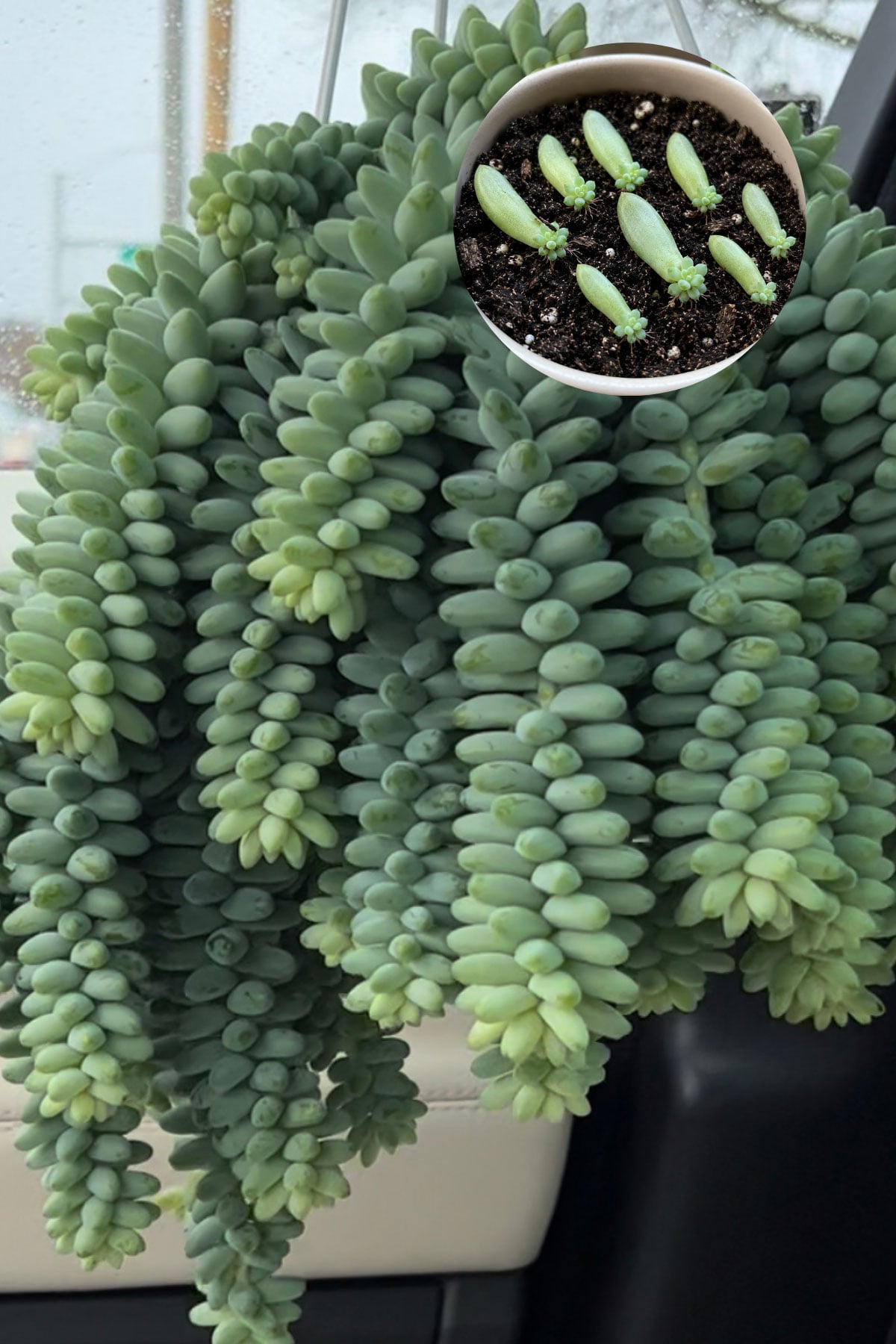
Burro's Tail (Sedum morganianum) is super easy to propagate, and you almost have to propagate the leaves. The leaves are very fragile and break off quite easily! Simply scroll up a bit and follow the exact same instructions as Echeveria for propagation.
6. zz plant
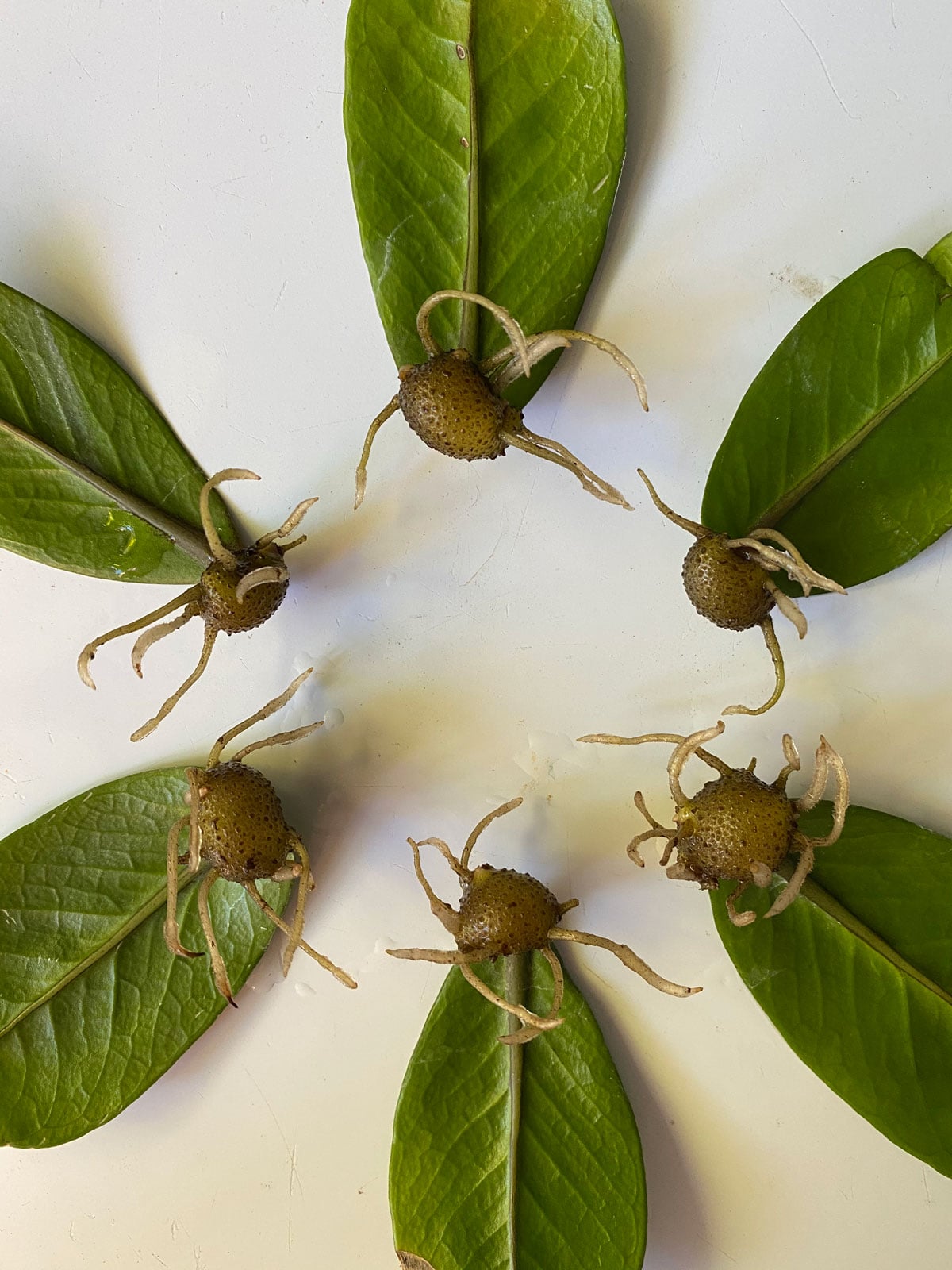
Many people don't know that you can propagate ZZ plants from leaflets. As you can see in the ones I propagated in the photo above, they will first grow a rhizome with roots and then the plant itself will follow in time. It is quite slow, but it's fun to do.
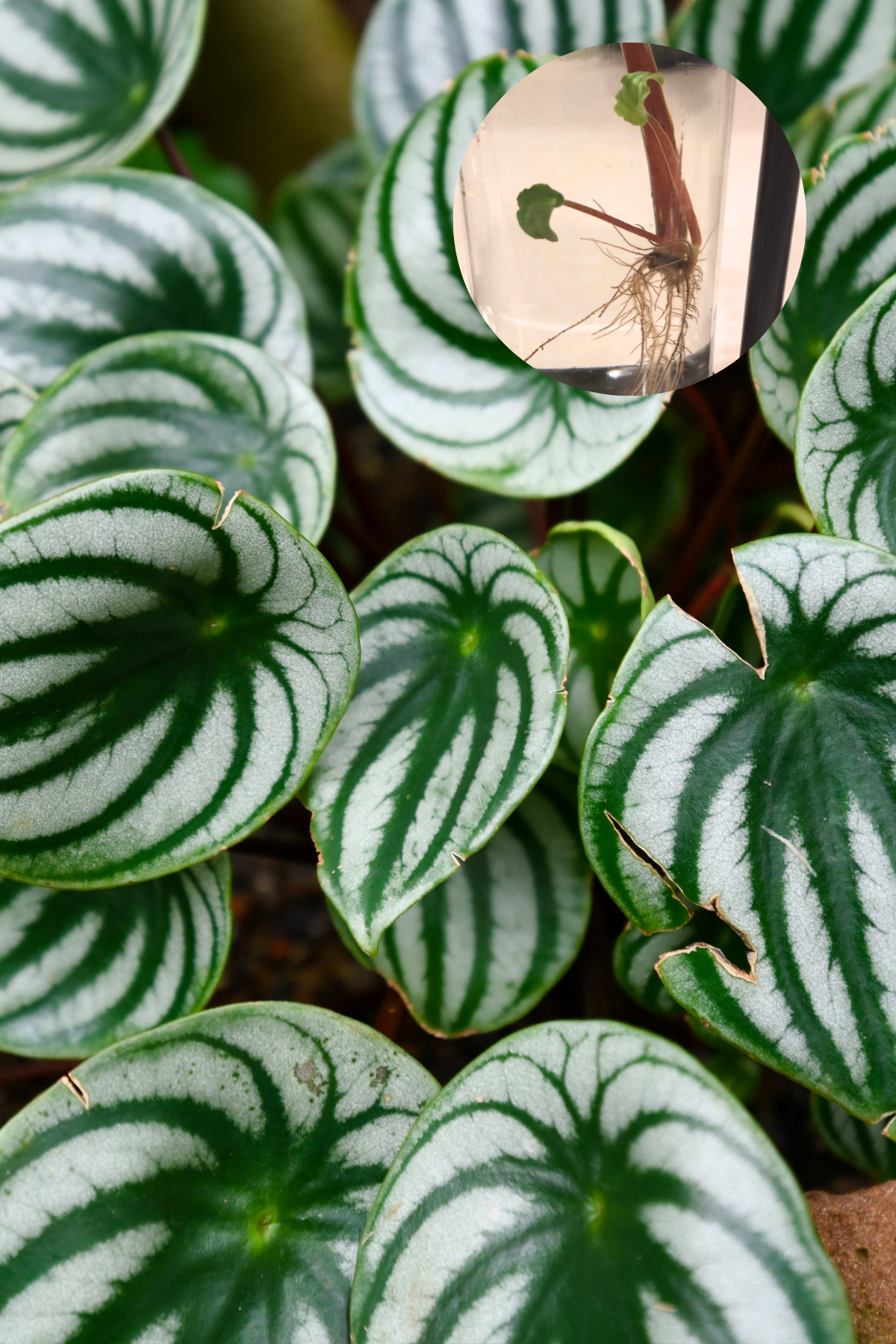
Watermelon Peperomia also propagates with single leaves. I've done it before by snipping a healthy leaf off (with 2-3 inches of the petiole as shown in the circular area of the photo above) and place it in water. Roots and a plantlet will form over time.
You can also cut the leaf itself in half and place the cut end into soil and it will grow plantlets that way too. I haven't tried that method personally, but I have see others do it, and it does indeed work.
8. chinese money plant
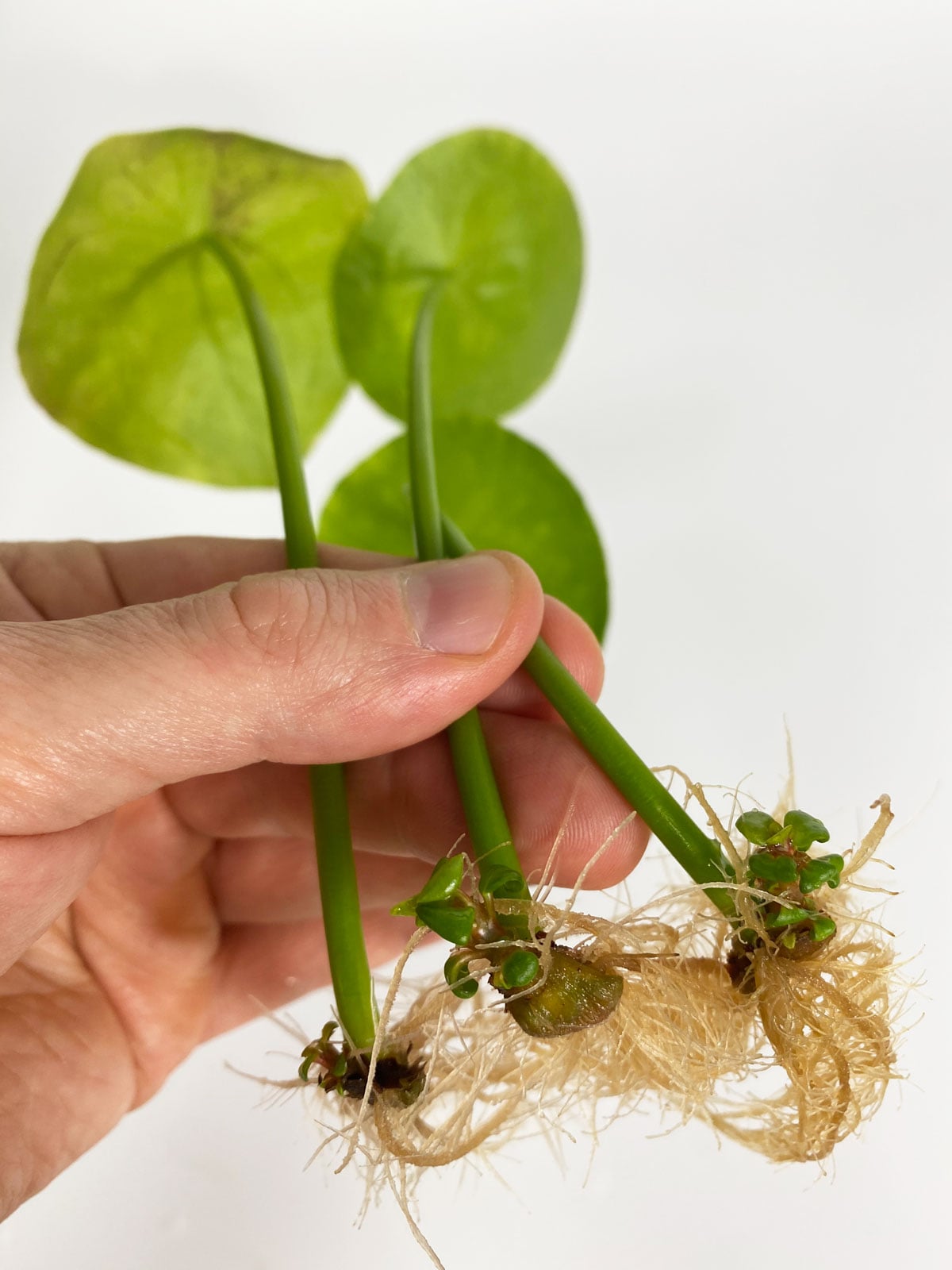
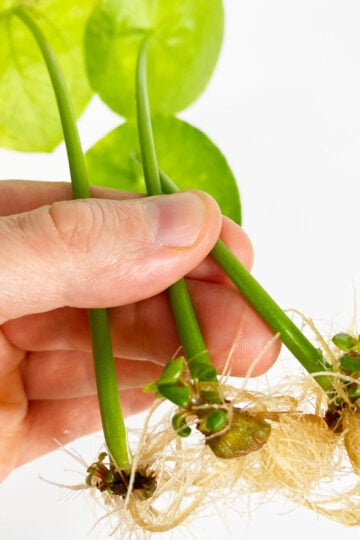
Pilea peperomioides (Chinese Money Plant) produces a lot of pups so it essentially propagates itself. However, many people don't know that you can also propagate with single leaves. But when you cut a leaf off, you need to get a small part of the stem. Then simply place in water and watch the roots and plantlets form like you see in the photo above where I'm holding 3 leaves that I propagated.
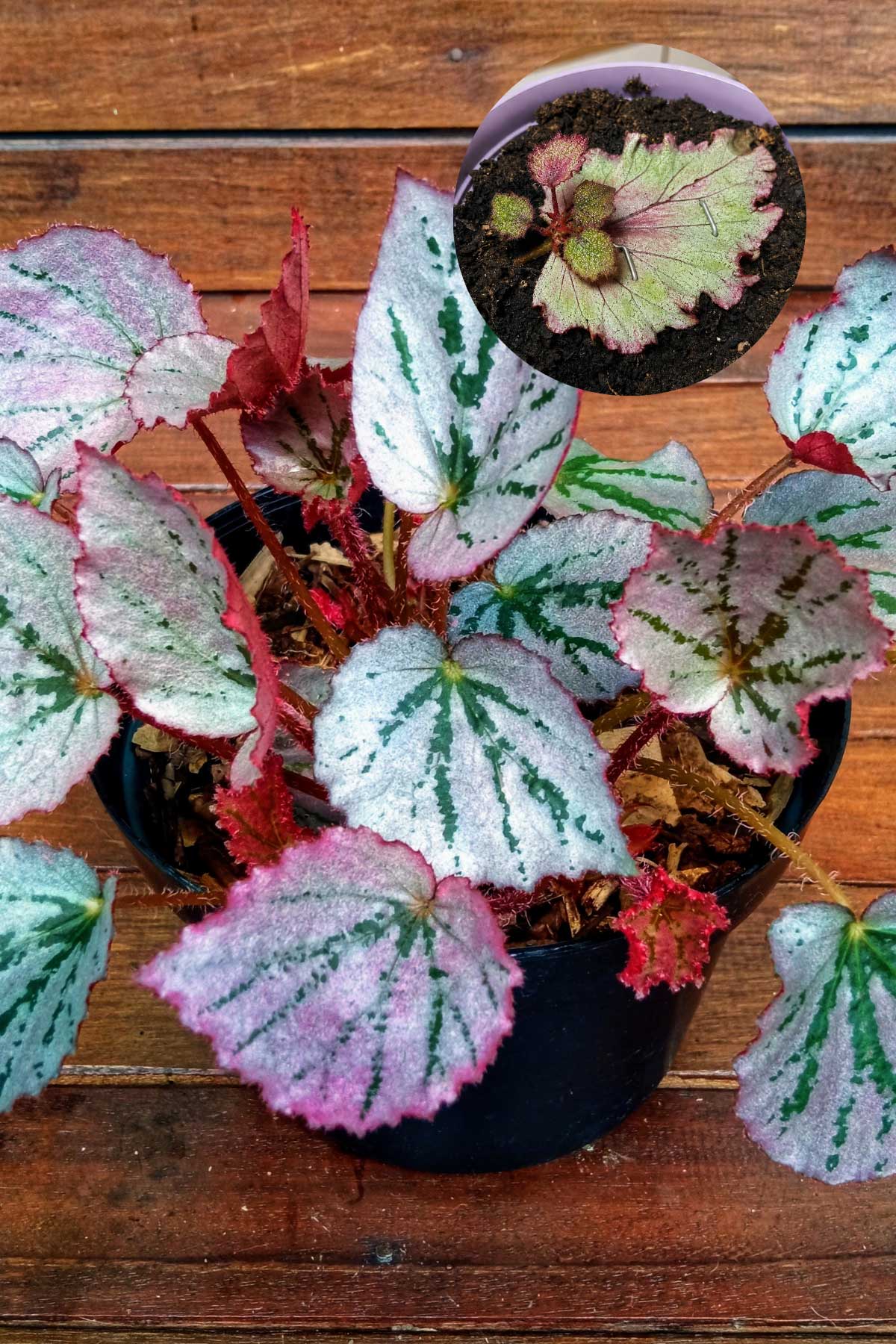
You can easily propagate Rex begonias using two methods. One method is simply to cut a leaf off with a segment of the petiole attached, and place in water to root.
Another way is to just take the leaf itself, and you simply cut the veins in the leaf and pin it down flat against soil. Small plantlets will form where the cuts are made. Here is a process you can follow:
Choose a healthy leaf that is undamaged. Next, you'll want to score the veins. With a clean and sharp knife or razor blade, make small horizontal cuts across 5 or 6 of the largest veins on the underside of the leaf (about an inch out from the central vein). The plantlets will form along these cuts.
Then lay the leaf face-up onto a pot of moist soil. Press the leaf gently right into pot (filled with seed-starting soil). Remember that the scored veins must be in direct contact with the soil, so you can use U-shaped wire pins or even long staples to gently hold the leaf against the soil. Avoid pinning through any main veins.
Increasing humidity helps, so you can place the pot or tray into a clear plastic bag. Check to make sure that the soil doesn't dry out too much, and water as needed to keep it lightly moist. Tiny plantlets will emerge after a few weeks. Once the plantlets are 3 inches tall or so and with at least 2 leaves, pot them up individually.
10. cape primrose
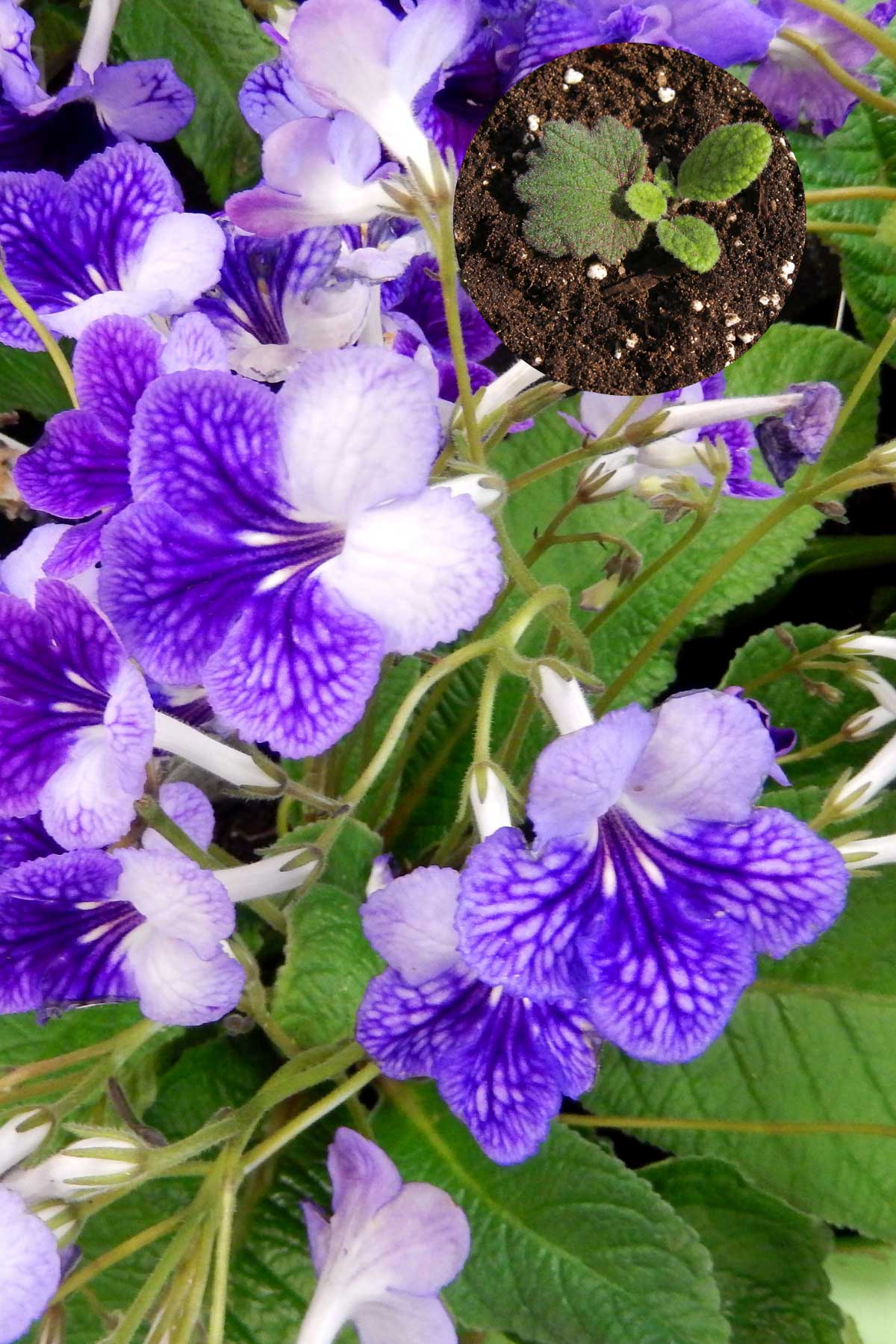
Cape Primrose (Streptocarpus) is a gesneriad and is a close relative to African Violets. And as you can imagine, it is also easy to propagate, but the process is a little different from African Violets.
Select a healthy, green leaf and cut it off the plant close to the base of the plant. Then, using a sharp knife, slice out the leaf's midrib (the long "vein" right in the middle of the leaf). You'll be left with 2 long pieces of the leaf.
You can cut each of those two leaf segments into multiple segments if you wish. Dip the cut-end into a rooting hormone, and insert into a small pot of soil about ¼ to ½ inches deep. Water the pot. You can even place in a plastic bag to keep the humidity high as the plant is rooting. After several weeks, you should start to see small plantlets emerging from the leaf cutting, as you can see in the circular part of the photo above in the upper right hand corner.
You can keep these plants in an Eastern facing window, or even in front of a large window that doesn't get any direct sun at all. They like the same conditions as African Violets.
I hope you've enjoyed this post. Have you tried propagating any houseplants from just leaves before?
One useful caveat for anyone trying Snake Plant leaf cuttings: variegated cultivars such as Laurentii often produce all-green pups because leaf propagation does not reliably preserve the yellow margins. Division is the better route if keeping the variegation matters.
For Echeveria and Jade, I would also avoid keeping an unrooted leaf constantly wet. Let the break callus, keep it in bright indirect light, and add only light moisture once roots or a plantlet appear; humid rooms make rot more likely. With ZZ leaflets, slow progress is normal—rhizomes can form months before you see top growth. Labeling each batch with the plant name and date helps prevent giving up too early.





One useful caveat for anyone trying Snake Plant leaf cuttings: variegated cultivars such as Laurentii often produce all-green pups because leaf propagation does not reliably preserve the yellow margins. Division is the better route if keeping the variegation matters.
For Echeveria and Jade, I would also avoid keeping an unrooted leaf constantly wet. Let the break callus, keep it in bright indirect light, and add only light moisture once roots or a plantlet appear; humid rooms make rot more likely. With ZZ leaflets, slow progress is normal—rhizomes can form months before you see top growth. Labeling each batch with the plant name and date helps prevent giving up too early.