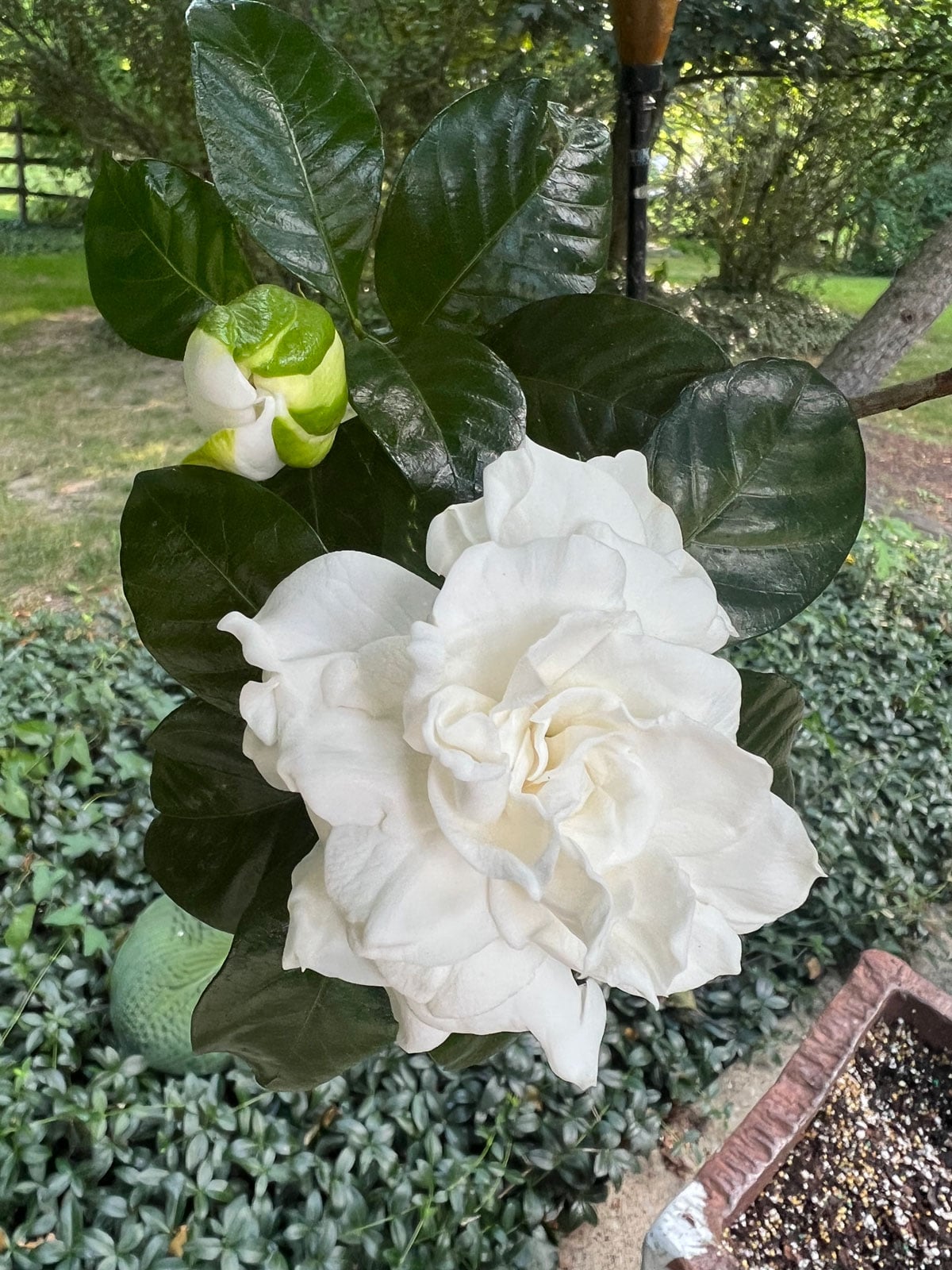
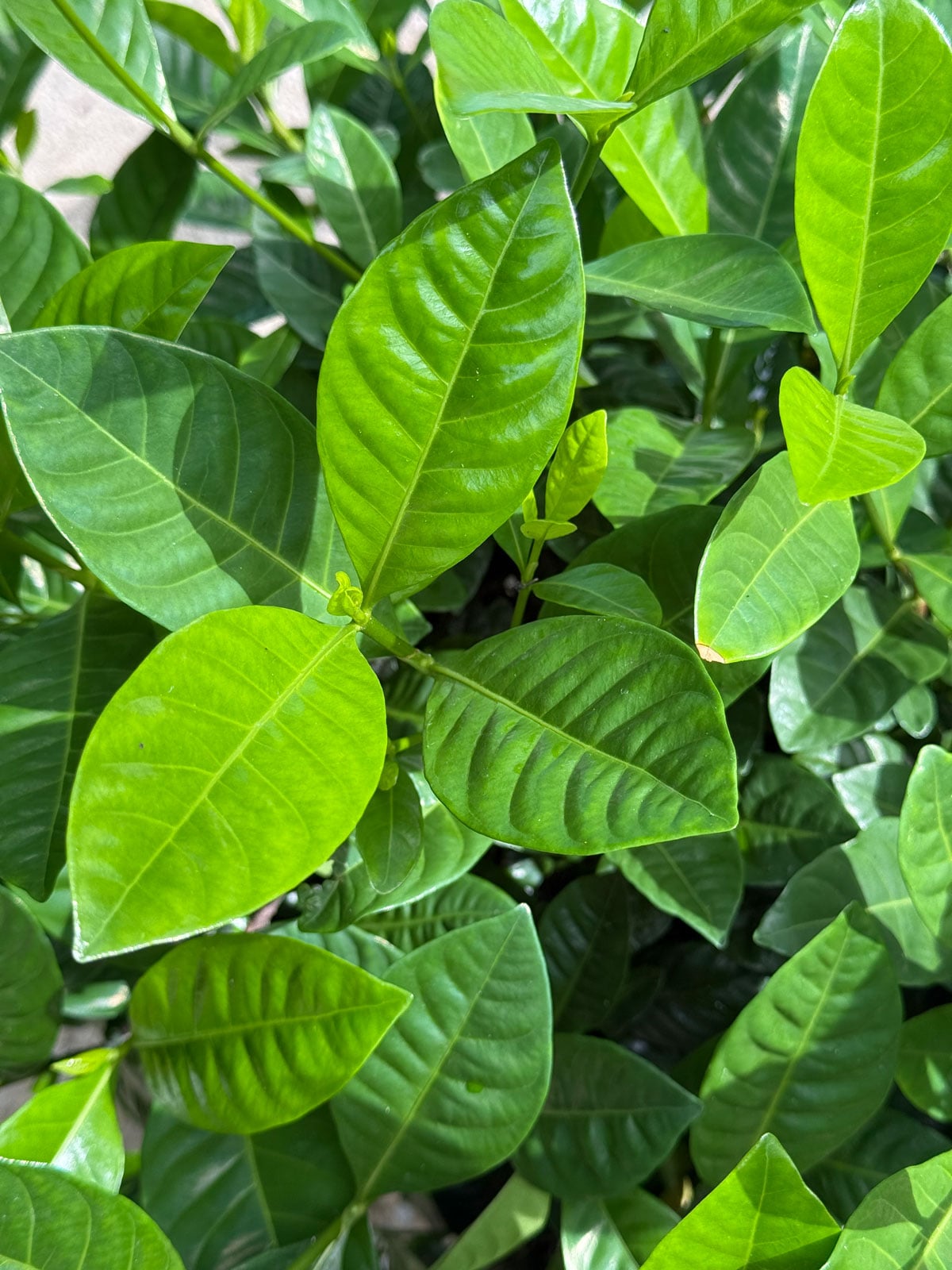
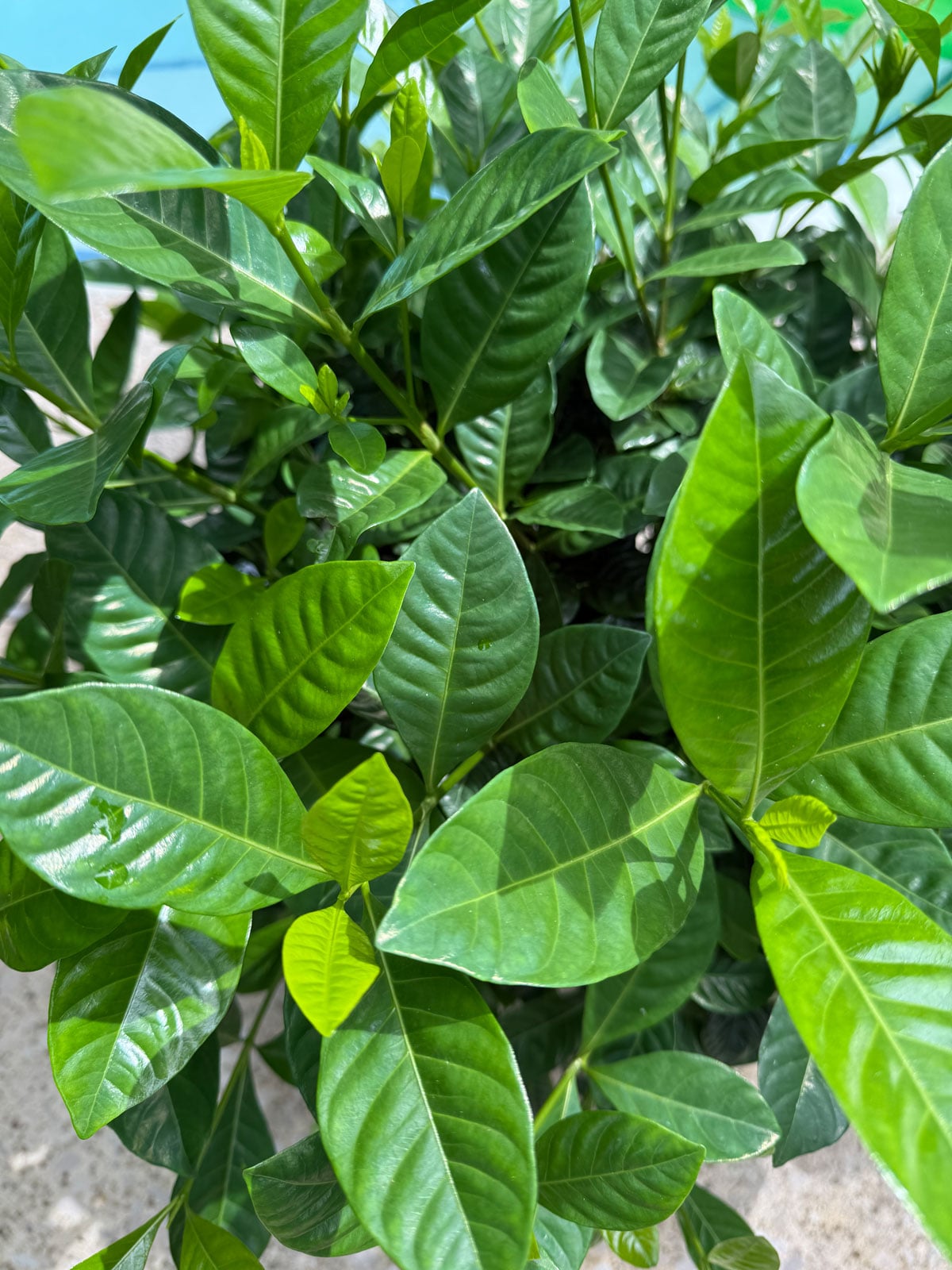
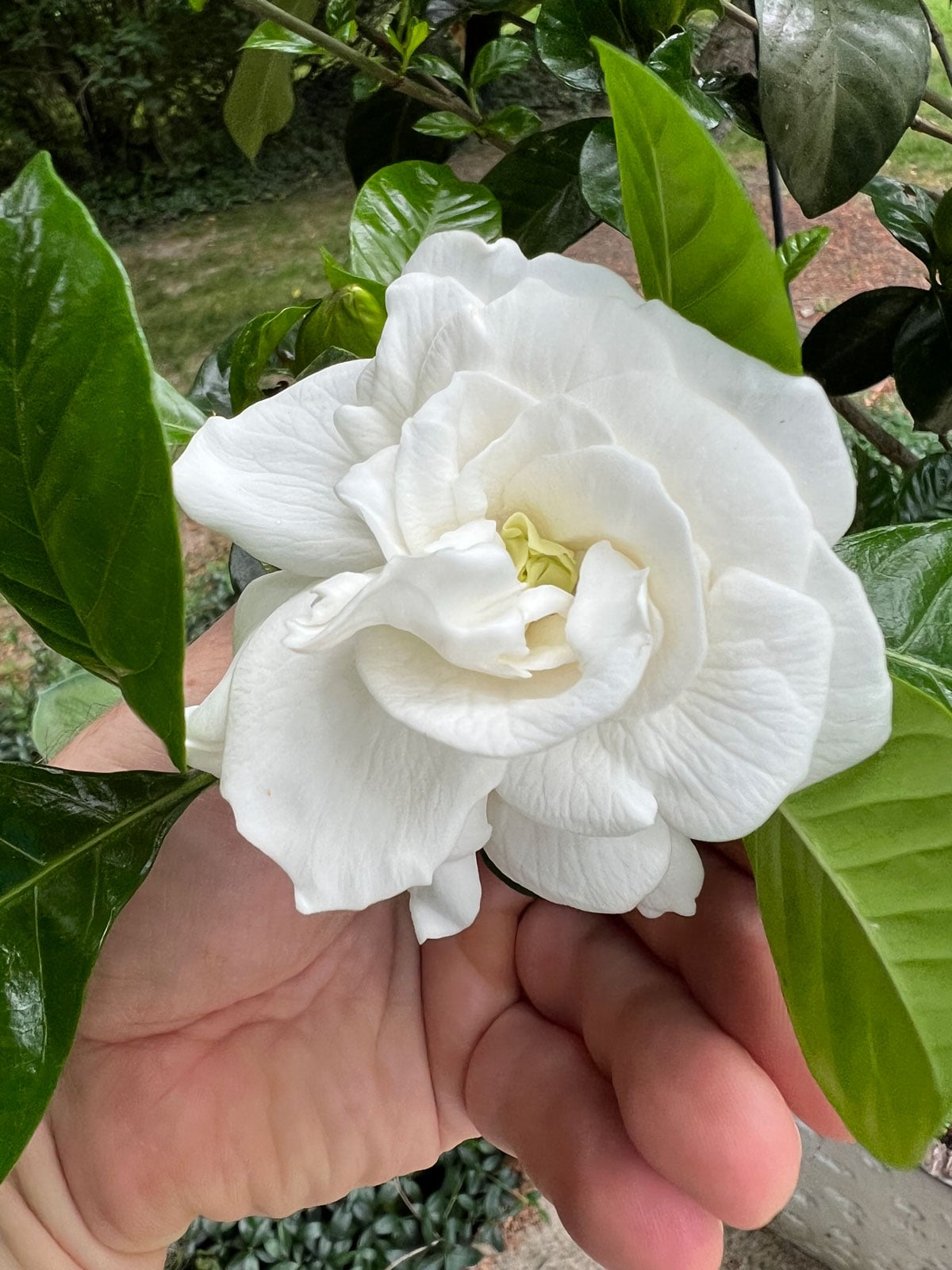
Few plants inspire as much devotion, and frustration, as the gardenia. That heavy, intoxicating fragrance and those waxy white blooms are the whole reason people grow them. So when a gardenia produces glossy green leaves all season and nothing else, it feels like a personal failure.
It usually isn't. Gardenias are simply particular about the conditions required to set flower buds, and a plant can be perfectly healthy while still refusing to bloom. Here are the most common reasons why, according to horticultural research and extension programs across the country, along with my own experience.
Table of Contents
Reasons why gardenias aren't flowering
Not Enough Direct Light
Gardenias are sun lovers, and "getting light" is not the same as getting enough of it. North Carolina State Extension recommends a minimum of six hours of direct sun for outdoor gardenias, with morning sun and afternoon shade being ideal in hotter climates. Indoors, even a spot that feels bright is often far dimmer than a gardenia wants, since light intensity drops off dramatically just a few feet from a window.
I always recommend keeping a gardenia immediately in front of a window. And I'm talking as close as possible to the window without the plant actually touching the window itself.
A gardenia can survive, and even push out new leaves, in lower light. Flowering is a much higher energy demand, so it's usually the first thing to be sacrificed when light is not sufficient.
However, getting enough light, although very necessary for blooming, is not always enough to get your gardenia to bloom!
I like to move my gardenia plants outdoors during warm weather. The increased light, air circulation, and drop in temperature in the evening is very beneficial for growth and blooming.
Be careful though whenever you are moving your gardenia plants outdoors. You'll need to acclimate them to any level of direct sun outside in order to prevent burning. Even if your plant was growing in a sunny window indoors, if you're choosing to move your plant outside during warm weather, always start the plants off in complete shade. Then after a few days, introduce maybe an hour of morning sun, and do that for a few days. Keep repeating and increasing the level of direct sun until you have your plant in its final growing location.
This is the MOST common pitfall that people come to me with when moving plants outdoors. Even sun-loving plants must be acclimated slowly to higher light when. moving them outdoors.
Nighttime Temperatures Aren't Cooperating
Gardenias initiate flower buds in response to nighttime temperature, not daylight hours. Clemson Cooperative Extension notes that gardenias typically need several weeks of nights in the 60 to 65 degree Fahrenheit range to trigger bud set. If nights stay too warm, which is common for gardenias grown indoors year-round or in regions with mild winters, the plant simply never gets the cue to start budding.
I can attest to this because my plants always bloom better when they have this temperature drop at night.
This is one of the most overlooked causes of bloom failure because it has nothing to do with how the plant looks. A gardenia can have perfect leaf color and vigorous new growth and still skip flowering entirely if it never experiences that cool-night window.
Would you like to save this post?
Enter your email, and I will send this link straight to you!
Pruning at the Wrong Time
Gardenias bloom on old wood, meaning the flower buds for this year's display were largely set on the previous season's growth. The University of Florida IFAS Extension advises pruning gardenias immediately after flowering, not in late summer or fall. Prune too late in the season and you remove the very buds that would have opened the following spring, even though the plant appears untouched otherwise.
If a gardenia gets a hard shearing in August or September, a bloomless spring the following year is almost guaranteed, and it has nothing to do with soil, water, or fertilizer.
Soil pH Is Off
Gardenias are acid-loving plants that struggle to take up iron and other micronutrients when soil pH climbs above roughly 6.0. The Missouri Botanical Garden points to alkaline soil as a frequent cause of both poor flowering and the yellowing, green-veined leaves known as chlorosis. Hard tap water, which is alkaline in many regions, can gradually push container soil pH upward over time even if the potting mix started out acidic.
A simple soil pH test can rule this out quickly, and it's worth doing before assuming the problem is light or temperature related.
Bud Drop From Environmental Stress
Sometimes a gardenia does set buds, only to drop them before they open. This is typically triggered by inconsistent watering, low humidity, sudden temperature swings, or moving the plant while buds are forming. Gardenias are known for being sensitive to change, and a relocation from a nursery to a home, or from indoors to outdoors, can be enough to trigger bud drop even under otherwise good care.
If you've purchased a gardenia plant at the nursery or grocery store that is shiny and beautiful and full of fragrant blooms, only to bring it home and have them drop their buds, this is why. A drastic change in environment will cause bud drop, especially if you place it low light and you let the soil dry out too much.
I always say that consistency matters a lot in plant care. A steady watering schedule and stable growing conditions go a long way toward helping buds make it to bloom.
Too Much Nitrogen
A heavy hand with high-nitrogen fertilizer encourages lush leafy growth at the direct expense of flowers. Gardenias benefit from a fertilizer formulated for acid-loving plants, applied during the growing season rather than in fall or winter when the plant is heading into dormancy or bud initiation.
The Bottom Line
A gardenia that won't bloom is rarely a sick plant. It's usually a plant that hasn't experienced the right combination of cool nights, correct pruning timing, strong direct light, acidic soil, and steady conditions. Working through this list in order, starting with temperature and pruning timing since they're the most common culprits, will solve the mystery in most cases.
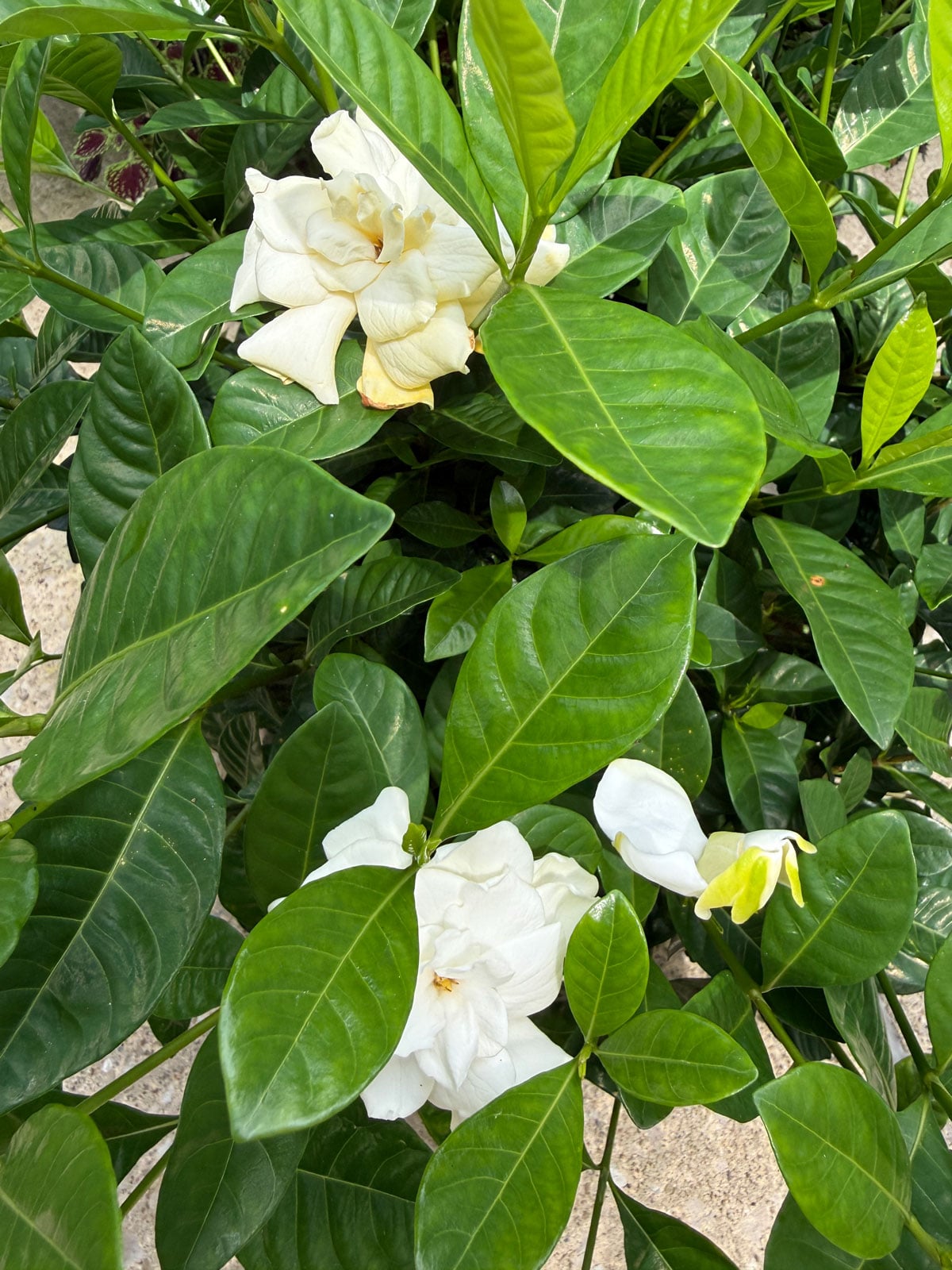
My gardenias have been blooming for months I live about 60 miles west of Birmingham,Alabama our temperature has been in the 90s for more than a month nights above 80. They will continue to bloom until sometime in November.
I haven’t read up on growing / blooming conditions for gardenias I just know they reliably bloom all summer. I planted them spring 6 years ago.



My gardenias have been blooming for months I live about 60 miles west of Birmingham,Alabama our temperature has been in the 90s for more than a month nights above 80. They will continue to bloom until sometime in November.
I haven’t read up on growing / blooming conditions for gardenias I just know they reliably bloom all summer. I planted them spring 6 years ago.
That's wonderful Josephene!