Blue Mistflower: The Native Ageratum Your Fall Garden Is Missing
Some of the links in this post may be affiliate links.
By late summer, most gardens are running on fumes. The coneflowers have gone to seed, the bee balm is looking tired, and everything leans a little more yellow and brown each week. Then blue mistflower shows up and floods the bed with soft, powdery blue right when you thought the show was over.
True blue is one of the rarest colors in the plant world, and it is even rarer in the fall garden, which tends to be dominated by golds, rusts, and purples. Blue mistflower fills that gap beautifully. It is a native perennial, it feeds a long list of pollinators late in the season, and it asks for very little in return.
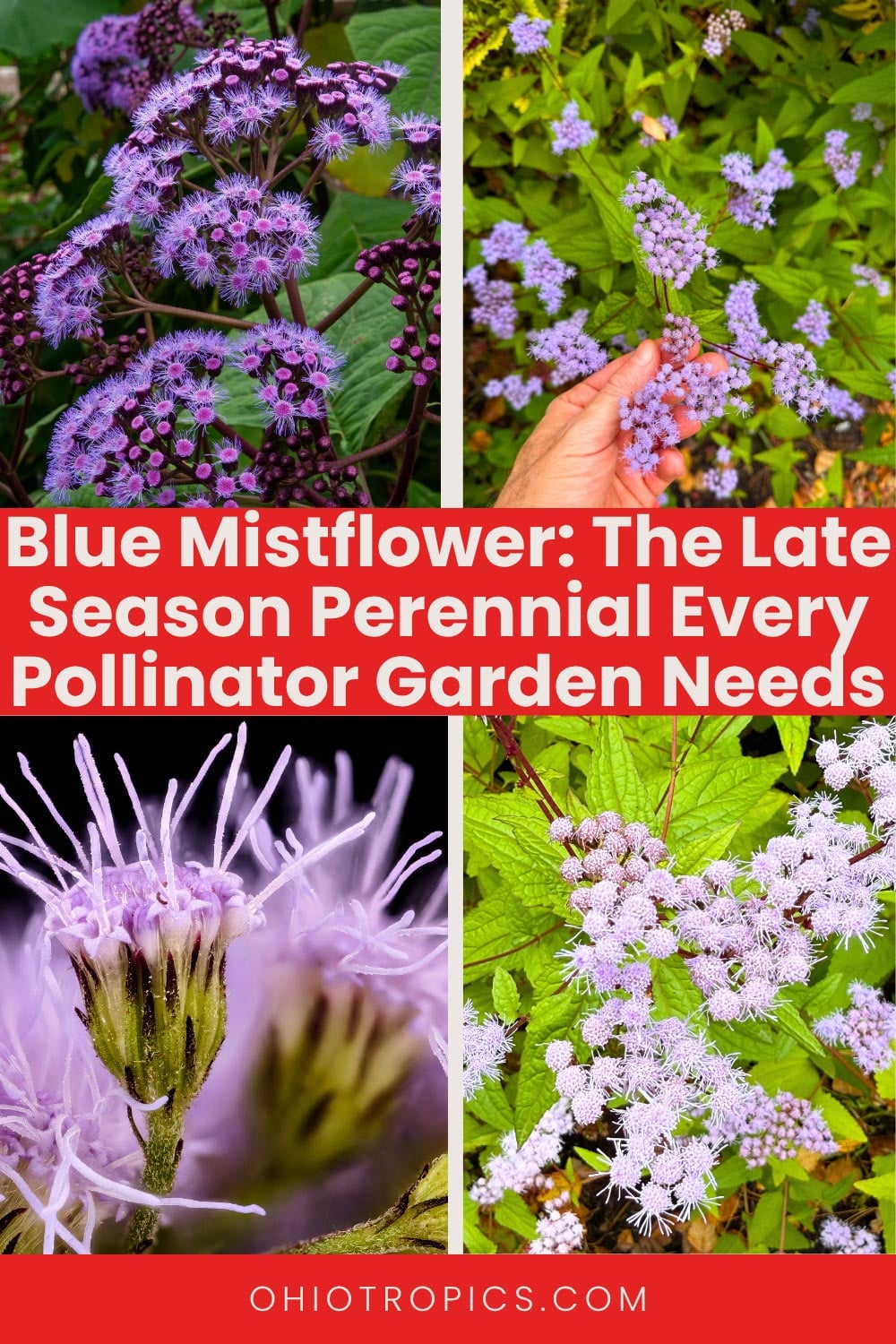
Table of Contents
Meet Blue Mistflower
Blue mistflower (Conoclinium coelestinum) is a herbaceous perennial in the aster family, Asteraceae. You will also see it sold as wild ageratum, hardy ageratum, or blue boneset.
It is native to the eastern and central United States, ranging roughly from New York and New Jersey west to Nebraska and Kansas, and south to Florida and Texas, with populations reaching into southern Ontario. In the wild it grows in moist meadows, stream banks, pond edges, floodplain woods, ditches, and roadsides. That habitat list tells you most of what you need to know about growing it.
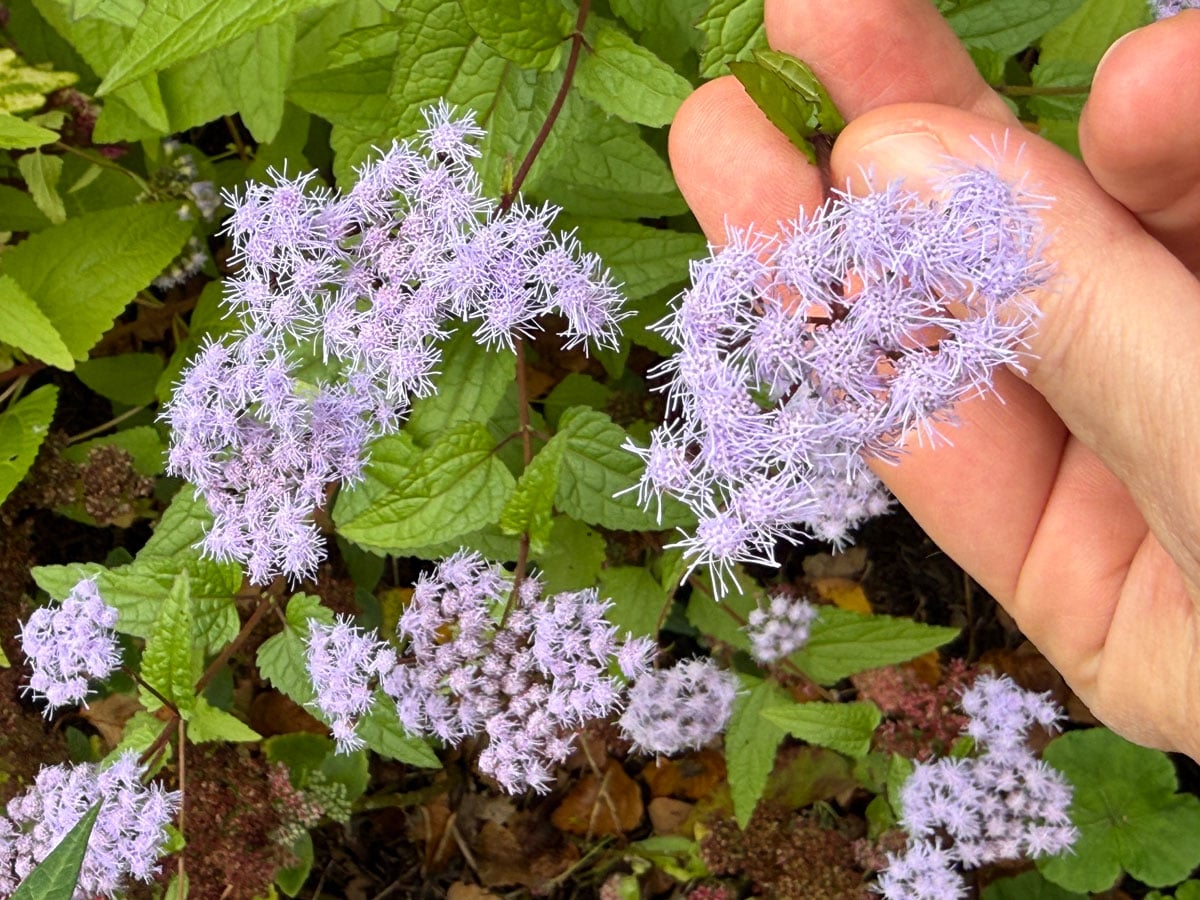
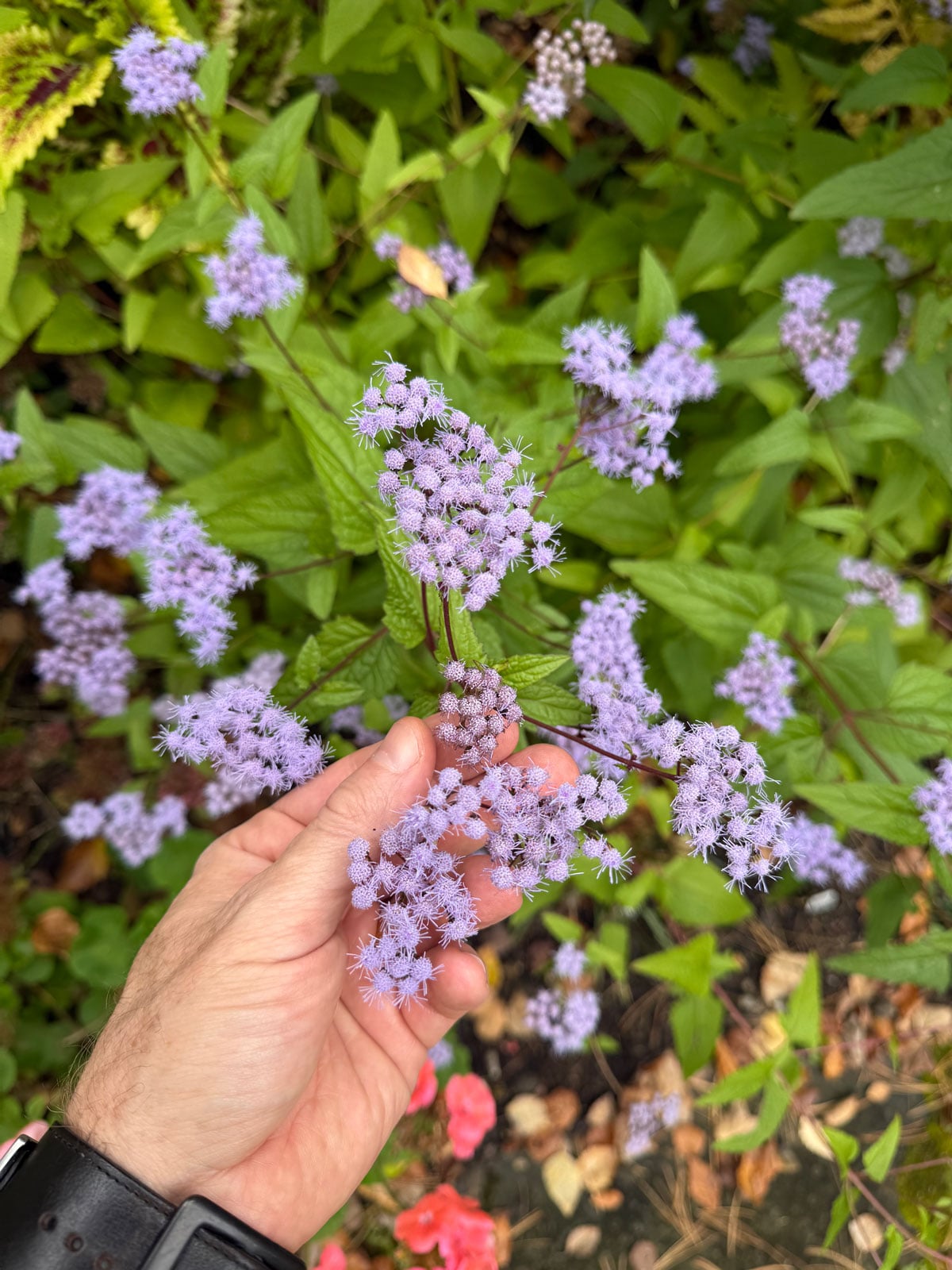
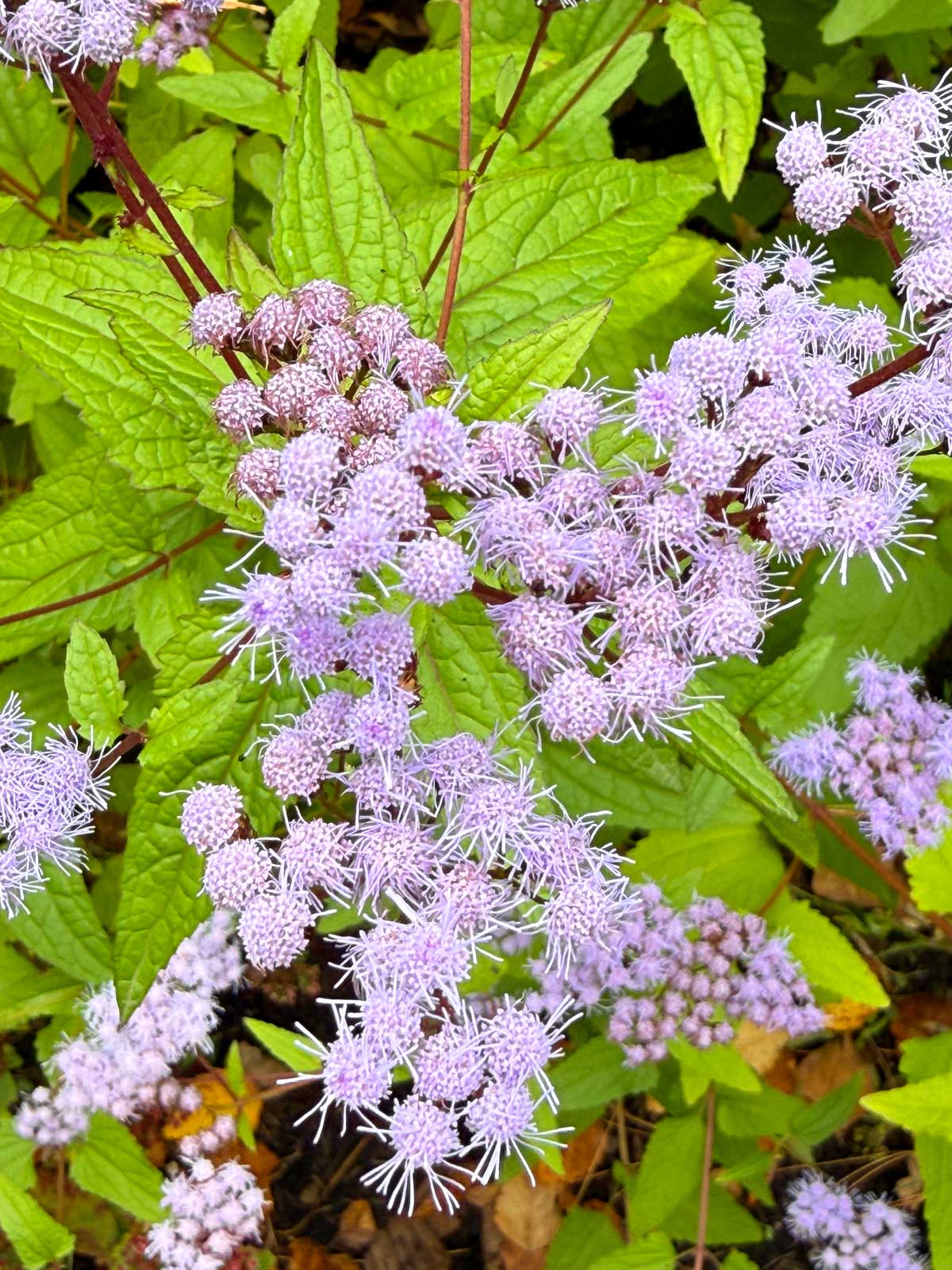
The flowers are what make it special. Each fuzzy, button-like head is made up entirely of tiny disc florets, roughly 40 to 90 of them, with no petal-like ray florets at all. Long, threadlike styles stick out of each floret, and en masse they create that hazy, soft-focus look that earned the plant its common name. The heads gather in flat-topped clusters at the tips of the stems and range from sky blue to lavender, with the occasional pinkish or white form.
The leaves are opposite, roughly triangular, coarsely toothed, and often have a slightly wrinkled texture. Stems are frequently tinged purple, which is a nice touch against the blue.
No, It Is Not the Ageratum at the Garden Center
The resemblance is real.. The bedding plant sold as ageratum or floss flower is Ageratum houstonianum, a tender annual from Mexico and Central America. The flowers look strikingly similar, but the two plants behave very differently in the garden.
| Blue mistflower | Annual ageratum | |
|---|---|---|
| Scientific name | Conoclinium coelestinum | Ageratum houstonianum |
| Life cycle | Hardy perennial | Tender annual in most of the US |
| Origin | Eastern and central United States | Mexico and Central America |
| Height | 1 to 3 ft | Usually 6 to 12 in for bedding types |
| Bloom time | Late summer into fall | Summer until frost |
| Spreads by | Rhizomes and seed | Seed, in warm climates |
| Native pollinator value | High, co-evolved with local insects | Visited, but not part of the local food web |
If you want the look of ageratum with plants that come back every year and actually belong in your regional ecosystem, blue mistflower is the choice. Just know that it grows taller and looser than the tidy little bedding mounds.
How to Grow It
Blue mistflower is hardy in USDA zones 5 through 10, which covers a big chunk of the country. It is not fussy, but it does have clear preferences.
Light. Full sun to part shade. In full sun you get the most flowers and the sturdiest stems. In more shade it still blooms, but stems stretch and flop and flowering is lighter. A spot with morning sun and some afternoon shade works well in hot southern gardens.
Soil and water. This is a plant of stream banks and wet meadows, so consistently moist soil is where it really thrives. It handles clay, loam, and organic soils, and it is a great fit for rain gardens, low spots, and pond margins. It will tolerate average garden soil and short dry spells once established, but in prolonged drought it wilts dramatically and growth slows. Rich, moist soil makes it lush and also makes it spread faster, so keep that tradeoff in mind.
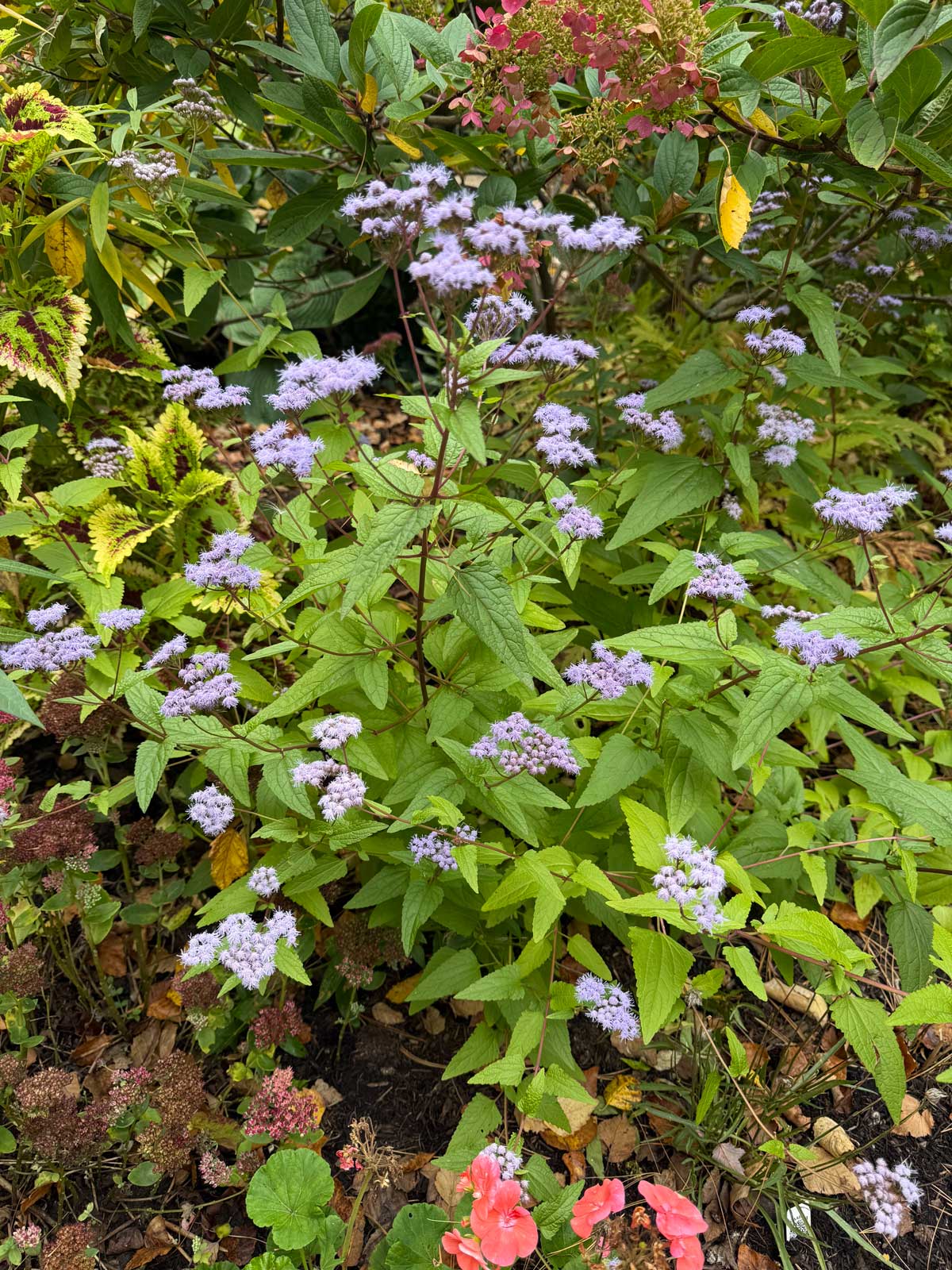
Size. Expect plants roughly 1 to 3 feet tall. Individual clumps are modest, but the colony keeps widening every year.
Timing. Blooms typically start in late summer and continue into fall, often until the first hard frost. In warmer zones the season can start earlier and run longer.
A spring warning. Blue mistflower is one of the last perennials to wake up. Shoots often do not appear until late spring, well after you have started worrying. Mark its location so you do not dig into it or declare it dead.
growth habit: It Spreads
Blue mistflower spreads by shallow underground rhizomes, and in moist, fertile soil it can spread enthusiastically. It also self-sows. Left alone, one plant becomes a patch, and a patch becomes a colony.
Blue mistflower is not invasive within its native range. "Invasive" refers to non-native species that cause ecological harm. A native plant that spreads well is better described as aggressive or vigorous. That distinction matters, because the same behavior that frustrates you in a tidy border is exactly what makes this plant valuable for filling gaps, stabilizing damp soil, and covering ground in naturalized areas.
The good news is that the rhizomes are shallow, white, and fairly easy to pull compared to many other spreaders. A few habits keep it in check:
Would you like to save this post?
- Plant it where spreading is welcome: rain gardens, meadow plantings, pond edges, or a bed you want filled in.
- Pair it with tough, competitive neighbors so no single plant takes over.
- Pull wandering shoots in late spring and early summer while the soil is soft.
- Divide clumps every two to three years.
- Shear off spent flower heads before they release seed if you want to limit self-sowing.
- Avoid planting it in small, formal beds unless you enjoy weeding.
In drier or leaner soil it spreads much more slowly, so your site conditions largely set the pace.
A Late-Season Lifeline for Pollinators
The reason this that Blue mistflower is one of my favorite perennials is that it hits its stride when many summer bloomers are finished, so it becomes a reliable nectar stop at a point in the year when food is getting scarce.
On a sunny fall afternoon you can expect a steady stream of visitors: native bees of many sizes, honey bees, hover flies, small wasps, skippers, and a variety of butterflies. Because each flower head is packed with dozens of tiny florets, small and short-tongued insects can feed easily alongside the bigger pollinators.
It is also a useful fuel stop for monarchs moving south during fall migration, when late-blooming nectar sources make a real difference.
A few practical notes on the wildlife side:
- Deer and rabbits generally leave it alone, likely thanks to the foliage's bitter chemistry.
- After bloom, the seed heads can provide food for small seed-eating birds.
- Leaving stems and leaf litter in place over winter gives shelter to overwintering insects.
Where It Shines in the Garden
Blue mistflower's flowers are small, so it makes the biggest impression planted in drifts rather than as a single specimen.
Good places to use it:
- Rain gardens and bioswales, where its tolerance for wet feet is an asset
- Pond, stream, and ditch edges
- Meadow and prairie-style plantings
- Woodland edges with a few hours of sun
- Pollinator gardens that need late-season bloom
For companions, think about color. Blue and gold are complementary, so goldenrods (Solidago) are the classic partner and the combination is hard to beat. Other natives that pair well and share its taste for moisture include:
- New England aster (Symphyotrichum novae-angliae) for purple on purple-blue
- Swamp milkweed (Asclepias incarnata) for earlier pink blooms and monarch host value
- Joe Pye weed (Eutrochium species) as a tall backdrop
- Sneezeweed (Helenium autumnale) for warm yellow and orange
- Black-eyed Susan (Rudbeckia species) for contrast in sunnier, slightly drier spots
- Switchgrass (Panicum virgatum) or little bluestem (Schizachyrium scoparium) for fall texture
It also does well in large containers, which is a smart way to enjoy it if you are worried about spreading.
Care, Propagation, and Troubleshooting
Once it is established, blue mistflower is close to carefree. No fertilizer is needed, and rich soil only encourages more spreading and floppier growth.
Pinch for a tidier plant. If your plants tend to sprawl, cut stems back by about a third to a half in early summer. You will get bushier, sturdier plants with more flower clusters. Do this no later than early to mid summer so you do not remove developing flower buds.
Watering. Water during extended dry spells, especially the first year. Wilting is the plant's way of telling you it is thirsty, and it usually recovers quickly once watered.
Fall cleanup. Skip it. Leave the stems standing through winter for wildlife and cut them back in spring before new growth appears.
Propagation. Division is the easiest method. Dig and split clumps in spring once shoots appear, or simply sever a rooted rhizome section and replant it. Seed works too, and you can sow it outdoors in fall or give it a period of cold, moist stratification before sowing indoors.
Problems. Few serious issues. Powdery mildew can show up on stressed plants in dry conditions, and plants in too much shade will stretch and flop. The most common complaint by far is that it spreads, which is really a siting issue rather than a plant problem.
The Bottom Line
Blue mistflower gives you a true blue color in a season that rarely has it, feeds pollinators when they need it most, and thrives in the damp spots where many other perennials sulk. Give it room, give it moisture, and give it neighbors that can hold their own. In return, it will light up your fall garden with a soft blue haze year after year.