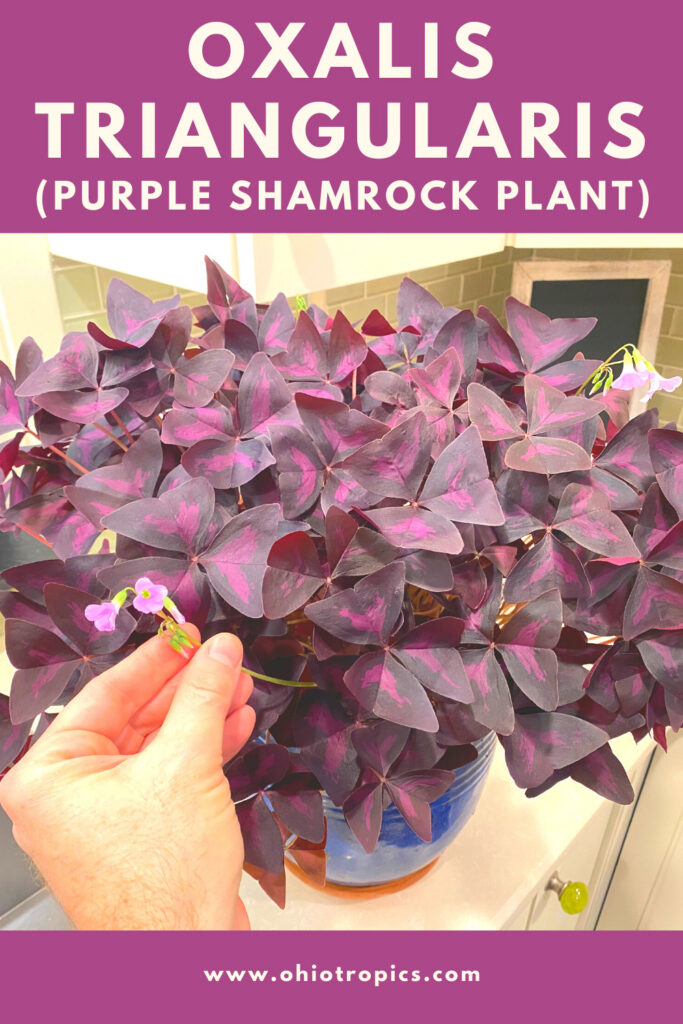
Since I have so many houseplants, I resisted getting any new ones for a while even though I've always admired Oxalis triangularis, or the Purple Shamrock Plant. One day I was shopping for my summer annual plants at a nursery, and they had a display of these plants and I told myself that I would just grow them as annuals.
Who am I kidding? These plants flourished in a pot outdoors, but then I firmly decided to bring it back indoors to enjoy as a houseplant! Do you want to know how to grow Oxalis triangularis indoors, or even outdoors? Keep reading and I will fill you in on all the details!
Would you like to save this post?
Enter your email, and I will send this link straight to you!
Table of Contents
Oxalis Triangularis Care
Before I get into the care of potted Oxalis triangularis, here is some interesting information that would be good to know. (If you don't care you can move onto the next section but I promise this is interesting information!)
You'll sometimes see this plant called False Shamrock Plant. Why is it a "false" shamrock? If you are familiar with clover, you'll know that the leaves strongly resemble clover which is in the Trifolium genus. "False Shamrock" plant actually belongs to the Oxalis genus.
Oxalis triangularis belongs to the Oxalidaceae family, or the wood sorrel family.
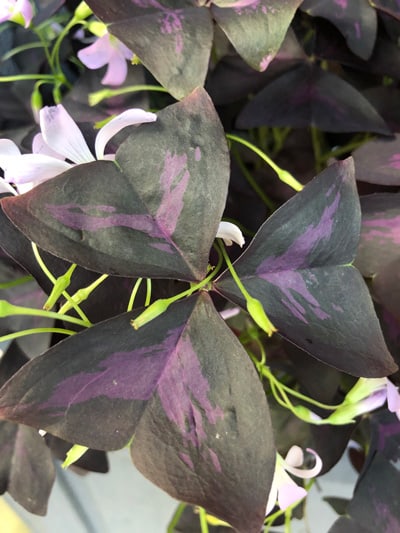
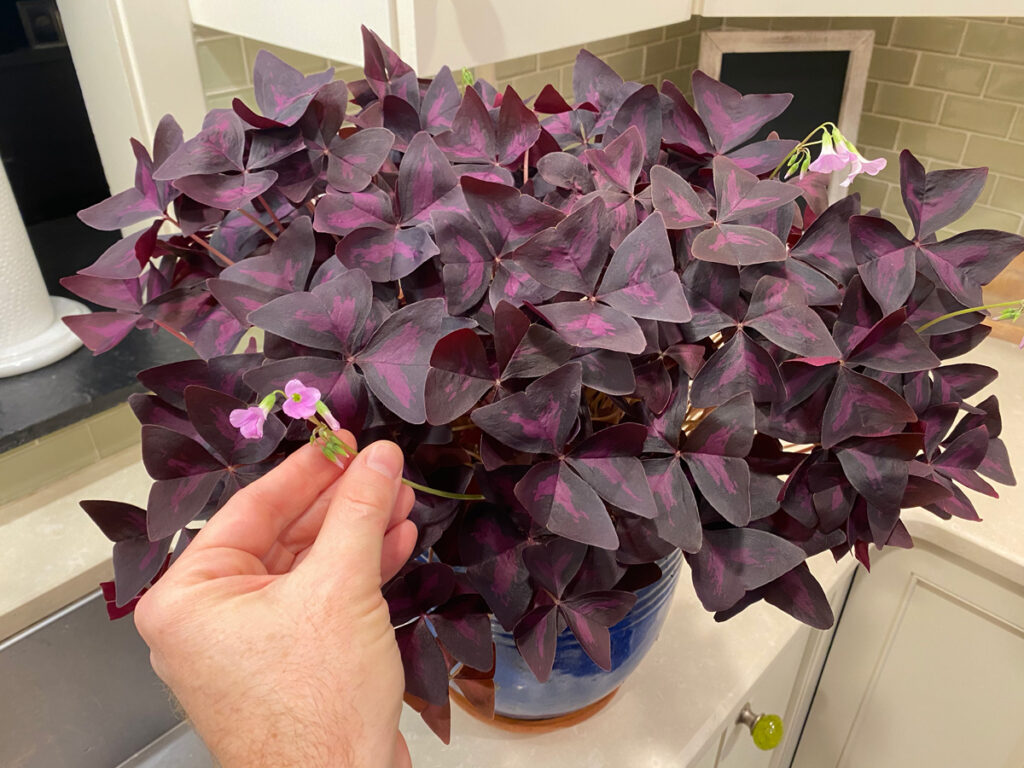
This plant's foliage consists of trifoliate leaves (compound leaf with 3 leaflets). Depending on the variety you have, the triangular leaves can be the plain green type, or they also come with dark purple leaves like my own plant.
Depending on the type you have, the small trumpet shaped five-petaled flowers come in different colors. My own plant has lavender or purple flowers, but there are other types that have white flowers and even yellow flowers.
These plants are native to a few countries in South America, including Brazil, but did you know that Oxalis triangularis is actually hardy in zones 6-11?
If you live in these zones, Oxalis triangularis makes for a lovely perennial plant that will keep spreading and add plenty of interest to your garden.
I've never tried growing these as a perennial, but know that it can be possible depending on where you live! If you live in a marginally hardy zone for this plant, be sure not to miss my Pushing Your Hardiness Zone blog post to ensure your chances of success!
One intriguing part of this plant is its ability to close its leaves (and flowers) at night and open them back up during the day, making it the subject of some wonderful time-lapse videos.
This phenomenon is called photonasty behavior. Funny word right? Check out the cool video on Wikipedia where you can see the Oxalis triangularis photonasty behavior. (I chuckle every time I see the word photonasty).
Oxalis triangularis actually grow from tubers and these plants do have a dormancy period, so if you think your plant is suddenly dying, you are probably OK and I describe what to do later in this post.
Lastly, the leaves are edible, so you can sprinkle some of the beautiful leaves as garnish if you'd like...but don't eat too much because they contain a lot of oxalic acid.
Oxalic means sour, and it is sour because of the high oxalic acid content. A little won't hurt you at all, but too much will deter your body from absorbing calcium.
Just don't go eating full salads of these plants. A little garnish will do no harm though 🙂
These plants are incredibly long lived and there have been reports of families having these plants for over 100 years. Talk about heirloom houseplants!
HOW DO YOU CARE FOR AN OXALIS PLANT INDOORS?
Let me go through some basic care information and growing conditions, and I will later describe how to plant the corms if you chose to purchase corms instead.
LIGHT
Light levels for this plant is a very important topic to consider indoors.
Indoors, you'll want to give these plants some direct sunlight. Depending on where you live and how strong the sun and light is, you may want to give this plant at least half a day's sun.
Is your Oxalis triangularis leggy or sparse? If it is, chances are that it is not receiving enough light.
I find that only indirect light indoors is not sufficient in many cases. Your plant will still grow, but not as full.
Move your plant to a sunnier location, with at least partial sun if you can, and it will respond by producing lusher growth and turn into a fuller plant. You should have this plant right in front of a window for best results.
These plants can even take full sun indoors, as long as you can keep up with watering because it will dry out much more quickly with bright light.
A few words about taking your plant outdoors. Although these plant do like some direct sunlight, please be careful when you place any of your houseplant outdoors. You can NOT move a plant that has been indoors immediately outdoors into direct sun.
If you do this, your plants will burn. Even the ones that like a lot of sun. To make the transition from indoors to outdoors safely, you'll need to make sure to harden your plants off.
This means that you will gradually acclimate your plants to brighter outdoor conditions so that the leaves don't burn. If you'd like to know more information on how to do this, please read my blog post on how to harden off indoor plants and place them outdoors safely.
You will be glad you read this. I'd had so many people tell me that taking plants outdoors is really bad because they burn and die. This is because those plants were not hardened off.
So be sure to not skip this step and read that blog post I referenced above!
WATERING
This plant likes slightly moist conditions, but do allow the top inch of soil or two (2.5-5cm), depending on the size of your pot, to dry out before watering again.
When you do water, make sure you give your Oxalis triangularis plant a good soak and allow excess water to escape the drainage hole.
Good drainage is very important so always use pots with drainage holes! Having no drainage holes is an invitation for root rot and we don't want that.
Avoid letting these go totally dry especially for long period of time or you may induce a dormancy period. The dormancy period will occur anyway, but more about that later.
Avoid keeping these constantly wet indoors though may cause the corms to rot, and then you can say bye bye to your Oxalis.
FERTILIZING
During active growth, I like to fertilize dilutely with every watering. My favorite fertilize that I've switched to for pretty much all my houseplants is Dyna-Gro Grow (link to Amazon).
I add ¼ teaspoon of Dyna-Gro Grow per gallon of water and use it just about every time I water all my plants.
I love using it because it is urea-free and it contains ALL of the macro and micro nutrients that plants need. If you pick only one fertilizer to use for your indoor plants, you can use this one for all of them and with great results! I've been so happy with the results I've been able to achieve with this fertilizer.
TEMPERATURE
These plants do prefer temperatures on the cooler end. An ideal temperature range for oxalis plants is 60-75F (16-24C).
Consistent temperatures of over 80F (27C) can cause the plant to shut down and start to go dormant.
I like to bring my plant outdoors in the Spring once temperatures are warm enough. I keep my plant outside until about October or even November. At that point, I place it in a cool, dark place and stop watering. This will force it into dormancy.
Over the next few weeks, it will go into dormancy and all the leaves will dry up. Keep an eye on it because it may start to come into growth again after a few weeks. If you notice it start to grow again, immediately place it in front of a window so it can resume growing.
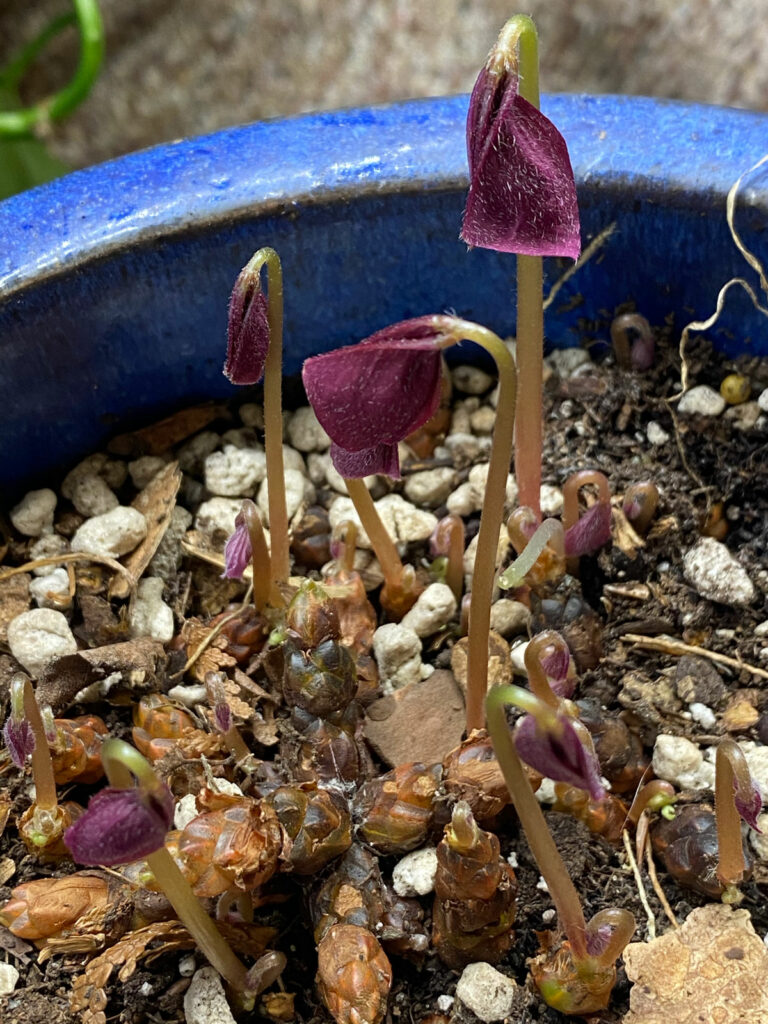
Here is my plant after it started growing back after dormancy:
If you don't notice any growth yet after about 4-6 weeks or so, don't worry. Clean up the dead leaves, place it in front of a bright window, and starting watering and watch for signs of new growth.
With good conditions indoors, new leaves will start growing remarkably fast.
SOIL
For this plant, I like to use 3 parts of an all-purpose potting mix and 1 part perlite. This is my standard mix that I like to use for many plants.
Why is My Oxalis Dying?
If your Oxalis triangularis starts to look a little rough, despite nothing changing in its care, it may simply be entering its dormancy period on its own.
It is not dying, so you should not worry! Think of it as a chance to rejuvenate your plant. The dormancy period is normal so you'll just have to get used to it.
Sometime after the main growing season each year, your Oxalis may start to look a little droopy. The leaves may stop opening up during the daytime.
At this point, it is time to give your triangularis a rest. I would recommend to stop watering at this point and let the leaves completely dry up. Then cut the leaves off and place it in a cool, dark location (above freezing) and let it rest for 3-4 weeks, or even up to 6 weeks. Do not water during this time period.
At the end of the dormancy period, bring your plant out of hibernation and back to a sunny indoor window, and start watering lightly. When you see signs of growth, you can water a bit more. Until you see new growth though, don't add too much water.
Keep it on the drier side until growth starts to pick up, but don't ignore watering.
Or if you'd like to make more plants, this is also a good time to divide the tubers and make as many new pots as you'd like. After the dormancy period, you can divide your tubers to your liking.
Or if you'd just like a specimen plant, keep things as is, or maybe pot it up to the next larger pot size.
PESTS & DISEASES
Pests and diseases are always a nuisance. The beautiful part about your Oxalis triangularis plant is that if your plant is infested with any bugs or diseases, if you don't want to treat your plant, you can always let it go dormant and start growing fresh foliage from scratch!
Otherwise, read below on some tips to treat your plant.
SPIDER MITES
Spider mites are a nuisance and like any pests, are best dealt with before the problem gets out of control.
Spider mites themselves are very small, but you'll be able to see very fine webbing on the foliage and they often hide underneath the foliage as well.
Mealybugs are another annoying pest. They will appear as white, cottony masses (and they contrast nicely against the rich purple leaves!)
I like to use an insecticidal soap to treat mealy bugs. Check out my post on treating mealybugs in order to have the best success at eradicating these annoying pests.
POWDERY MILDEW
Powdery mildew is a fungal disease that appears as hazy white areas on your leaves. It typically forms on dry foliage when your light conditions are low and it is very humid and temperatures are on the cool end.
Poor air circulation can also aggravate the issue.
Use an organic fungicide to treat your plant. Some people also have success with mixing a tablespoon of baking soda and ½ teaspoon of dish soap to one gallon of water and spraying on the plant.
THRIPS
Thrips are an exceedingly irritating pest to deal with. Fortunately, it is easier to manage thrips with Oxalis triangularis compared to other plants.
Why? Because you can let it go dormant, like I outlined in the previous section. You're essentially able to set the reset button very easily.
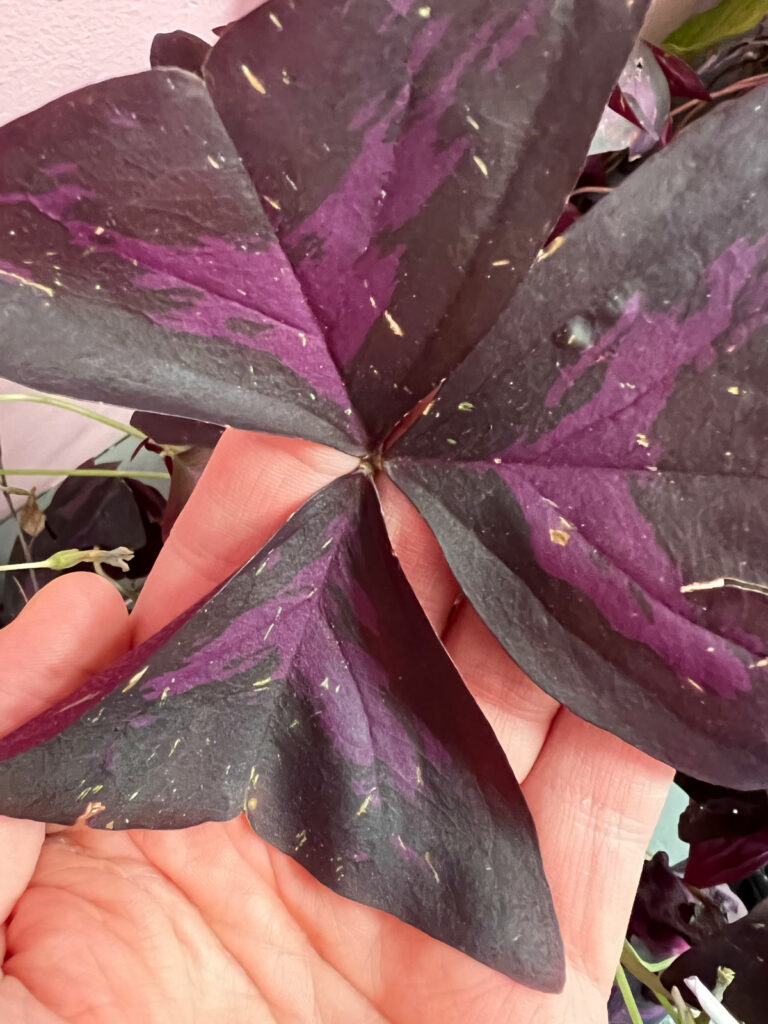
One of my Oxalis triangularis that got thrips outdoors. Note the multiple injuries on the leaf.
You can attempt to spray with insecticidal soap, but it will be pretty difficult to completely cover the plant. My plants are a tangled mess of foliage.
And unless you're able to effectively spray the entire plant, it's almost not worth doing.
Instead, I recommend following this procedure to eradicate thrips in your Oxalis:
Isolate your plant and allow it to go dormant by withholding water and allowing all the foliage to die off, as previously described above.
Once the foliage has all dried up, discard the dead foliage.
If you don't obtain an actual plant, you can simply order corms and pot them up to grow your own plants. It is very simple, convenient, and easy to do!
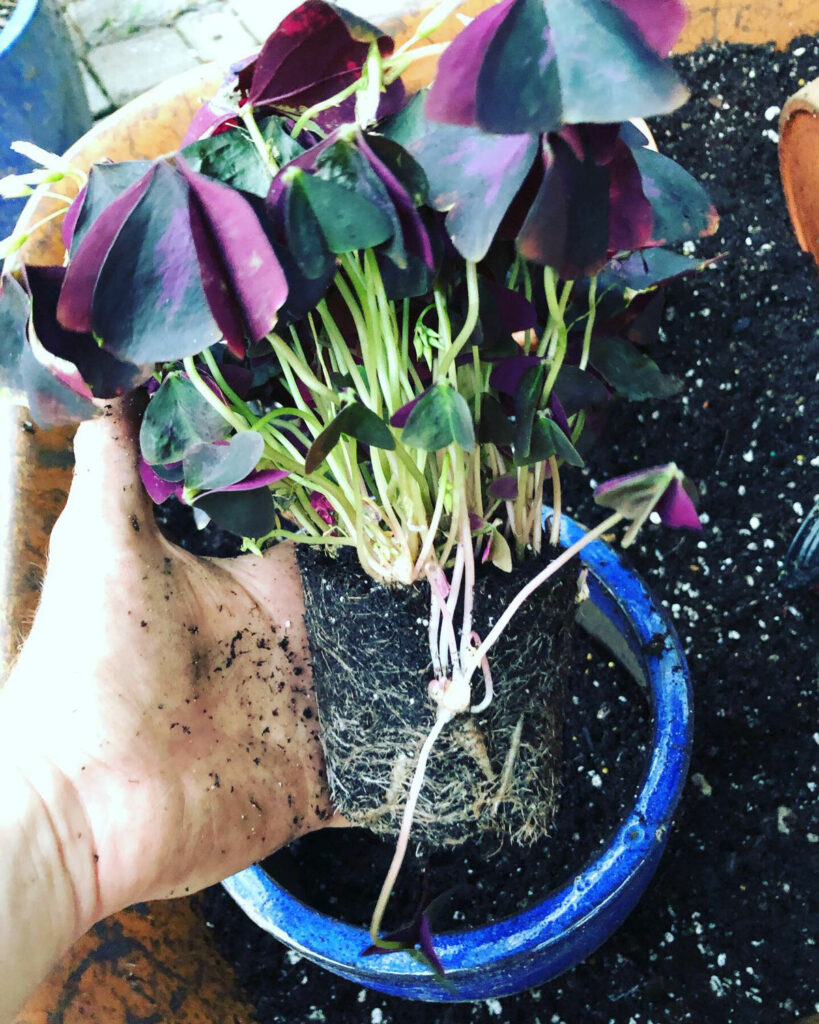
I actually purchased my own plant in the annuals section of a nursery, so I started out with a plant in a 4 inch pot:
Simply pot up your tubers about 1 to 1 ½ inches (2.5 to 4cm) apart and also 1 to 1 ½ inches deep. Don't space your tubers too far apart otherwise you won't have a full plant.
Plant the tubers vertically with the narrower end at the bottom. They will still grow regardless, but this is what I prefer doing.
Water lightly and place in a sunny window. You should have new growth within about 2 weeks or so. These are great plants for the impatient gardener because they do grow pretty quickly and it is fun to watch the progress!
For a very detailed post on how to plant corms, and also how to divide an existing plant, step-by-step with photos, check out my blog post: How to Plant Oxalis Bulbs (Corms).
OXALIS TOXICITY
Oxalis is toxic to cats and dogs because of calcium oxalate according to the ASPCA.
That's about it folks! I hope you've enjoyed this blog post and that you've taken some useful tips. Do you have any Oxalis triangularis? Comment below! I love to hear from my readers.
When a few stems on my oxalis houseplant came loose in the soil, I put them in a vase of water. The flowers lasted for several months, and the stems rooted. I planted them, and the plant is beautiful. Amazing!
Hi I just found this site and have a Question about my oxalis also. I bought the seeds through Amazon and gave them to my granddaughter to start. They did come up but it's been months and there are still only 5 stems t he plant she gave me. Do the corms produce more under the soil and does one corm just produce only one stem. I was hoping that by now I would have a fuller plant but that's not the case.what should I do to get a fuller plant.Thank you
Hi Marie! It will be slower from seed, but yes, the corms will multiply over time and you will get a fuller plant. With good care, you will get there. Good luck!
It's Barbara again - I fogot to add that I left each plant on its windowsill throughout so they were in full light since I first had them. Was this a mitake ? Step by step care advice would be much appreciated.
That will be fine. They have gone dormant since you withheld water. I just replied to your other comment, so use that advice and monitor your plants. Good luck!
Hello from the UK. I fell inlove with this plant when I bought it for the first time - I think about last spring - especially when I saw the leaves closing up as the light faded and the closed leaves then moving together to form a blunt arrow shape - and the little delicate pink flowers are delightful. I fear I forced dormancy on my two plants several months ago by withdrawing water and left them completely dry. I didn't fully understand what I was supposed to do. The leaves died down and I recently cut them off leaving only short stems. I am unsure now what to do and when to act. Should I start watering them soon or wait further? Your advice is needed! I want to look after them correctly! Thank you,
Hi Barbara! Place your plants in the brightest window that you have indoors, and give it a good watering. Allow the top inch or so to go dry before watering again. Your plants should start back up into growth soon. How long were they left completely dry?
Hi Carole! That's a great question. I'm assuming that your Oxalis flowered and went to seed, and the seeds found their way to other pots via the wind or by other means. 🙂
Hi there, a friend gave me some corms off her purple shamrock last spring. My plant has grown beautifully, however it is green. I know there are green varieties, but these came from a purple plant. Some of the young leaves have a purple tint at first but turn completely green as they grow. I haven't found any info on this in my internet searches. Do you have any insight? Thank you in advance.
Hi Bethany! That's interesting...how does your light situation compare with your friend's? Is yours in dimmer light? That's the only think I could think of at the moment.
Thank you for this wonderful, informative post! I'll be saving this link 🙂
I have 2 weird Oxalis questions, if someone wouldn't mind providing advice and/or feedback!
My Oxalis recently completely died down, so I assumed it was going dormant. However, it quickly became LOADED with flowers, they are popping up everywhere! There are about 2 or 3 healthy tiny leaves starting to grow now.
My main question is: Does the abundance of flowers but severe lack of leaves indicate anything is wrong with the plant?
(I should note- right before the leaves started to die off, I noticed that many of the leaves had white/grey spots on them. I plucked the sick leaves off and all seemed well, until the plant died back. I didn't see any pests or any other indication of illness/issues. I think I may have over-watered it? Do the leaves usually get spotty before the plant goes dormant?
Hi Courtney! I'm wondering if your plant possibly had powdery mildew or some other kind of fungus. Have you kept your plant pretty wet by any chance? What kind of humidity levels is it growing in? Tell me about your soil moisture and how you approach watering? What kind of light is your plant growing in?
Hi thank you for all of your advice - so good!! I live in Australia and we are in the middle of winter.. i made the huge mistake recently of putting some of my indoor plants out in the sun (thinking they would love that... and they got burnt) it was a lesson learnt..
I thought maybe that was why my oxalis started drooping but after reading this i think it may want to go dormant - it's winter as i said and it's gone really droopy...
Can i send you a picture and get your opinion? I would be really scared to cut it if that's not what is going on.
Hi Brooke! Like you said, lesson learned...If you're moving any plant outdoors, you'll always want to place it in full shade for a few days first and then gradually increase the sun exposure if needed. Oxalis can definitely take some sun outdoors, but you'll have to do it gradually so it doesn't burn. At any time, you can let your plant go dormant if you don't like its appearance. You're welcome to send me an email with photos if you'd like, but I would just cut out all water like I described in the post and follow that process :-).
I know this is an old post, but hopefully you'll still be able to answer. My question:
My oxalis triangularis is purple, but none of the leaves show the characteristic lighter purple triangle in the middle. Did I get a different variety of oxalis? Do I need to do something special with fertilizer to get it to have the distinctive bicolor leaves?
I planted 10 corms in 3 nursery pots and they have grown beautifully. They have been in a window but, to me, still seem leggy. Wondering if I should combine them in one larger pot?
Hi Kate! It all depends on how cold it got and the condition of your soil during the winter. Do you know what USDA zone you live in? These are hardy down to zone 6 or so, but there are other factors at play too.
Hi and thanks for the wealth of information! I'm curious about how long you should wait (if at all) to fertilize after repotting corms? It's been about a month and they've newly sprouted up a majority of what is filling the pot now. Thanks! 🙂
You're very welcome Tiara! You can go and fertilize now for sure! In the past I've even mixed in some Osmocote (time release fertilizer granules) right into the mix upon planting the corms.
Hi! I love your site. I learned a lot from you.
And i subscribed to your YT channel too.
I wanted to know why is my oxalis is drooping and the leaves is still close even in daytime. My friend gave it to me, then i repot from a plastic pot to clay pot. Its only have 3 stems anyway. Can u help me?
Glad you enjoy my site :-). Has the soil gone really dry? You have to be careful of terra cotta pots since they dry out extremely quickly (especially small ones). Oxalis don't like to go completely dry and will droop pretty quickly when that happens. Is this the case from what you've seen? Hope this helps.

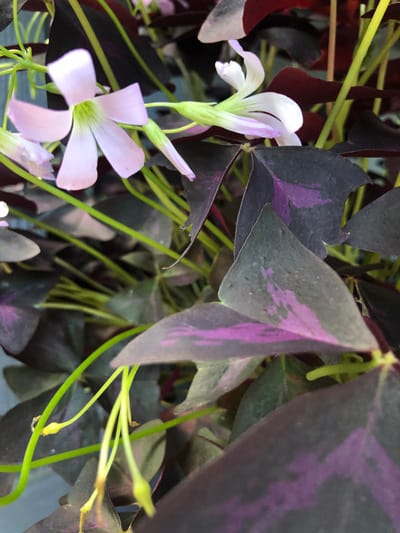
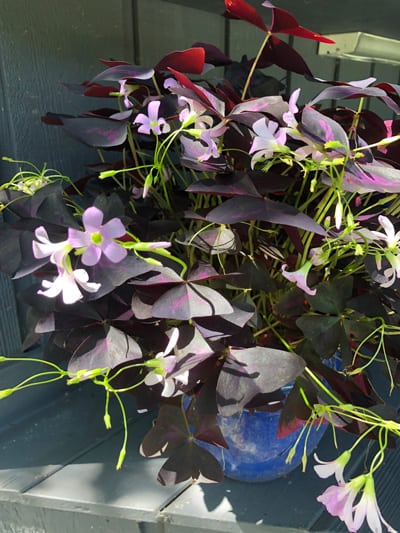
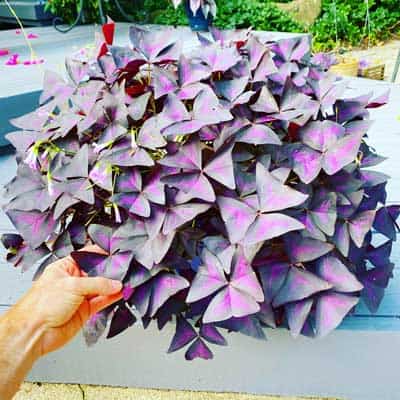





When a few stems on my oxalis houseplant came loose in the soil, I put them in a vase of water. The flowers lasted for several months, and the stems rooted. I planted them, and the plant is beautiful. Amazing!
They're such resilient plants! Thanks for sharing 🙂
Hi I just found this site and have a Question about my oxalis also. I bought the seeds through Amazon and gave them to my granddaughter to start. They did come up but it's been months and there are still only 5 stems t he plant she gave me. Do the corms produce more under the soil and does one corm just produce only one stem. I was hoping that by now I would have a fuller plant but that's not the case.what should I do to get a fuller plant.Thank you
Hi Marie! It will be slower from seed, but yes, the corms will multiply over time and you will get a fuller plant. With good care, you will get there. Good luck!
It's Barbara again - I fogot to add that I left each plant on its windowsill throughout so they were in full light since I first had them. Was this a mitake ? Step by step care advice would be much appreciated.
That will be fine. They have gone dormant since you withheld water. I just replied to your other comment, so use that advice and monitor your plants. Good luck!
Hello from the UK. I fell inlove with this plant when I bought it for the first time - I think about last spring - especially when I saw the leaves closing up as the light faded and the closed leaves then moving together to form a blunt arrow shape - and the little delicate pink flowers are delightful. I fear I forced dormancy on my two plants several months ago by withdrawing water and left them completely dry. I didn't fully understand what I was supposed to do. The leaves died down and I recently cut them off leaving only short stems. I am unsure now what to do and when to act. Should I start watering them soon or wait further? Your advice is needed! I want to look after them correctly! Thank you,
Hi Barbara! Place your plants in the brightest window that you have indoors, and give it a good watering. Allow the top inch or so to go dry before watering again. Your plants should start back up into growth soon. How long were they left completely dry?
Thanks SO much... I have one of these and this is great information...
I'm glad you enjoyed the article Mary :-).
I have Oxalis planted in pots outside in summer and they come up in other pots and planter on the wall how does that happen?
Hi Carole! That's a great question. I'm assuming that your Oxalis flowered and went to seed, and the seeds found their way to other pots via the wind or by other means. 🙂
Hi there, a friend gave me some corms off her purple shamrock last spring. My plant has grown beautifully, however it is green. I know there are green varieties, but these came from a purple plant. Some of the young leaves have a purple tint at first but turn completely green as they grow. I haven't found any info on this in my internet searches. Do you have any insight? Thank you in advance.
Hi Bethany! That's interesting...how does your light situation compare with your friend's? Is yours in dimmer light? That's the only think I could think of at the moment.
Thank you for this wonderful, informative post! I'll be saving this link 🙂
I have 2 weird Oxalis questions, if someone wouldn't mind providing advice and/or feedback!
My Oxalis recently completely died down, so I assumed it was going dormant. However, it quickly became LOADED with flowers, they are popping up everywhere! There are about 2 or 3 healthy tiny leaves starting to grow now.
My main question is: Does the abundance of flowers but severe lack of leaves indicate anything is wrong with the plant?
(I should note- right before the leaves started to die off, I noticed that many of the leaves had white/grey spots on them. I plucked the sick leaves off and all seemed well, until the plant died back. I didn't see any pests or any other indication of illness/issues. I think I may have over-watered it? Do the leaves usually get spotty before the plant goes dormant?
Thanks for any help and assistance! 🙂
Hi Courtney! I'm wondering if your plant possibly had powdery mildew or some other kind of fungus. Have you kept your plant pretty wet by any chance? What kind of humidity levels is it growing in? Tell me about your soil moisture and how you approach watering? What kind of light is your plant growing in?
Hi thank you for all of your advice - so good!! I live in Australia and we are in the middle of winter.. i made the huge mistake recently of putting some of my indoor plants out in the sun (thinking they would love that... and they got burnt) it was a lesson learnt..
I thought maybe that was why my oxalis started drooping but after reading this i think it may want to go dormant - it's winter as i said and it's gone really droopy...
Can i send you a picture and get your opinion? I would be really scared to cut it if that's not what is going on.
Hi Brooke! Like you said, lesson learned...If you're moving any plant outdoors, you'll always want to place it in full shade for a few days first and then gradually increase the sun exposure if needed. Oxalis can definitely take some sun outdoors, but you'll have to do it gradually so it doesn't burn. At any time, you can let your plant go dormant if you don't like its appearance. You're welcome to send me an email with photos if you'd like, but I would just cut out all water like I described in the post and follow that process :-).
I know this is an old post, but hopefully you'll still be able to answer. My question:
My oxalis triangularis is purple, but none of the leaves show the characteristic lighter purple triangle in the middle. Did I get a different variety of oxalis? Do I need to do something special with fertilizer to get it to have the distinctive bicolor leaves?
Hi Valerie! There are definitely different kinds of Oxalis so you probably have a different cultivar :-).
This is very good inforamation! I have a plum crazy. Does it follow the same care? And how do I propogate it as it looks like it's only one stem. TIA!
Hi Jen! Glad you enjoyed the post! I'm not sure what a plum crazy is. Was that a typo? 🙂
I planted 10 corms in 3 nursery pots and they have grown beautifully. They have been in a window but, to me, still seem leggy. Wondering if I should combine them in one larger pot?
Hi Billie! There is no harm in doing that. Is it getting any direct sun at all? That will help keep the plant a little more compact.
Hello! Thank you very much for your guide. It was very helpful!
I am have a question/doubt and was wondering if you could help me.
My oxalis is closing during the day. Do you know why this is happening? It doesn’t close during the day every day, but sometimes it does.
My plant is indoors and is is by a window. The room is very bright and it gets some direct sun light on it.
Thank you very much
Hi Joana! How long have you had your plant? Is it under any kind of stress that you know of? Tell me about your watering routine?
I left mine in the ground all winter. I guess it won't come back again?
Hi Kate! It all depends on how cold it got and the condition of your soil during the winter. Do you know what USDA zone you live in? These are hardy down to zone 6 or so, but there are other factors at play too.
Hi and thanks for the wealth of information! I'm curious about how long you should wait (if at all) to fertilize after repotting corms? It's been about a month and they've newly sprouted up a majority of what is filling the pot now. Thanks! 🙂
You're very welcome Tiara! You can go and fertilize now for sure! In the past I've even mixed in some Osmocote (time release fertilizer granules) right into the mix upon planting the corms.
Hi! I love your site. I learned a lot from you.
And i subscribed to your YT channel too.
I wanted to know why is my oxalis is drooping and the leaves is still close even in daytime. My friend gave it to me, then i repot from a plastic pot to clay pot. Its only have 3 stems anyway. Can u help me?
Glad you enjoy my site :-). Has the soil gone really dry? You have to be careful of terra cotta pots since they dry out extremely quickly (especially small ones). Oxalis don't like to go completely dry and will droop pretty quickly when that happens. Is this the case from what you've seen? Hope this helps.