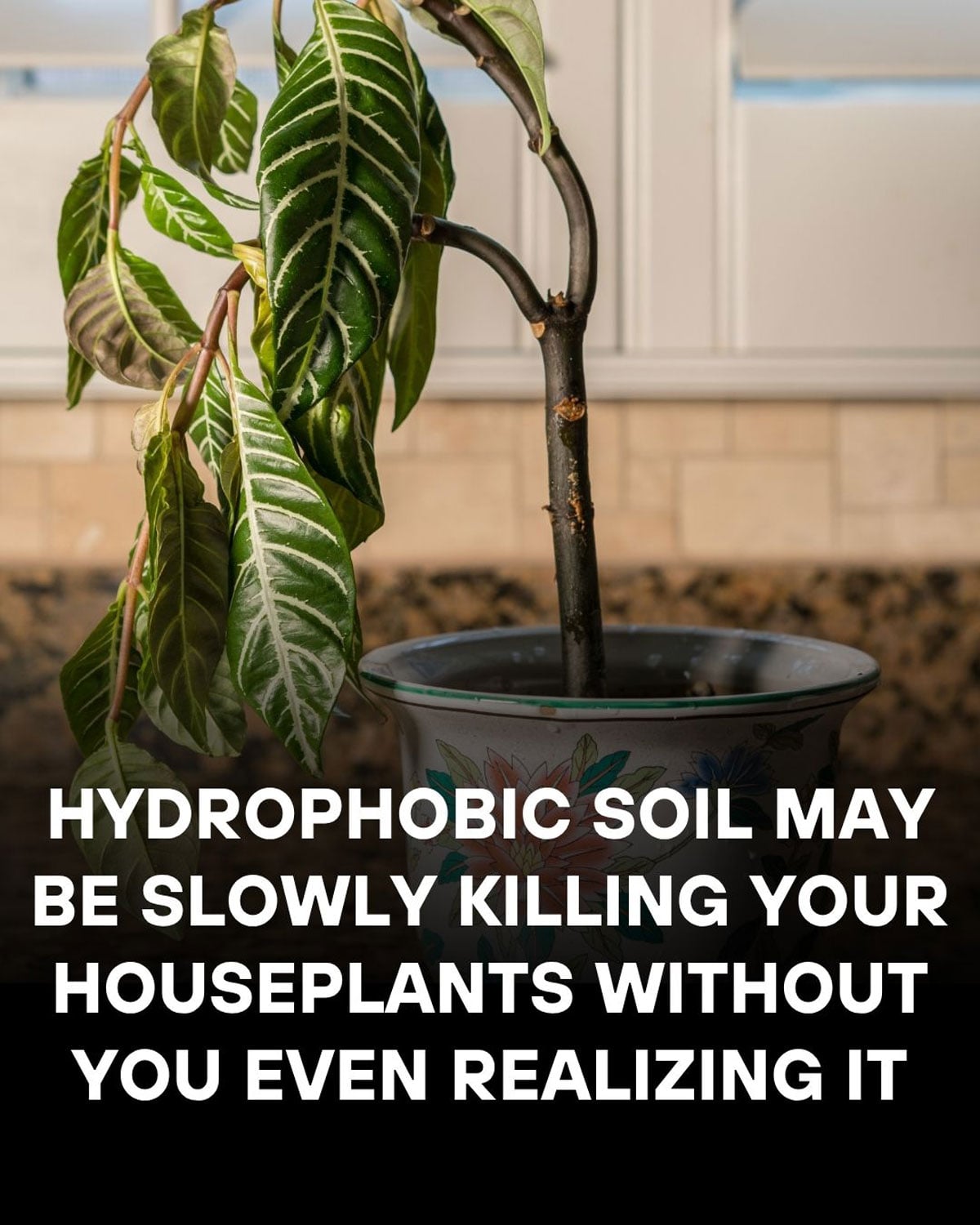
Many people's houseplants have soil that has gone hydrophobic, and it is damaging their plants without even realizing it. If you are using potting mix that is peat-based, and you tend to neglect watering often, this is a very common problem and your plants may be suffering without you even realizing what happened.
In the same week, two people reached out to me with the same issue. One was a paying client that booked a houseplant care consultation with me, and the other was a friend that I visited out of state. In both cases, they had the same problem.
Despite their plants getting enough light, they simply were not growing. Everything checked out fine, but once I drilled them on their watering practices, it quickly became apparent that both of them had problems with hydrophobic soil.
In this article, I'll explain what hydrophobic soil is, what causes it, signs to look for that tells you that your soil has gone hydrophobic, and what you can do to fix it. (Yes, you can fix it, and it doesn't necessarily require any repotting, although you can).
Table of Contents
What is Hydrophobic Soil?
Simply by looking at the word, you can easily piece it together. "Hydro" is derived from Greek and it means water, and "phobic" means "fear of." Piecing it together, it literally means fear of water.
In practical terms, hydrophobic soil is soil that has dried out so much that it actually starts repelling water instead of absorbing it.
Signs That You Have Hydrophobic Soil
The danger of soil that has gone hydrophobic is that even though you "watered," the soil didn't absorb the water and your plants will suffer. If one or more of these things happen, it may indicate that your soil has gone hydrophobic:
When you water your plant, the water seemingly run straight through and quickly drains through the drainage holes without absorbing into the soil. This usually happens when the soil got so dry that the soil around the perimeter of the pot pulled away from the pot and exposes a gap between the soil and the pot. And after you "water," none of it gets absorbed and runs straight through the gap and through the drainage hole, and the soil still feels dry.
When you go to water, the water may just sit on top of the soil instead of absorbing immediately.
The pot feels REALLY light, even after watering because the soil didn't absorb any water.
Despite getting enough light, your plants may have drastically stalled growing. You may also have wilty leaves and crispy leaf edges.
Causes of Hydrophobic Soil
Hydrophobic soil is simply caused by potting soil that has gone dry for so long that it starts to repell water. This is particularly a problem with peat-moss based potting soils (most of them on the market are using peat moss. If you're not sure, check the label).
When peat moss dries excessively, it goes hydrophobic, and it is very difficult for it to absorb water. Peat moss-based potting mixes become extremely water-repellent when bone dry.
What are some real world cases that can cause your soil to go hydrophobic?
Continually allowing your plants' soil to go bone dry repeatedly.
Just adding a tiny bit of water (especially people that are afraid to "overwater"). The low quantity of water doesn't wet all of the soil in the pot, and it will cause big dry pockets of bone dry soil.
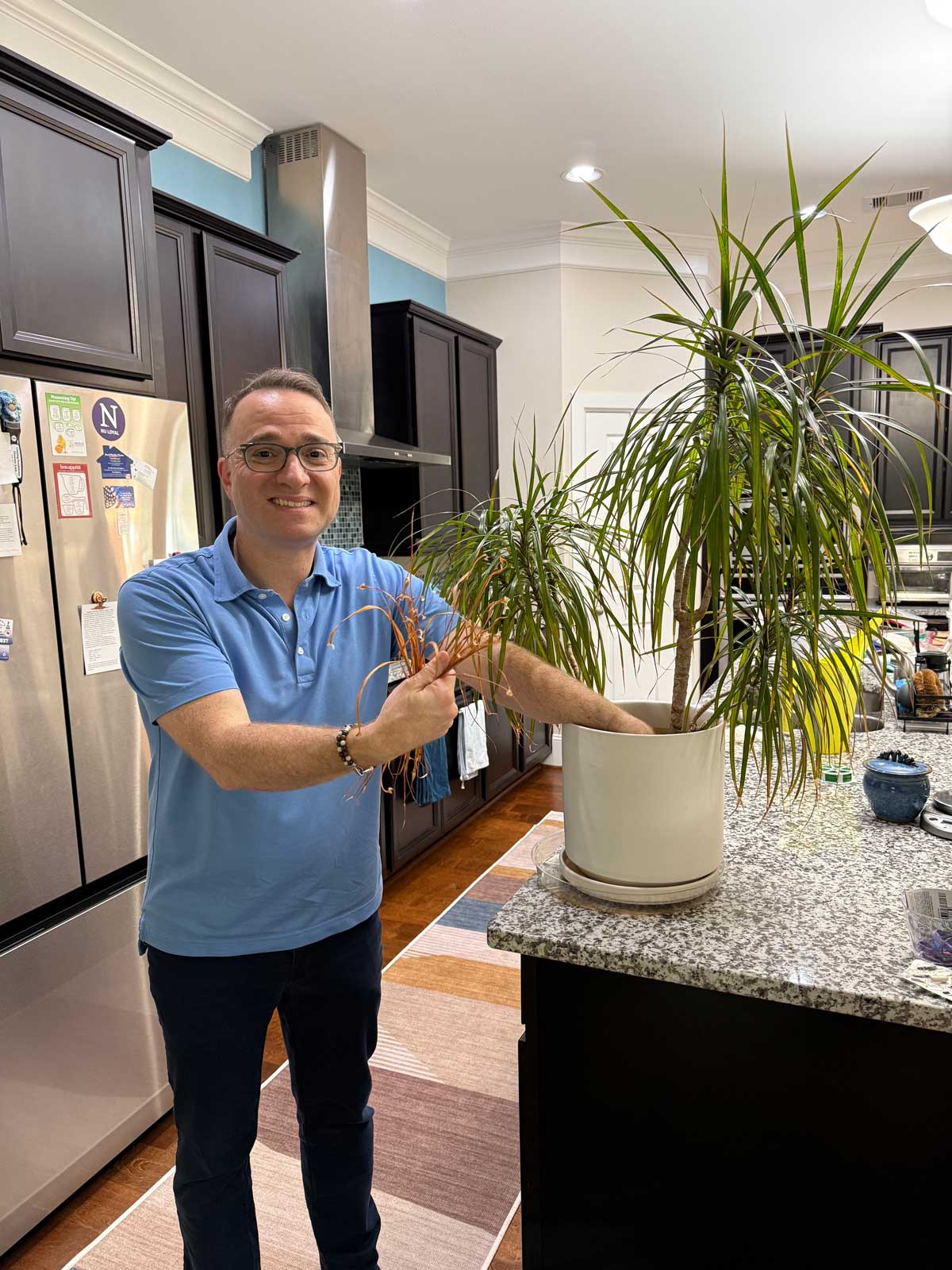
In the case of a friend that I helped with this issue, she was using self-watering devices that were supposed to slowly add water into the pot. Unfortunately, they weren't working properly, and her soil went bone dry and all of her houseplants experienced hydrophobic soil.
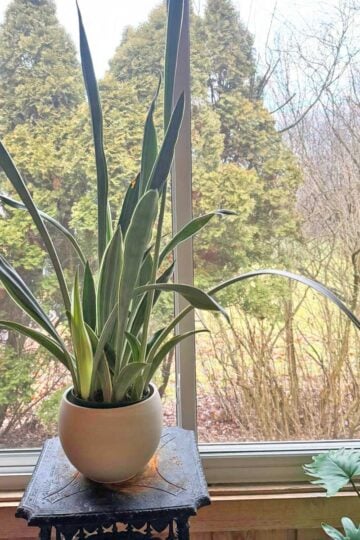
One of my friend's plants that had soil that went hydrophobic (Dracaena marginata). After I helped her with her watering, her plants made a drastic turn around.
Would you like to save this post?
Enter your email, and I will send this link straight to you!
How to Fix Hydrophobic Soil
Here are a few methods that you can use to fix hydrophobic soil so that it accepts water once again.
1. Bottom watering
With this method, time will do the work. Set it and walk away for a while.
Take a sink or bucket and fill it with water. Adjust the water level so that when you place your plant in, the water level is just below the rim of the pot. Let your plant sit for at least 30-60 minutes or longer.
If you place your plant in the sink or bucket and it's not stable and tips over because the pot is too light, you can add less water, but just monitor your plant and add more water after the initial water has absorbed.
You can also place your pot on top of a deep saucer and add water in the saucer. After it has absorbed, keep adding water.
After at least 30-60 minutes, lift your plant up. It should feel much heavier, which is an indication that the soil has accepted water again.
The surface of the soil may or may not be damp. But at that point, you can try top watering to moisten the top of the soil too.
2. Top Water Repeatedly
Another method is to continually top water several times. Place your plant in a sink, bathtub, or even outside as long as it's warm. Take a knife or fork and gently poke holes on the surface of the soil. This will help a lot if the soil has REALLY gone dry.
Then top water once. If water sits on top, just leave it and walk away. Come back later and add more water. Keep repeating this several times throughout the day until the soil has absorbed water again.
3. Place your plants outside if there is a slow and steady rainfall
Timing would have to be on your side with this one, but this is an amazing way to fix your soil. If you have a dreary day where there are gentle rains that don't want to stop, simply put your plants with hydrophobic soil outside.
After a while, the gentle rains and humidity will slowly fix your soil. Just don't forget to bring your plant back indoors (especially if it's in a normally sunny area...don't sunburn your plants!)
4. REPOT
And last but not least, you can always repot with fresh soil. If you needed to repot your plant anyway, this will fix the hydrophobic soil issue and also give your plant fresh soil and a bigger pot so that it can continue to grow.
After you have fixed your hydrophobic soil, remember what caused it in the first place and try not to do that again. It's good to let your soil dry out to some extent, but not to the point where it get so dry that it repels water. Try and keep a routine where you check on your plants often so that this doesn't happen again.


I have had that happen and you're 💯 per cent correct on the soaking method. It works beautifully 😁
Thanks for all your tips 🫂
You're very welcome Leo! 🙂