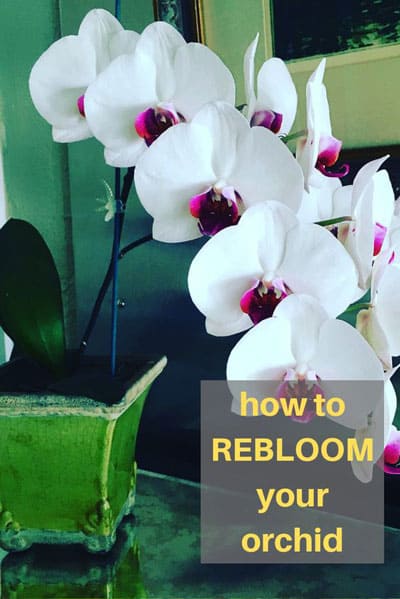
You may be wondering what to do with your orchid when the flowers have withered and died. Your beautiful blooming orchid that you purchased will bloom again for you if you follow a few simple steps that are outlined below.
You really have 3 total options to figure out what to do with your orchid after the flowers fall off. The 3 options involve what to do with the old flower stalk. I have photo illustrations for these below so keep reading.
And I'll also go into what to do with the care of the plant itself so that you can continue to keep it healthy and blooming for years to come.
Table of Contents
How Long Do Orchids Bloom?
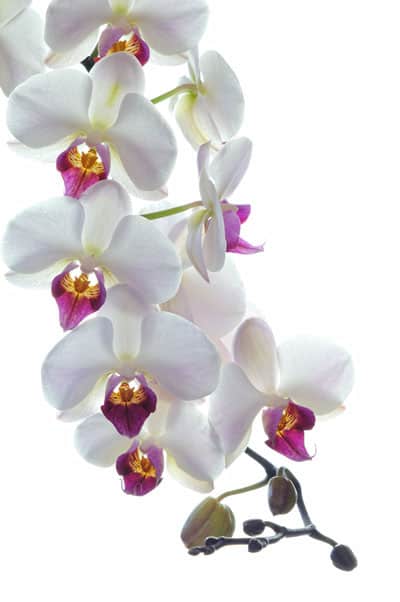
It depends on the individual orchid, but most moth orchids or Phalaenopsis will grow a new flower spike about once a year. Although most will only grow one new flower spike per year, that spike can be in bloom for a good 3-5 months!
After all the orchid flowers have all fallen off, you have 3 main options to get your Phalaenopsis to flower again.
What To Do With Orchids After Blooming
Before I go into the 3 options that you have, let me clear up one very important thing. I've had so many people get worried after their orchid flowers fall off.
If you've just purchased an orchid, you really don't know how long the flowers have been open so don't be shocked if they start to wither shortly after you bring them home!
The flowers will not last forever, so there isn't anything necessarily wrong if your flower wither and fall off! They may have just been open for a long time already.
So what do you do after all your flowers are withered and have fallen off?
Option 1: Leave it As-Is
Option 1 is to just leave the whole flower stem intact. I've never done this, and I'll explain why.
The flower spike may continue to grow some buds at the tip, but the stem will grow longer, will look ungainly, and the flowers will be smaller. Not the best option in my opinion, but it is possible to take this route.
If you want to learn all about how to get your orchid to rebloom reliably and have healthy, thriving moth orchid plants, don't miss my signature, online orchid care course, Become an Orchid Master. It also includes bonuses with support from me, personally, to guide you in your orchid journey!
Option 2: Cutting Stems After Blooming
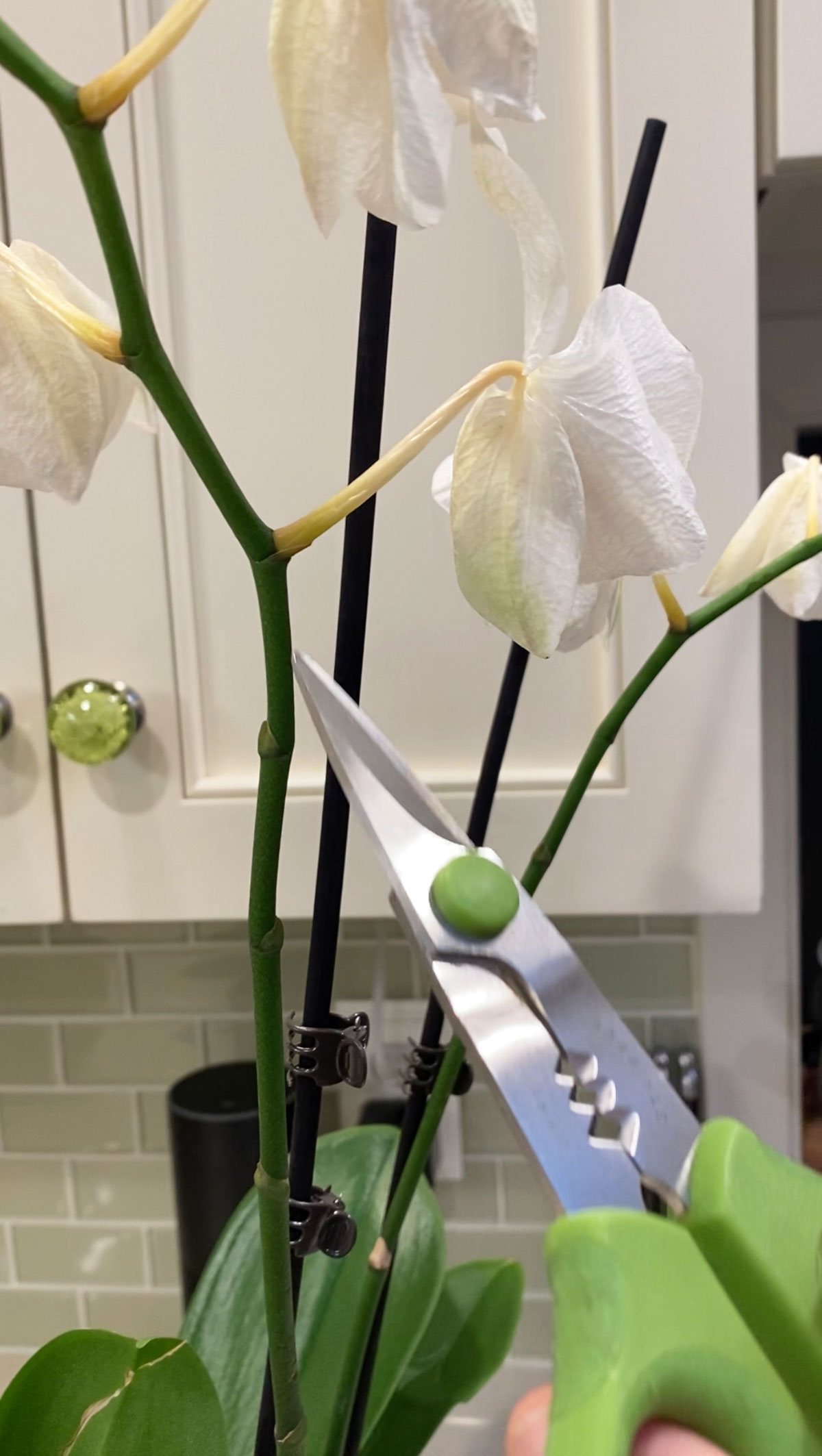
Option 2 is to snip the bloom spike right above one of the nodes on the spike. You'll see a node every few inches on the flower spike.
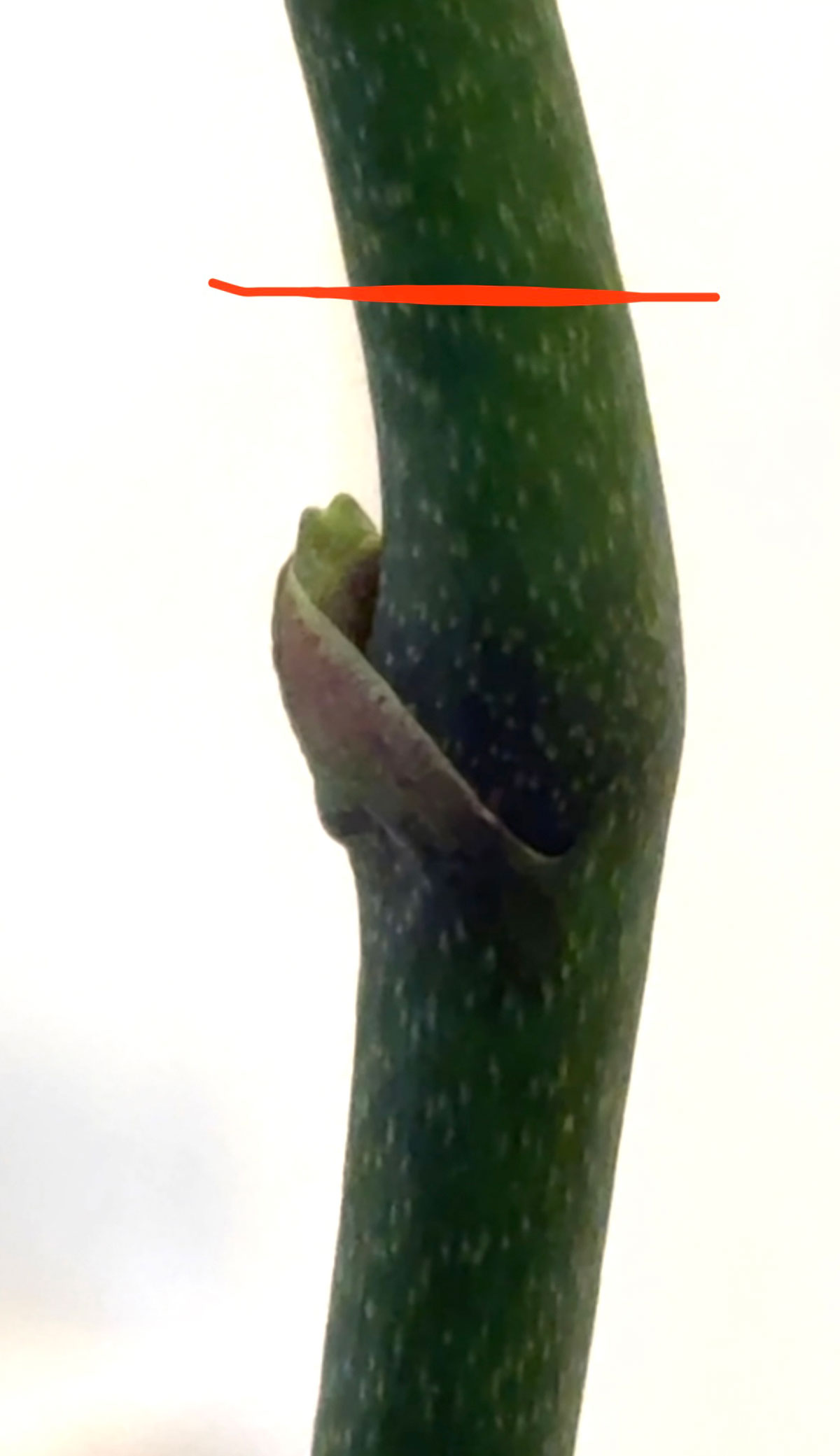
The nodes are very noticeable on the flower spike and will look like little bumps covered with a little triangular pointed covering. See picture below:
Count one node below where the bottom flower was located and snip it right above that node but leave a little room so you're not cutting too close to the node.
Many times, your orchid will branch off with a new, secondary flower spike right at one of the remaining nodes on the original flower stalk and will continue to bloom. This may not always happen so don't get discouraged if it doesn't!
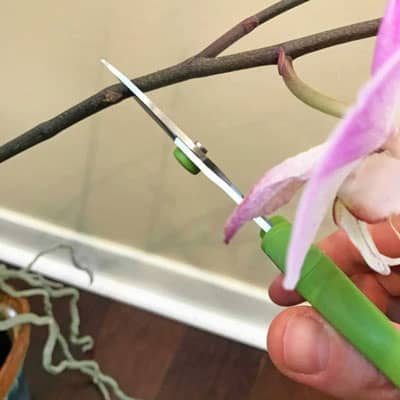
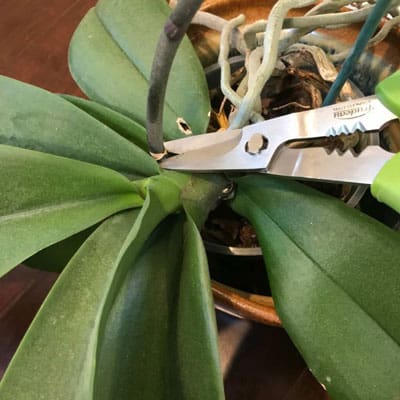
Sometimes you may already see new side branches on your flower spike starting to grow! And sometimes they will appear after you lightly prune the flower stalk as I've described above. Here is another photo illustration.
You can simply cut right where the tip of the scissors are.
With this option, your plant's flowering season will be extended and you won't have to wait until a new flower spike grows the following year. A secondary flower spike will usually start to grow right at a node.
Take a look at the photo below. You can see the secondary flower spike growing on an old flower stalk. Many times though, you won't see it growing yet, and that's ok! Just give it time. The red line represents where you would trim your stalk right above that node.
Would you like to save this post?
Enter your email, and I will send this link straight to you!
But like I said, it doesn't always happen so don't think that something is necessarily wrong. I would only recommend this option if your Phalaenopsis orchid plant is healthy. If your plant appears to be struggling and it has lost a lot of roots and the orchid has wrinkly leaves, then it best NOT to encourage reblooming off of the old flower stalk, and I would recommend the next option instead.
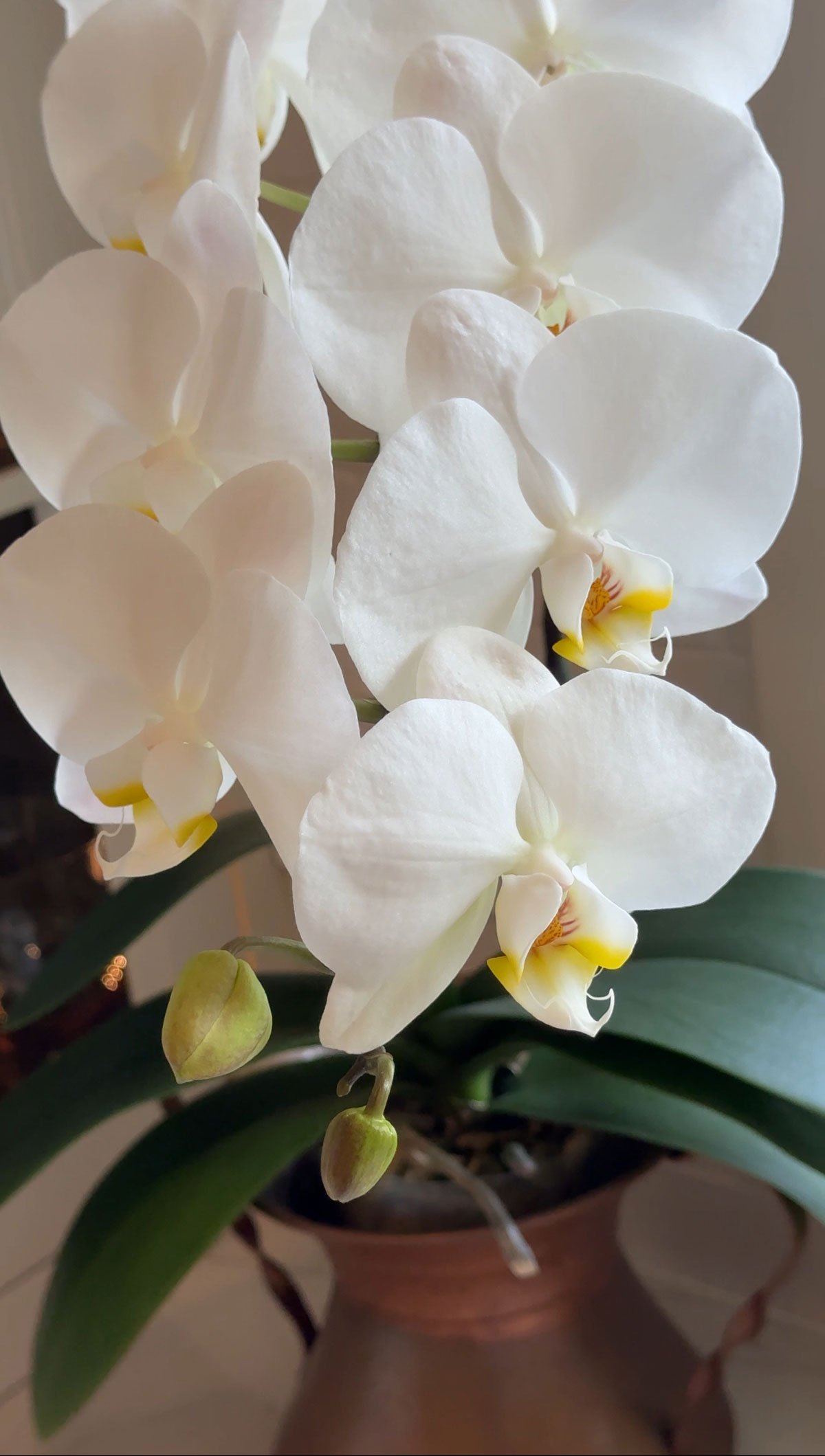
After trimming the orchid from the previous picture, the photo below shows the results. It produced a secondary flower spike off of the old spike and it had 10 flowers.
Option 3: Cut the Whole Flower Spike Off
If you start to see that the entire flower spike is starting to turn brown and dry up, it is time to cut the whole stem off. Your orchid will grow brand new flower stalks from the base of the plant so don't despair.
I would also recommend cutting off the flower stalk off after blooming if you have a sickly orchid and your plant is not healthy.
In the photo below, I'm just demonstrating where to cut. I actually left this spike since it is still green and alive and the plant is very healthy.
Take a pair of sharp scissors (sterilizing the tip would be a good idea...either in a flame or with rubbing alcohol) and snip the whole spike off as close to the bottom of the plant as possible, without damaging any leaves.
After this point, after blooming, your plant should start growing more roots and a new leaf.
Trimming off the entire, old flower stalk on a sickly, struggling orchid will allow it to focus its energy on growing new leaves and roots so that it can be strong enough to bloom in the future. If your plant is very healthy though, I would choose option 2 above instead.
Don't be scared to cut off that flower spike if you have a sickly plant! With good care, as you rehabilitate your orchid, it will grow a new flower spike. If you are a beginner, it can be hard to tell the difference between a new root versus a new flower spike. Check out my blog post so that you can visually see the difference between an orchid root vs. a new flower spike.
More Orchid Care After Flowering
After you've completed one of the three options describe above, you should resume your normal care routine. If you've had your plant on display somewhere in your house while in bloom, like I often do, return your plant to a window and let it do its thing.
Watering
Phalaenopsis orchids do NOT go dormant so you'll need to water your plants like normal. They do not need a dry rest period and will keep growing year-round. If you need some tips on watering, read my blog post on how to properly water an orchid.
Light
If you've left your plant next to a window during its bloom, then leave it there. East windows are ideal for moth orchids regardless of where you live. Phalaenopsis are among the low light orchids (another great one is Paphiopedilum), but the morning sun is gentle enough on them and will provide enough light for strong growth.
Light is the most important factor in blooming, so if you don't have enough light, you will struggle in getting your plant to grow new flower spikes.
Be careful of too much direct sun though because moth orchid sunburn can occur pretty quickly if it's sitting in direct sun all day (and also if you haven't acclimated your plant properly to higher light). Depending on where you live, you may even want to use a southern facing window if you live in a darker climate. If you live in a warm climate with a lot of strong sun, you can try diffusing particularly sunny windows with sheer curtains or partially closed blinds in order to avoid sun scald.
Fun fact: Unobstructed Southern facing windows have the most light in the northern hemisphere, with northern facing windows having the least amount of light. This is the opposite in the Southern hemisphere!
Temperature
Summering your orchid outside will work wonders for your plant, but wait until the nighttime temperatures stay consistently above a minimum temperature of 50°F (10°C) so your plant isn't damaged. And be sure to return your plant back indoors before temperatures get too cold again. A few weeks of cooler nighttime temperatures can help your orchid grow a new spike!
These are just a few tips to keep your orchid growing and blooming, but there is really a lot more to learn.
If you have reason to believe that your orchid is truly dying, and has more than just some spent, old flowers, check out my blog post Help My Orchid Is Dying! It goes through all sorts of orchid problems and let you know how to fix it.
If you want to learn all about how to get your orchid to rebloom reliably and have healthy, thriving moth orchid plants, don't miss my signature, online orchid care course, Become an Orchid Master. It also includes bonuses with support from me, personally, to guide you in your orchid journey!
I recently "rescued a couple orchids from a box store”. The one I have mounted on a piece of wood with spaghum moss after the blooms dropped. It did have some root issues upon removing from the original pot. I water it daily to ensure it does not dry out, but I’ve noticed that the leaves are drooping but by no means wrinkled. It’s been about 4 weeks since I made this transition with it. Do you think that it’s is perhaps still going thru transplant shock or should I demount it and put it back into a regular pot?
Hi Sharon! Give it time to adjust. And like you mentioned, mounted orchids will take a lot more work since they dry out incredibly fast. Keep an eye on your plant the next several months.
Great article about after flower care. But it was supposed to be how to fix drooping leaves... My orchids are doing fabulous but I always like to have information on hand just in case something happens!
Hi
Love the simplicity of the explanation for caring the orchids. I’ve quite a few that I rescued for$2. Not sure what to do with the stems after blooming. Do i repot them?
I usually choose option #2 that I talked about in my blog post. Normally it results in a new branch on the flower stalk and it will continue to bloom. It doesn't always work, but it often does! As far as repotting, I'd need more information. It really depends. If you just got them, they're probably fine for another year or two. Just one thing to watch out for. If they're in orchid bark, that will eventually break down and you'll want to repot into fresh media before it breaks down too much. Hope this helps a bit.
Many thanks for your advice. I’ve had my lovely deep lilac/purple Phalaenopsis for about five years now and she is a beauty, flowering every year since I bought her, living in the morning sunshine window sill, all this time. We’re in the UK so she stays indoors, in my direct line of sight, so I appreciate her every day 🥰 When covid hit we got stuck in Australia for a couple of months before we could return and she had been in flower for a couple of months when we left and welcomed us back in flower on our return and for a couple more months. This year she outdid herself with one stalk bifurcating into two with so many flowers she was top heavy and I had to rig some scaffolding to hold them all up. Now she’s bare but the stalk is very tall and winding, thus my need for advice. There are now five long roots stretching out from the pot, which I think is in part the reason for her ongoing and best success, as there were none when I bought her. I have indulgently rambled, but finding another orchid enthusiast set me off to share the joy I feel about the plant that sits so unassumingly in front of my net curtains. Many thanks ♥️
Hi Chrissie, it sounds like a lovely plant! You can trim the stalk back a bit like I talk about in option #2 in the blog post. It may just branch off and start to grow new flowers. It doesn't always happen, but it happens often enough!
Hi! Thank you for these tips. I am on my first rebloom after receiving my orchid a year and half ago as a gift. I have three flowering stems with over 25 blooms right now! Two of the stems branched off of a set of new leaves that grew at the top of a stem. Are these leaves a new baby orchid that I can attempt to re-pot?
My other question is that the base plant now has seven leaves. Do I ever cut away any of these leaves or just keep them going? The bunch of leaves are getting very heavy and starting to droop over to one side. Currently I have the plant in a 6 inch orchid pot. It sits in a south facing window.
Hi Jessica! Sounds like you're doing great! The baby orchid growing on the flower stem is what's a called a "keiki". It is a baby orchid plant. You can wait until the small plant has some roots of its own, and then you can cut it off and pot it up! And I would NOT recommend cutting any leaves off unless they've turned completely yellow. Sounds like you're doing a great job with your orchids!
I just received a Phalaenopsis orchid for my birthday and your tips are very helpful and I will try and follow your suggestions and enjoy my orchid fo A long time You did not mention watering methods or perhaps I missed it. Please advice. I was watching the video and it stopped playing.
Hi Gloria! I have other care posts where I talk about watering. You can use the search feature to type in "orchid" and you will find several posts on orchids. I also have a very short ebook where I cover all aspects of care: https://www.ohiotropics.com/moth-orchid-mastery/
Hi my name is Maggie, I am new to orchards. I left the flower spike in after the blooms fell of. Now it looks as if there leaves growing on the flower spike. What do I do now?
Sounds like you have a keiki, which is a baby orchid growing on the flower stalk. You can wait until it grows a bit and has its own roots and then cut it off and pot it up!
I loved this article. My kids gave me an orchid for Christmas, 1st one in my life - and I have grown monster vegie gardens on farms but with this, I wanted to cry. I was sure I would kill it. What is this strange alien plant that only a select few can grow? And I read a bit, so I didn't kill it with water; and I read some more, so I didn't try to repot the poor root bound alien in rich fertile soil; and I read some more.... And then I found your article, and wow.....100 years? I want more. I want more orchids. Beautiful fascinating plants. Thank you for this. Who knew? My new favourite!
Glad you enjoyed the post Ally! Good luck with your orchid :-). They're not hard to grow...just different! And once you understand them, they're a cinch!
You're welcome Michael! It depends on how you look at it. Normally they'll grow a new flower spike every year. But you can get them to rebloom off the old spike if you trim it like I described in the post, and this can prolong the blooming. You can potentially have the same plant in bloom for many months of the year! But as far as new bloom spikes go, generally I've found that they'll grow one a year. There are always occasional exceptions of course. 🙂
Hellooo ! Great info from you, thank you! Getting ready to do a repot after blooming, have a boat load of the areal roots. Do I try to tuck them in the new bark or let them run wild ? They are getting very long and from watching your videos I understand why that happened, but can I tuck them in the bark. Thank you ! Kim
If you can encourage them to grow in the bark, they would be easier to keep hydrated. Otherwise, you can mist the exposed roots regularly (even daily) to water them so that they don't dry out. Hope this helps!
I truly liked this item, it really is nice. I might have a suggestion, but Im not causing a quarrel 😀 Anyway, keep up the great work, and see you! Regards
Well, aren't you just a cup of sunshine sister! Your post is so delightful! THANK YOU so much for the invaluable information. We were just given a monster of an orchid plant in full bloom. 6 stems at least 2 feet tall! It is a gift from my husband's office staff because his mother just passed away. I want to keep it going if I can. The flowers are white and so beautiful. There must be at least 30 blooms and several buds that have yet to open. According to some other information, I just put some ice cubes on them to water them. Many blessings and peace to you and yours. Thank you again!









I recently "rescued a couple orchids from a box store”. The one I have mounted on a piece of wood with spaghum moss after the blooms dropped. It did have some root issues upon removing from the original pot. I water it daily to ensure it does not dry out, but I’ve noticed that the leaves are drooping but by no means wrinkled. It’s been about 4 weeks since I made this transition with it. Do you think that it’s is perhaps still going thru transplant shock or should I demount it and put it back into a regular pot?
Hi Sharon! Give it time to adjust. And like you mentioned, mounted orchids will take a lot more work since they dry out incredibly fast. Keep an eye on your plant the next several months.
Do you report and when? What kind of fertilizer?
Hi Ruth! I'll refer you to my repotting blog post for orchids: https://www.ohiotropics.com/2019/05/08/repotting-you-moth-orchid/
Mine has just quit blooming! The stalk is brown and looks a little dry.
If the flower stalk dries up, just cut it off. It should grow a new one with good care 🙂
Great article about after flower care. But it was supposed to be how to fix drooping leaves... My orchids are doing fabulous but I always like to have information on hand just in case something happens!
Hi Lesley, I do have another post on drooping orchids. Perhaps you clicked on the wrong one? Here is the drooping orchid post: https://www.ohiotropics.com/2019/11/30/droopy-wrinkled-orchid-leaves/
Hi
Love the simplicity of the explanation for caring the orchids. I’ve quite a few that I rescued for$2. Not sure what to do with the stems after blooming. Do i repot them?
Thank you so much
I usually choose option #2 that I talked about in my blog post. Normally it results in a new branch on the flower stalk and it will continue to bloom. It doesn't always work, but it often does! As far as repotting, I'd need more information. It really depends. If you just got them, they're probably fine for another year or two. Just one thing to watch out for. If they're in orchid bark, that will eventually break down and you'll want to repot into fresh media before it breaks down too much. Hope this helps a bit.
Many thanks for your advice. I’ve had my lovely deep lilac/purple Phalaenopsis for about five years now and she is a beauty, flowering every year since I bought her, living in the morning sunshine window sill, all this time. We’re in the UK so she stays indoors, in my direct line of sight, so I appreciate her every day 🥰 When covid hit we got stuck in Australia for a couple of months before we could return and she had been in flower for a couple of months when we left and welcomed us back in flower on our return and for a couple more months. This year she outdid herself with one stalk bifurcating into two with so many flowers she was top heavy and I had to rig some scaffolding to hold them all up. Now she’s bare but the stalk is very tall and winding, thus my need for advice. There are now five long roots stretching out from the pot, which I think is in part the reason for her ongoing and best success, as there were none when I bought her. I have indulgently rambled, but finding another orchid enthusiast set me off to share the joy I feel about the plant that sits so unassumingly in front of my net curtains. Many thanks ♥️
Hi Chrissie, it sounds like a lovely plant! You can trim the stalk back a bit like I talk about in option #2 in the blog post. It may just branch off and start to grow new flowers. It doesn't always happen, but it happens often enough!
Hi! Thank you for these tips. I am on my first rebloom after receiving my orchid a year and half ago as a gift. I have three flowering stems with over 25 blooms right now! Two of the stems branched off of a set of new leaves that grew at the top of a stem. Are these leaves a new baby orchid that I can attempt to re-pot?
My other question is that the base plant now has seven leaves. Do I ever cut away any of these leaves or just keep them going? The bunch of leaves are getting very heavy and starting to droop over to one side. Currently I have the plant in a 6 inch orchid pot. It sits in a south facing window.
Hi Jessica! Sounds like you're doing great! The baby orchid growing on the flower stem is what's a called a "keiki". It is a baby orchid plant. You can wait until the small plant has some roots of its own, and then you can cut it off and pot it up! And I would NOT recommend cutting any leaves off unless they've turned completely yellow. Sounds like you're doing a great job with your orchids!
Thank you for all your tips and suggestions. My orchid just finished its 3rd year bloom I love them I have three.
You're very welcome Margaret!
Hi I did something dumb and didn't notice the bud and chopped the stem 🙁
Can i save it by replanting into the same soil/pot? HELP......
Unfortunately you can't really save the flower stalk if you cut it off 🙁
I just received a Phalaenopsis orchid for my birthday and your tips are very helpful and I will try and follow your suggestions and enjoy my orchid fo A long time You did not mention watering methods or perhaps I missed it. Please advice. I was watching the video and it stopped playing.
Hi Gloria! I have other care posts where I talk about watering. You can use the search feature to type in "orchid" and you will find several posts on orchids. I also have a very short ebook where I cover all aspects of care: https://www.ohiotropics.com/moth-orchid-mastery/
Hi my name is Maggie, I am new to orchards. I left the flower spike in after the blooms fell of. Now it looks as if there leaves growing on the flower spike. What do I do now?
Sounds like you have a keiki, which is a baby orchid growing on the flower stalk. You can wait until it grows a bit and has its own roots and then cut it off and pot it up!
@Raffaele, so exciting! Thanks for sharing your expertise!!!
You're very welcome!
I loved this article. My kids gave me an orchid for Christmas, 1st one in my life - and I have grown monster vegie gardens on farms but with this, I wanted to cry. I was sure I would kill it. What is this strange alien plant that only a select few can grow? And I read a bit, so I didn't kill it with water; and I read some more, so I didn't try to repot the poor root bound alien in rich fertile soil; and I read some more.... And then I found your article, and wow.....100 years? I want more. I want more orchids. Beautiful fascinating plants. Thank you for this. Who knew? My new favourite!
Glad you enjoyed the post Ally! Good luck with your orchid :-). They're not hard to grow...just different! And once you understand them, they're a cinch!
Very informative, learned a lot question do they flower every year or do they miss a year
You're welcome Michael! It depends on how you look at it. Normally they'll grow a new flower spike every year. But you can get them to rebloom off the old spike if you trim it like I described in the post, and this can prolong the blooming. You can potentially have the same plant in bloom for many months of the year! But as far as new bloom spikes go, generally I've found that they'll grow one a year. There are always occasional exceptions of course. 🙂
Hellooo ! Great info from you, thank you! Getting ready to do a repot after blooming, have a boat load of the areal roots. Do I try to tuck them in the new bark or let them run wild ? They are getting very long and from watching your videos I understand why that happened, but can I tuck them in the bark. Thank you ! Kim
If you can encourage them to grow in the bark, they would be easier to keep hydrated. Otherwise, you can mist the exposed roots regularly (even daily) to water them so that they don't dry out. Hope this helps!
I truly liked this item, it really is nice. I might have a suggestion, but Im not causing a quarrel 😀 Anyway, keep up the great work, and see you! Regards
Well, aren't you just a cup of sunshine sister! Your post is so delightful! THANK YOU so much for the invaluable information. We were just given a monster of an orchid plant in full bloom. 6 stems at least 2 feet tall! It is a gift from my husband's office staff because his mother just passed away. I want to keep it going if I can. The flowers are white and so beautiful. There must be at least 30 blooms and several buds that have yet to open. According to some other information, I just put some ice cubes on them to water them. Many blessings and peace to you and yours. Thank you again!
Thank you for your kind words 🙂 That sounds like quite an amazing Phalaenopsis! If you want a comprehensive guide, and easily read in under an hour, I would recommend my book that I have for sale on amazon. I have an eBook and a paperback, and very shortly, I will have an audiobook. Here is the link for the eBook and paperback if you are interested. 🙂 https://www.amazon.com/Moth-Orchid-Mastery-Novices-Mastering-ebook/dp/B07FZ9W983/ref=sr_1_1?ie=UTF8&qid=1547076077&sr=8-1&keywords=moth+orchid+mastery