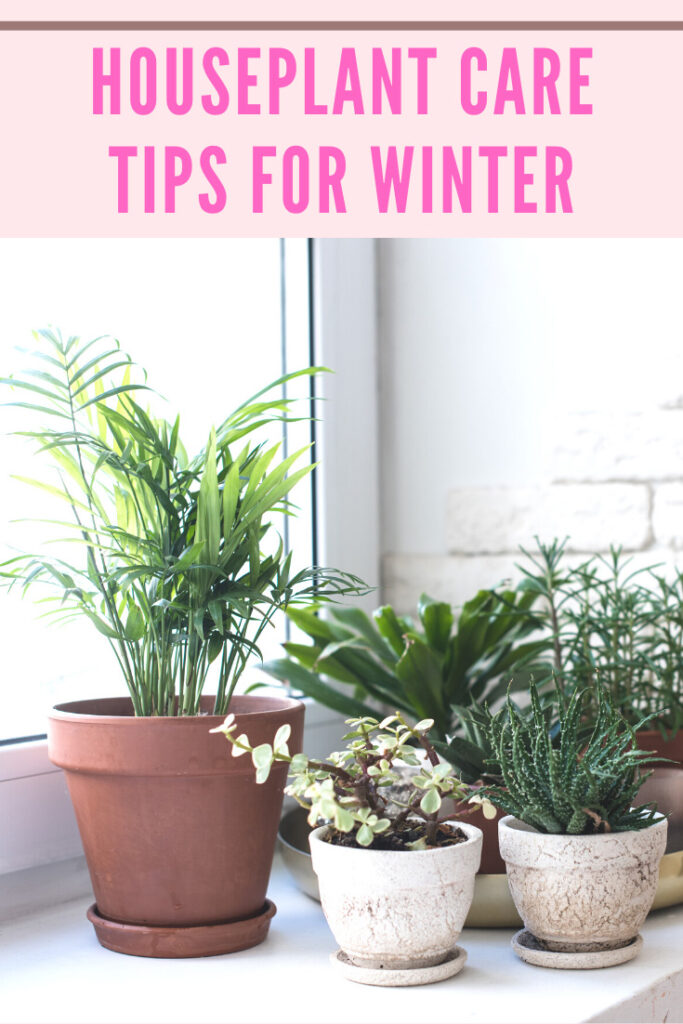
Have you struggled to keep houseplants in good condition over the winter? Perhaps you're wondering how to keep indoor plants warm in winter, or maybe winter is approaching and you are just plain nervous that you are going to kill your houseplants?
Keep reading because I will go over 7 things that you can do (or NOT do) to keep your houseplants alive this winter! Follow these steps, and you will be golden!
Table of Contents
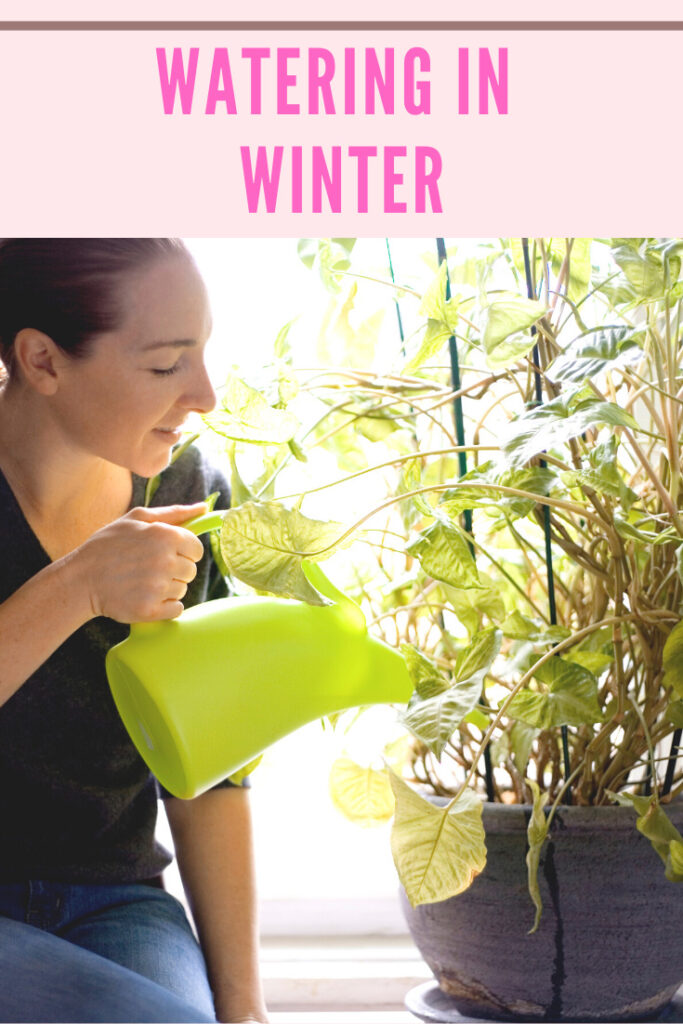
1. Watering Indoor Plants in Winter
For those of you that follow me closely either on Instagram (@ohiotropics) or on this blog, you know that I'm not a fan of watering schedules, and I will tell you exactly why. It becomes even more important in the winter.
We've all heard the "water once a week" or "water every other week" type of watering schedule. That fact is, your plants may not need water once a week. So how can you tell?
Because of different conditions (pot size, pot type, temperature, size of root system, amount of light, etc.), your plants vary in their needs in terms of how often to water.
In some cases, the timing in which you water your plants might very well be about once a week, given a certain combinations of conditions. But this is not how you should think about watering.
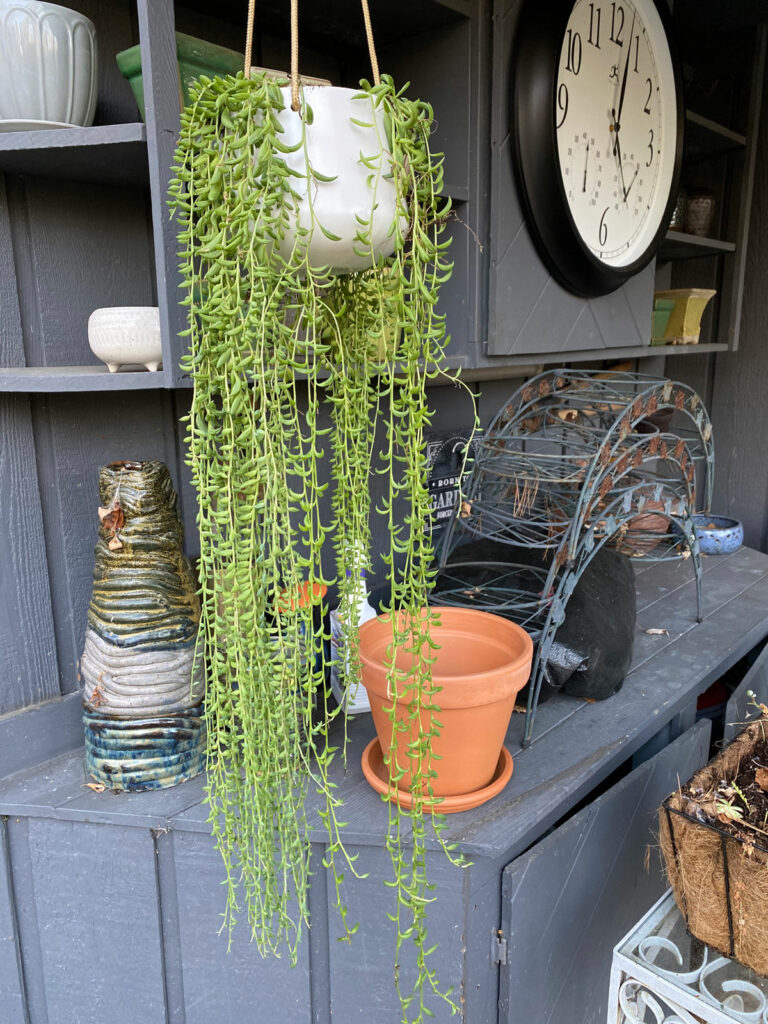
I'll give you an example and why it is so important. I have a string of bananas plant that during the growing season, I would water about once a week. But I didn't let the calendar dictate when I watered.
I would check the plant's soil every week, and it turned out that it fully dried out after about a week, so I would water about weekly.
Fast forward to Fall and Winter time. Darker, shorter days reduce the rate at which plants use water, so it will take longer to dry out.
During the Fall and Winter, after a week of watering, the surface is usually still damp, so I don't water. I'll wait another few days or maybe even another week.
And you can also encounter the opposite...if you have your plants in a location that is very warm and and with really dry air, your soil may dry out more quickly than you'd think (even in the winter).
Moral of the story, use your finger to feel the soil. This will tell you when to water your plants. Don't blindly water just because your calendar tells you so!
However, it IS a beneficial idea to have those regular check points with your plants. So by all means, check your plants at least every week (or even more frequently!) in order to determine if they have any needs.
Sometimes you may need to water at those regular check points, and other times you may need to wait longer.
For example, for succulents, I wait until my soil is fully dried out before watering again. For other plants, I may just let the top inch or so of the soil dry out.
Different plants have different soil moisture needs. Get to know, from a trusted source, what each type of plant likes.
Ditching the watering schedule is always important, but especially in the winter when your plants are less robust and more vulnerable to improper culture.
Succulents can often go quite a long time in the winter without water, especially if temperatures are cooler indoors. Just keep an eye on your plants and watch for signs of stress.
For tropical foliage plants, you may only want the top inch or two of the soil to dry out before you water. Use your finger to determine when to water, not your calendar.
I like to err on the dry side of soil moisture. But don't wait too long until your plant is showing signs of stress from "underwatering" or "overwatering."
Overwatering is such an overused, misunderstood and confusing term. It doesn't mean what most people think it means!
2. Light in Winter
Unless you live near the equator, where light is pretty constant throughout the year, you'll want to read this!
My dream is to live in a subtropical or tropical region where it is sunny and warm year-round, but since I live in the Northern United States with pretty ugly winters, I have to make some adjustments!
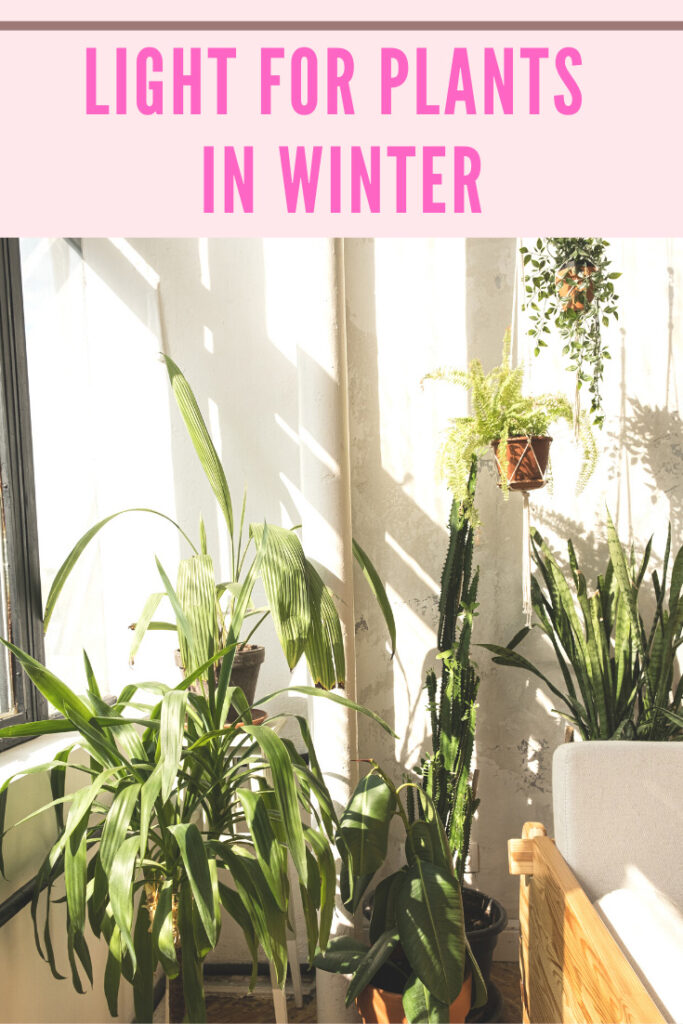
I always, always recommend keeping your houseplants directly in front of a window. In the brighter seasons of the year, you may be able to get away with keeping them further away, but not so much in Winter.
Do your plants a favor and move them to a window if you currently have them far away. Generally speaking, I honestly would consider anything more than 1-2 feet away from a window to be far.
I've received pictures from my clients that have plants several feet away from windows. Even up on top of cabinets, several feet away from windows. Your eyes might think it's bright, but it really isn't.
No wonder these plants are not doing well. Plants need light to photosynthesize. Period. This is how they make food. Depriving them of light is like not feeding your own children. So give your plants light!
Warning...I'm about to start a little rant. There is a rampant trend out there of "plant styling" going on. That's perfectly fine to decorate with plants, and plants make any decor very interesting and beautiful.
But before you use plants for interior decoration, please make sure that your plants have their basic cultural needs met first before placing them somewhere!
Pick an appropriate plant for the location, and not the other way around! If you can achieve good light conditions for your plants AND a beautifully styled area, then you are winning!
One other point about light. In the winter, especially if you live in darker, colder areas like I do, you can pretty much place any houseplant in the sun. Or at least areas that get morning sun.
Often times, it just means that they will tolerate low light. They will eventually decline over time. So move those plants right in front, 1-2 feet, of a window. Winter sunshine is a blessing for virtually any houseplant.
If you don't have any bright windows, you can definitely supplement with artificial lights. Use a grow light to at least supplement your plants' light needs during the winter if you lack good window space.
GROW LIGHTS FOR PLANTS IN WINTER
Here are some grow lights that I'm currently using and enjoying. I've included different types and sizes so you can select one for your budget and space. All are easily available on Amazon.
I hung them from the ceiling and they provide light for many hanging plants which are right under the lights, and also to my floor plants that are a bit further away from the lights: Syngonium, Anthurium, Philodendron Pink Princess, and many others.
I've been really pleased with these lights and the resulting growth from my plants. They also cover a good amount of area since they're 4 feet long and you get a good bang for the buck.
I use this particular light over a terrarium that I made. It is in my basement and it is the sole light source. All my foliage plants in the terrarium have gone crazy.
The HLG 65 V2 4000K LED grow light is also super thin and doesn't take up much space, which is a plus if you don't want anything big or clunky in your grow area.
Lastly, I also have experimented with the SANSI 70W LED Grow Light which has also been a great light. I use this right over my String of Pearls and it has been really happy.
Good light makes the difference between life or death for String of Pearls in the winter! Our house simply doesn't have enough light for these plants, so I was able to make it happy.
Choose a grow light that works for you and you should consider some if you are concerned about light levels, especially in winter. You can't go wrong with any of these and I have been using all and have been happy with the results.
3. Keep Your Plants Clean
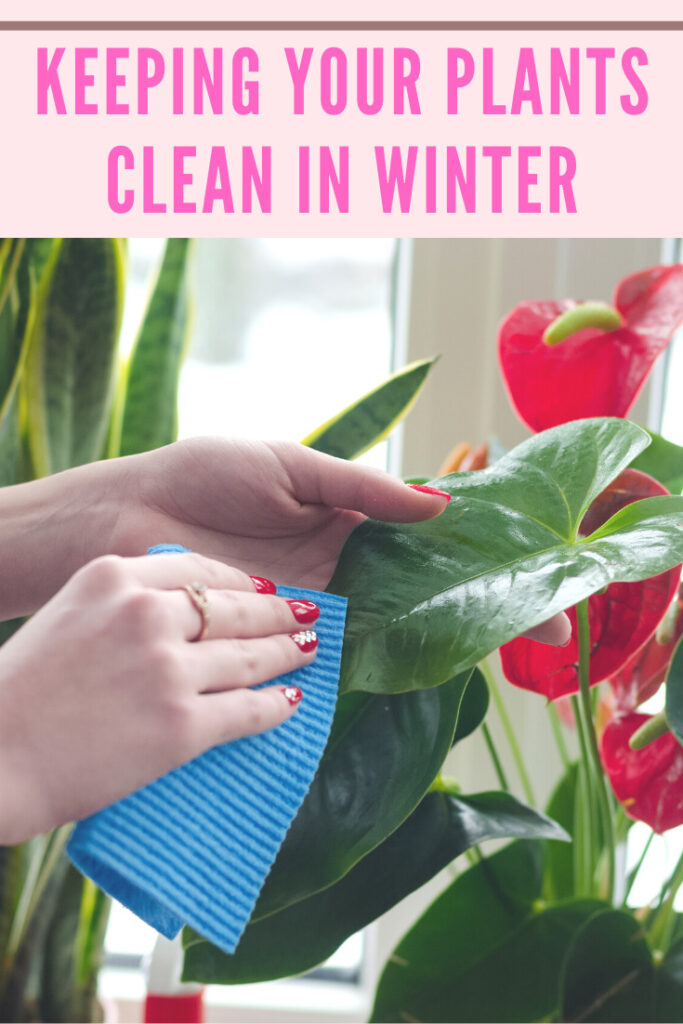
Be sure to regularly monitor your plants to make sure that their leaves are dust free, especially during the winter.
The interior of your home can get incredibly dusty, especially during the winter time. This will interfere with your houseplants' ability to breathe through their leaves, and also decrease the amount of light for them.
Cleaning your dusty houseplant leaves will allow your plants to carry out their biological processes, including photosynthesis, more efficiently and therefore be healthier!
Would you like to save this post?
Enter your email, and I will send this link straight to you!
The other benefit of keeping your houseplant leaves clean and free of dust, is that it will help to deter any pests. Especially spider mites!
Spider mites will thrive in very dry, warm areas and can be an issue during the winter time when some of our homes have bone dry air.
So how do I keep my plant leaves clean? Sometimes if I have a larger plant with broad leaves, or a plant that I don't want to move, I will simply use a mister to spray the leaves down, and then wipe each leaf with a paper towel, rag or sponge.
Other times, if it's a smaller plant, or a plant that has smaller leaves where it would be difficult to wipe each leaf, I will take it to the sink or the shower. I'll simply gently spray warm water to wash the leaves off.
Be careful though of certain plants that can potentially rot if water gets stuck in between their leaves or in the crown of the plant.
If you are washing any succulents off, or even Phalaenopsis orchids, be sure to dislodge any water that gets stuck in the leaves or in the crown of the plant.
I have never had any plants rot from this personally, but under the right conditions, you can have certain plants rot if you have water stuck in the crown of the plant, especially if your air circulation is poor.
One of my clients had her moth orchids rot because she would shower them and then placed them in a room and had the door closed all the time.
Every single orchid she had suffered from crown rot because of hangin very poor air circulation and standing water in the crown of the plant.
I don't mean to scare you, but just be aware! Dislodge any water after bathing your plants, especially for succulents and orchids.
Gently turn them upside down if you can, or use a sponge or paper towel to dry any water that is stuck in between leaves.
4. Increase Humidity
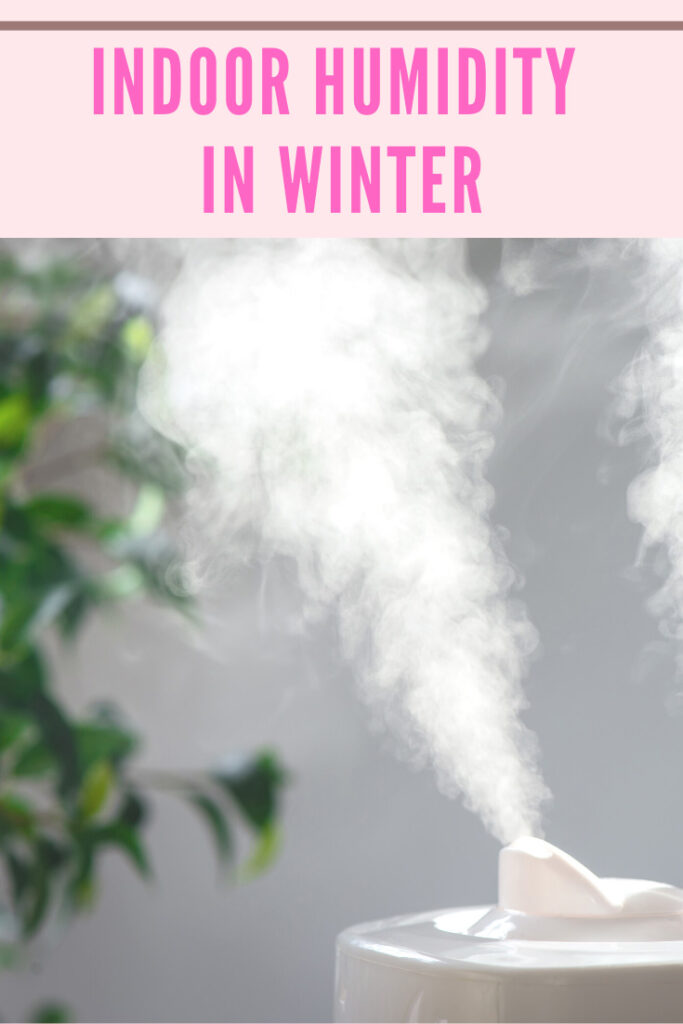
Winter can bring very dry indoor air, much to the dismay of our plants and our skin! Often indoor humidity can plummet to 30% or even lower in the winter.
There are effective ways to increase humidity, and there are some ineffective ways to increase humidity.
Let me start with the ineffective way. Misting! Sorry, I know there are a lot of misters out there. I used to be one myself.
Misting will not increase the humidity of your air. You're simply wetting the plant's leaves and doing very little, if any, to increase the amount of moisture in the air.
Spare your arm muscles, and don't mist if your only intent is to increase humidity.
So, what are some good ways to increase humidity?
Place your plants on top of a tray of pebbles. Add enough water so that the level is right below the pebbles. Then place your plants on top. The evaporating air will increase the humidity around your plant.
Group your plants together. Plants naturally release moisture in the air through a process called transpiration. The more plants you group together, the more effective this method is.
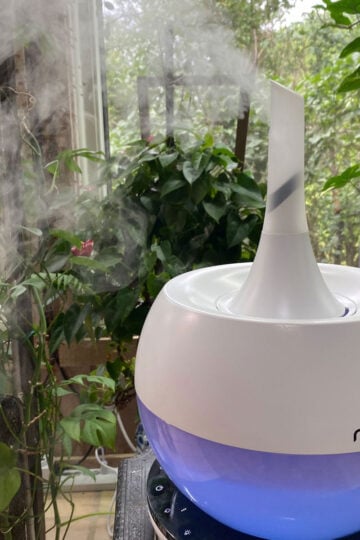
And finally, get a good humidifier! This is my preferred method since it is easiest (and it's also good for my skin).
In the market for a good humidifier? I've tested many and have my top 3 favorites. Check out my humidifier picks blog post where I talk about each one in detail.
One last really interesting thing about humidity levels. The drier the air, the more plants transpire water through their leaves (release water vapor into the air).
So if you live in a really dry climate, or have super-dry air because of forced air heating systems during the winter, increasing the humidity in your air will also help your plants to not lose as much moisture and your soil won't dry out as quickly.
Not to mention, your tropical plants will love the extra humidity and so will your respiratory system!
5. Should I Fertilize My Indoor Plants in the Winter?
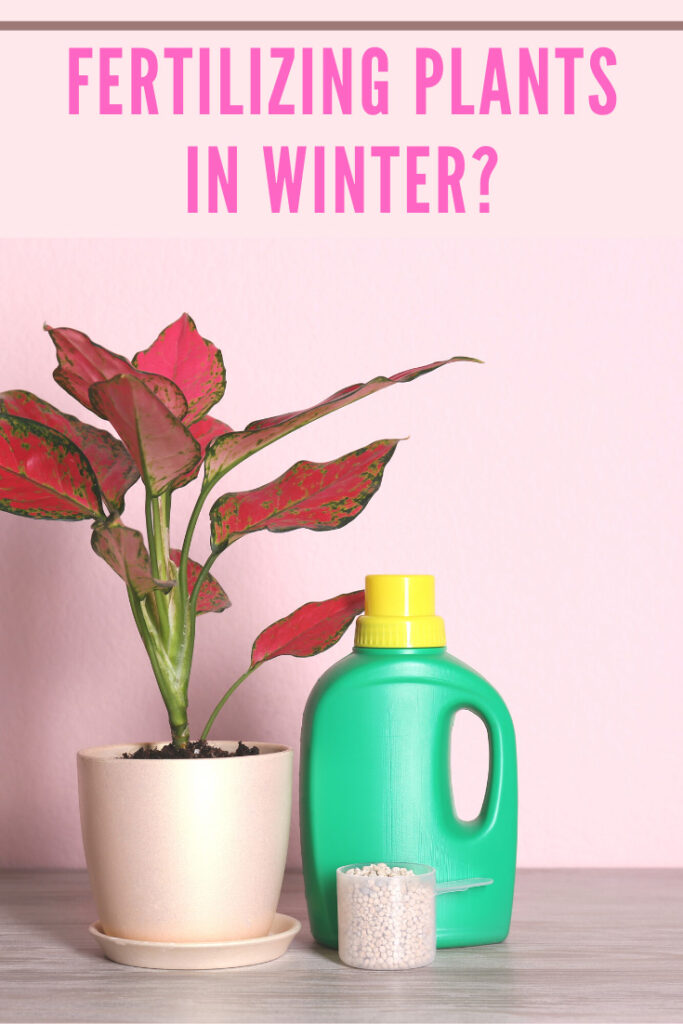
Quite simply, you don't want to fertilize when your plant is not growing. With reduced light in the winter, many houseplants will cease growing.
So let your plants rest when they slow down or stop growing. For me, I usually stop fertilizing around October. They will tell you when it is time to grow again.
For me, this normally happens around February or March.
In late winter or early spring, when I see signs of growth, I will start fertilizing again. The longer, brighter days will trigger growth and a fresh start!
Not sure how to fertilize, or what kind of fertilizer to your on your houseplants? Check out my How to Fertilize blog post. In the post, I detail how I prefer to fertilize, and which ones I like to use!
6. How to Keep Indoor Plants Warm in Winter
I almost titled this section "avoid cold drafts" but it is really more than that!
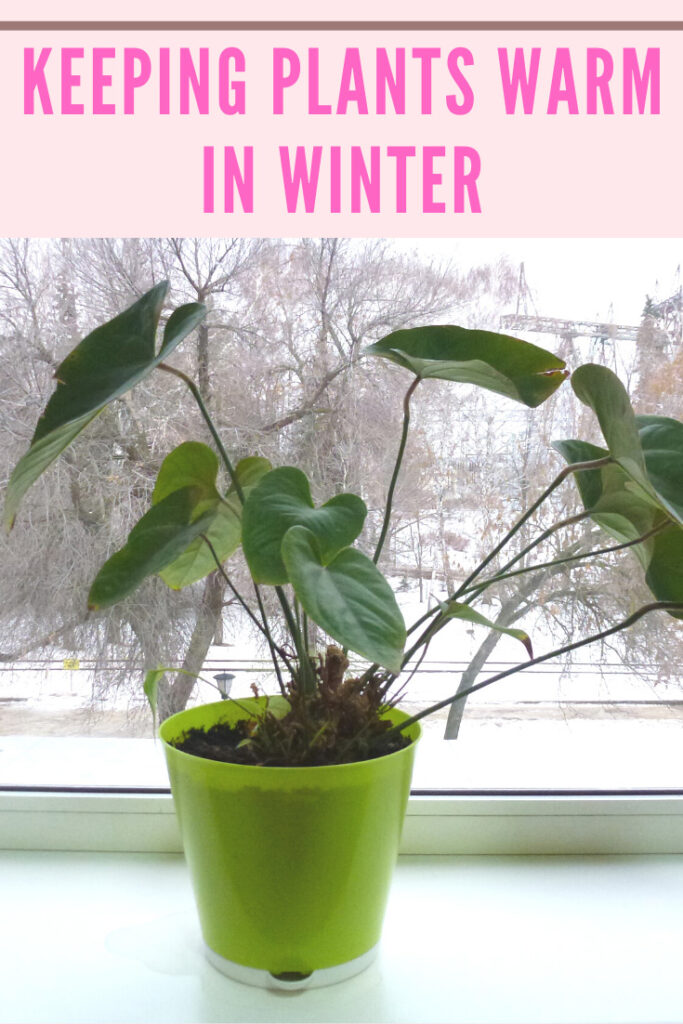
Let's talk about cold drafts first through. Do you have any plants around doors that you open constantly throughout the winter? This may be detrimental to your plants.
Some houseplants are very sensitive to cold drafts. They may protest and respond by dropping leaves, aborting flower buds, or worse.
So place your houseplants away from any area where they might receive any really cold drafts from opening and closing windows or doors.
Do you have any old, or really drafty windows?
You may want to seal your windows with inexpensive window insulation kits that you can purchase. This will reduce or eliminate any cold draft that your tender tropical plants hate.
On the other hand, you'll also need to watch those heating vents! Try and keep your plants away from heating vents. I once had a pothos that crept over right above a heating vent and the leaves literally cooked and burned.
Lastly, you can always choose to run a space heater, but keep in mind that this can also dry out your air at the same time.
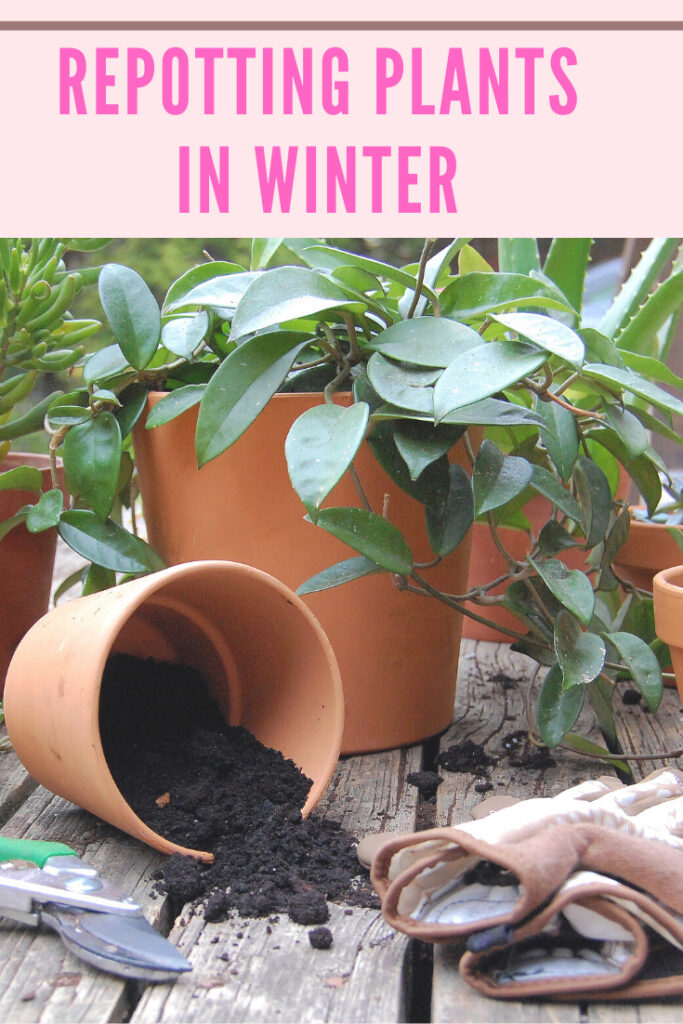
7. Repotting Plants in Winter
Sometimes it is best to wait for certain things and just let things be. Not repotting your houseplants in the winter is one of those things.
In general, the best time to repot is right when your plant is starting its active growing season, or anytime while it is growing.
If you repot a plant while it is resting and not doing much over the winter, you may be inviting problems.
Since the plant is not actively growing, the soil will take longer to dry out and potentially cause issues like root rot.
So give it a rest. Both for your sake and your plant's sake!
I'm not saying you can never repot in winter, but if you're just starting out with houseplants, stick with what I outlined above.
One thing to note though. If you live in an area that is bright year-round, or if you're using grow lights year round and your plants are in continual growth, you are safe to repot whenever you need to.
Not sure how to repot? Check out my blog post on repotting a houseplant. There is one critical step that you need to do for it to be successful! Find out what it is in my repotting blog post.
I hope you've found this blog post helpful in helping to keep your houseplants in good condition during the winter. Winter is hard on both our plants and ourselves! And be sure not to miss my post on indoor plant care tips for Spring.
Comment below to share your experiences with houseplant care in the winter. Do you have anything else to add? I love to hear form my readers.
Is it better for a plant to get an hour or two of direct sun followed by minimal (<50 fc) light the rest of the day, or constant low (100-200 fc) light throughout the day? Specifically deciding on a spot for a pothos, but also curious about other plants with different light needs, from pilea to aloe variants.
Hi Ryan, that is a great question. I'll try to answer as best as I can. In the specific case that you mentioned, I'd say that providing 100-200 fc of light consistently is better than the other scenario that you presented which is an hour or two of direct sun followed by <50 fc the rest of the day. Although Pothos can do pretty well in either of those cases. Plants like Aloe really need much higher light intensities than Pothos in order to do well. I hope this helps a bit. If you have consistently low light, you may want to focus on plants that are adapted to that, vs. plants that need a lot of sun and brighter light in order to do well. I hope this helps a bit.
I'm enjoying your tips on house plants and such. But I have a different question for you. I have quite a lot of house plants and succulents so I've built a greenhouse to store them in the winter. I have heat lamps and grow lights that I am using to help them during the winter. I live in zone 8b so sometimes we get very cold. What other tips can you give me to make sure that my plants survive.
Do you have any fans set up for air circulation? That's very important in a greenhouse. I would also get a thermometer to monitor the temperatures as well.
When you find the book about using intention to help plants grow, please let me know the title. I am very tuned into stuff like that. I used it on myself to survive and thrive a life/death medical condition (read the description of my book on amazon, FACING THE ULTIMATE FEAR: A NEW FUTURE). Now I want to try it in a big way on plants.
I love your blog. Fortuitously, I found it the moment I decided to get into houseplants, and read every single one you send! Thank you, thank you, thank you! It has helped me to the max!
Can you touch on Mandevilla (outside plants) that are brought inside in area zone 7? I have mine under a grow light during the night for 6 hours. The rest of the time they are in darkness and in cool temperatures. They won't fit in my greenhouse so I have them in an unheated shed which is insulated.
Hi Raffaele. I live in the UK and find your newsletters incredibly useful. My houseplant collection keeps in much better health these days now I understand what to look for. One plant I still struggle with though is the Heart Leaf Fern, especially with winter approaching. I'll confess I am on my third plant now, which I only bought because it was so cheap, for a final attempt. I love the look of the plant, and have it sitting on gravel in a dish for humidity and keep it well watered and in indirect light. One by one the leaves turn yellow and die. I think I am overwatering and it is crown rot, so cut down on water but then I get brown dry patches on the edge of leaves. I have started now using only rainwater. My house does get cold in winter. Any advice is very welcome please!
Hello fellow Ohioan!
I have always loved house plants, but have recently tried my hand at propagating a few plants while being home more these days. I'm so glad I found your site and your videos. You have already helped me with my baby pothos plants.
I have a large sunroom that faces NW and is unfinished. We do have one heat duct running out there and I also have an electric fireplace. Outside of being where most of my plants live, it is also my office. I have a tall baker's rack where all my new pothos cuttings sit and I have a grow light on them. Right now, the rack is about 8 feet from the windows. During the day I run the fireplace when I am working out there, but at night it can get chilly - down to the 50's out there. I brought all my potted pothos in, but wondering if I could actually keep them out there by using a heating pad underneath them? They are potted in small terra cotta pots.
Thank you!
Hi Jeanie! I'm glad you enjoy my blog! You can try to keep them there, but I'm not sure if that's the best spot for them. Pothos like it warm, and although the heating pad may help, it may not be enough. You can experiment though and see how they respond! If you have a warmer spot in your house, I would move them there, at least until the cold weather passes...I hope this helps you a bit!
Thanks for the really helpful post(s)! It’s only August but I’m mentally prepping for winter already. Do you have any advice on how long to leave grow lights on in winter? My entire house is super dark so I even have lights on in the summer but I feel like I need to decrease light time if they’re supposed to be resting up for the winter? Thanks again for all the great info!
You're very welcome Jasmine! I would say to leave your grow lights on for 12-14 hours. The reason many houseplants slow down in the winter is due to lack of light. Many "houseplants" in nature will actively grow year round. Hope this helps!
Hi, Thank you for the article. Agreed not to use fertilizer during winter because it can be stressed for the plants. Have you ever get mealybugs in winter? How did you treat that?
There are various ways to treat mealy bugs. I need to write a blog post on this topic....but you can use insecticidal soap or horticultural oil (always use as recommended on the label). You can also use 70% isopropyl alcohol (rubbing alcohol) and dilute it with water in a 50/50 mix. Then spray the whole plant down completely. Whatever spray you use, you have to spray to the point of dripping and cover all surfaces. A key point would be to repeat weekly, even for a period after you STOP seeing the pests. This will ensure that you eradicated everything. Hope this helps!
My vibrant Ficus Elastica was outdoors for the summer. But this is my first year with it (saved when pulled out of communal garbage bin). Replanted before I brought it indoors and it’s fading! I’m limited on where it can be put - guess I’ll have to try a light. Wish Us Luck.
Hi Rafael, I know this is an older post but I’ve really enjoyed reading through your blog for plant care tips and had a few questions about wintering house plants. I live in CA and winter low is around 40-50F at night, so I was wondering if I keep my windows closed to maintain a higher temperature, what’s a good way to get enough airflow? It’s usually not cold enough for me to turn the heater on but would you recommend doing that for airflow? Thank you!
Hi Bridget! Most of your plants should be OK! If you are concerned about air flow in that room though, you could just simply use a small fan to circulate the air. In my sunroom I have a ceiling fan that I run often. If you don't have a ceiling fan, you can use a smaller floor fan that is plugged into the wall. The majority of houseplants should be fine without it though, but it doesn't hurt! Plants like orchids, for example, like good air circulation. Good air circulation also helps to minimize certain diseases.
Thanks for the great post!!!! I have a monstera that has been doing great but recently it has developed brown crispy edges on leaves....all summer it was doing well and had lots of new growth. Now it has brown, crispy edges and spots in multiple leaves and some different texture on some leaves. I haven't changed anything but I do live in the northern hemisphere (Victoria, Canada). Should I move it closer to a window? It's been I. The same location for a couple of years doing well. I am in a townhouse with o ly East and west faci g windows. It is about 3 feet from my Western window. I am also wondering if it needs repotted. Any suggestions would be great.. I'm so sad it is sick!!!!!! Cheers.
Hello there Amy! Can you send me a photo of your plant in its growing location and also of the crispy edges? What size pot is it in? It may very well need repotting if it has grown well for a couple years. Let me refer you to another post that I wrote on the topic of brown, crispy leaves. It should help! https://www.ohiotropics.com/2019/03/31/plant-leaves-brown-and-crispy/
Hello Raffaele - I look forward to your newsletter every week - thank you. I don't have that many plants but for the ones that i do have - believe me - they are so thankful! You know me and you might already know that i am a bit eccentric - and in that regard - i DO talk to my plants. I think that they like that. After all, they ARE living beings. Funny thing - the ones that i haven't talked to aren't doing that well. The ones that i talk to - like when i water or dust off, they're the ones that seem to grow more. Am i imagining this or is this really possible? Thoughts? Take care, Lucy
Hi Lucy, so nice to hear from you! I'm glad you enjoy my blog! There have been numerous studies and also books that mention the power of intention helping plants to grow. I was reading a book that I can't remember the title of now, but I will let you know once I find it at home! It's pretty fascinating!
Hi, thanks for so of these great tips! This winter is my first time to try grow lights and I'm noticing my plants are putting out new leaves. You mentioned not to fertilize in winter because plants aren't growing, but mine are, so should I continue with a light fertilizer routine?
And of course, I'm struggling with fungus gnats and neem oil doesn't seem to be doing the trick. Do you have any ideas on what else I can try?
Thanks so much!
-Wendy
Hi Wendy! They may slow down soon, but if you are going to use grow lights, they may continue to grow. In which case, you would be OK to fertilize lightly. Especially if you plan to have the lights on for the next few months. The plants won't "know" it is winter if you do so 🙂 Regardless, if they do slow down, hold back on the fertilizer. As far as fungus gnats go, they proliferate when you keep the soil too moist. It's always a good idea to let the top inch or two dry out before watering again. I have a blog post on fungus gnats where I interviewed someone that had a problem. Check out that post. There is a product called Gnatrol and it's a natural product that works. But if you can prevent them, it is the best thing.
Thanks so much for your reply! I'm an overwatering fiend from way back! HaHa! I'll be keeping the lights on for the winter and will use a really dilute fertilizer, especially on the plants pushing new growth. Off to read through your post on gnats. ☀️?☀️





Hi Raffaele,
Is it better for a plant to get an hour or two of direct sun followed by minimal (<50 fc) light the rest of the day, or constant low (100-200 fc) light throughout the day? Specifically deciding on a spot for a pothos, but also curious about other plants with different light needs, from pilea to aloe variants.
Appreciate your advice!
Hi Ryan, that is a great question. I'll try to answer as best as I can. In the specific case that you mentioned, I'd say that providing 100-200 fc of light consistently is better than the other scenario that you presented which is an hour or two of direct sun followed by <50 fc the rest of the day. Although Pothos can do pretty well in either of those cases. Plants like Aloe really need much higher light intensities than Pothos in order to do well. I hope this helps a bit. If you have consistently low light, you may want to focus on plants that are adapted to that, vs. plants that need a lot of sun and brighter light in order to do well. I hope this helps a bit.
@Raffaele Di Lallo,
That helps, thanks!
I'm enjoying your tips on house plants and such. But I have a different question for you. I have quite a lot of house plants and succulents so I've built a greenhouse to store them in the winter. I have heat lamps and grow lights that I am using to help them during the winter. I live in zone 8b so sometimes we get very cold. What other tips can you give me to make sure that my plants survive.
Do you have any fans set up for air circulation? That's very important in a greenhouse. I would also get a thermometer to monitor the temperatures as well.
Hi Raffaele!
When you find the book about using intention to help plants grow, please let me know the title. I am very tuned into stuff like that. I used it on myself to survive and thrive a life/death medical condition (read the description of my book on amazon, FACING THE ULTIMATE FEAR: A NEW FUTURE). Now I want to try it in a big way on plants.
I love your blog. Fortuitously, I found it the moment I decided to get into houseplants, and read every single one you send! Thank you, thank you, thank you! It has helped me to the max!
Kathleen Lowndes
Can you touch on Mandevilla (outside plants) that are brought inside in area zone 7? I have mine under a grow light during the night for 6 hours. The rest of the time they are in darkness and in cool temperatures. They won't fit in my greenhouse so I have them in an unheated shed which is insulated.
Hi Richard! I talk about this a bit in my Mandevilla blog post. It looks like you are doing a hybrid approach from the two methods that I describe in my post: https://www.ohiotropics.com/2023/05/15/how-to-grow-mandevilla-in-a-pot/
Hi Raffaele. I live in the UK and find your newsletters incredibly useful. My houseplant collection keeps in much better health these days now I understand what to look for. One plant I still struggle with though is the Heart Leaf Fern, especially with winter approaching. I'll confess I am on my third plant now, which I only bought because it was so cheap, for a final attempt. I love the look of the plant, and have it sitting on gravel in a dish for humidity and keep it well watered and in indirect light. One by one the leaves turn yellow and die. I think I am overwatering and it is crown rot, so cut down on water but then I get brown dry patches on the edge of leaves. I have started now using only rainwater. My house does get cold in winter. Any advice is very welcome please!
Hello fellow Ohioan!
I have always loved house plants, but have recently tried my hand at propagating a few plants while being home more these days. I'm so glad I found your site and your videos. You have already helped me with my baby pothos plants.
I have a large sunroom that faces NW and is unfinished. We do have one heat duct running out there and I also have an electric fireplace. Outside of being where most of my plants live, it is also my office. I have a tall baker's rack where all my new pothos cuttings sit and I have a grow light on them. Right now, the rack is about 8 feet from the windows. During the day I run the fireplace when I am working out there, but at night it can get chilly - down to the 50's out there. I brought all my potted pothos in, but wondering if I could actually keep them out there by using a heating pad underneath them? They are potted in small terra cotta pots.
Thank you!
Hi Jeanie! I'm glad you enjoy my blog! You can try to keep them there, but I'm not sure if that's the best spot for them. Pothos like it warm, and although the heating pad may help, it may not be enough. You can experiment though and see how they respond! If you have a warmer spot in your house, I would move them there, at least until the cold weather passes...I hope this helps you a bit!
Thanks for the really helpful post(s)! It’s only August but I’m mentally prepping for winter already. Do you have any advice on how long to leave grow lights on in winter? My entire house is super dark so I even have lights on in the summer but I feel like I need to decrease light time if they’re supposed to be resting up for the winter? Thanks again for all the great info!
You're very welcome Jasmine! I would say to leave your grow lights on for 12-14 hours. The reason many houseplants slow down in the winter is due to lack of light. Many "houseplants" in nature will actively grow year round. Hope this helps!
Hi, Thank you for the article. Agreed not to use fertilizer during winter because it can be stressed for the plants. Have you ever get mealybugs in winter? How did you treat that?
There are various ways to treat mealy bugs. I need to write a blog post on this topic....but you can use insecticidal soap or horticultural oil (always use as recommended on the label). You can also use 70% isopropyl alcohol (rubbing alcohol) and dilute it with water in a 50/50 mix. Then spray the whole plant down completely. Whatever spray you use, you have to spray to the point of dripping and cover all surfaces. A key point would be to repeat weekly, even for a period after you STOP seeing the pests. This will ensure that you eradicated everything. Hope this helps!
My vibrant Ficus Elastica was outdoors for the summer. But this is my first year with it (saved when pulled out of communal garbage bin). Replanted before I brought it indoors and it’s fading! I’m limited on where it can be put - guess I’ll have to try a light. Wish Us Luck.
That's not unusual at all since light levels indoors are much lower. I think a grow light is a great idea 🙂
@Raffaele,
Need to get on this - today. Half his leaves may be gone soon. Can anything masculine live in the Pacific NW though?!
Thanks for sharing your wealth of information with us, Raffaele. Love reading your blog.
Thanks for your support Sharon 🙂
Hi Rafael, I know this is an older post but I’ve really enjoyed reading through your blog for plant care tips and had a few questions about wintering house plants. I live in CA and winter low is around 40-50F at night, so I was wondering if I keep my windows closed to maintain a higher temperature, what’s a good way to get enough airflow? It’s usually not cold enough for me to turn the heater on but would you recommend doing that for airflow? Thank you!
Hi Bridget! Most of your plants should be OK! If you are concerned about air flow in that room though, you could just simply use a small fan to circulate the air. In my sunroom I have a ceiling fan that I run often. If you don't have a ceiling fan, you can use a smaller floor fan that is plugged into the wall. The majority of houseplants should be fine without it though, but it doesn't hurt! Plants like orchids, for example, like good air circulation. Good air circulation also helps to minimize certain diseases.
Thanks for the great post!!!! I have a monstera that has been doing great but recently it has developed brown crispy edges on leaves....all summer it was doing well and had lots of new growth. Now it has brown, crispy edges and spots in multiple leaves and some different texture on some leaves. I haven't changed anything but I do live in the northern hemisphere (Victoria, Canada). Should I move it closer to a window? It's been I. The same location for a couple of years doing well. I am in a townhouse with o ly East and west faci g windows. It is about 3 feet from my Western window. I am also wondering if it needs repotted. Any suggestions would be great.. I'm so sad it is sick!!!!!! Cheers.
Hello there Amy! Can you send me a photo of your plant in its growing location and also of the crispy edges? What size pot is it in? It may very well need repotting if it has grown well for a couple years. Let me refer you to another post that I wrote on the topic of brown, crispy leaves. It should help! https://www.ohiotropics.com/2019/03/31/plant-leaves-brown-and-crispy/
Hello Raffaele - I look forward to your newsletter every week - thank you. I don't have that many plants but for the ones that i do have - believe me - they are so thankful! You know me and you might already know that i am a bit eccentric - and in that regard - i DO talk to my plants. I think that they like that. After all, they ARE living beings. Funny thing - the ones that i haven't talked to aren't doing that well. The ones that i talk to - like when i water or dust off, they're the ones that seem to grow more. Am i imagining this or is this really possible? Thoughts? Take care, Lucy
Hi Lucy, so nice to hear from you! I'm glad you enjoy my blog! There have been numerous studies and also books that mention the power of intention helping plants to grow. I was reading a book that I can't remember the title of now, but I will let you know once I find it at home! It's pretty fascinating!
I love this article! I'm going to look for more that you've written in effort to help my brown thumb.
Glad you enjoyed it Patti 🙂 You can always use the search feature on my website to find anything you might be looking for.
Hi, thanks for so of these great tips! This winter is my first time to try grow lights and I'm noticing my plants are putting out new leaves. You mentioned not to fertilize in winter because plants aren't growing, but mine are, so should I continue with a light fertilizer routine?
And of course, I'm struggling with fungus gnats and neem oil doesn't seem to be doing the trick. Do you have any ideas on what else I can try?
Thanks so much!
-Wendy
Hi Wendy! They may slow down soon, but if you are going to use grow lights, they may continue to grow. In which case, you would be OK to fertilize lightly. Especially if you plan to have the lights on for the next few months. The plants won't "know" it is winter if you do so 🙂 Regardless, if they do slow down, hold back on the fertilizer. As far as fungus gnats go, they proliferate when you keep the soil too moist. It's always a good idea to let the top inch or two dry out before watering again. I have a blog post on fungus gnats where I interviewed someone that had a problem. Check out that post. There is a product called Gnatrol and it's a natural product that works. But if you can prevent them, it is the best thing.
Thanks so much for your reply! I'm an overwatering fiend from way back! HaHa! I'll be keeping the lights on for the winter and will use a really dilute fertilizer, especially on the plants pushing new growth. Off to read through your post on gnats. ☀️?☀️